| Quick Answer How to test salt level in pool water is quick once you have the right tool. To test pool salinity, collect a sample away from returns, follow a salt specific strip, drop test, or calibrated digital meter, and compare it with the salt system display. Confirm an unexpected result before adding or removing water. |
Introduction
Learning how to test salt level in pool water accurately is the first step before adding or adjusting anything. This guide gives a practical overview before the detailed methods and tips below.
Why Independent Salt Testing Matters
The generator display estimates salinity through conductivity and cell performance. Water temperature, scale, calibration, flow, and cell age can influence the number. An independent test helps confirm whether a low or high warning reflects the water or the equipment.
Learning how to check salt level in pool water is especially important before a large salt addition or dilution.
Salt Testing Methods
| Method | Best Use | Main Limitation |
| Salt test strips | Fast routine checks | Color matching and storage can affect precision |
| Salt drop test | Detailed manual testing | Requires careful counting and technique |
| Digital salinity meter | Quick numerical readings | Needs calibration and clean probes |
| Salt system display | Daily equipment monitoring | Affected by temperature, scale, and cell condition |
| Pool store test | Second opinion | Quality and method vary by store |
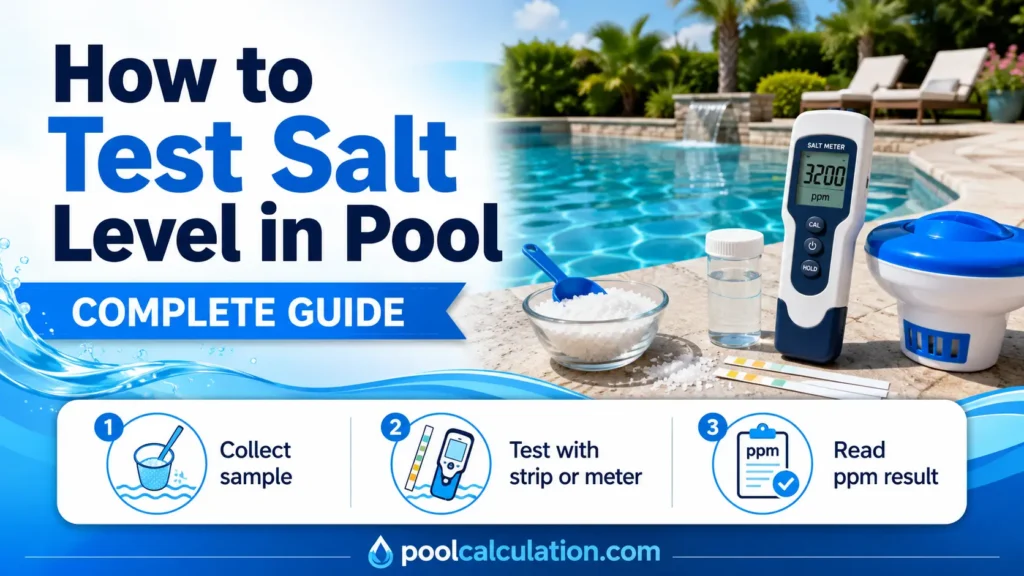
How to Collect a Good Sample
47. Run circulation long enough for the pool to be well mixed.
48. Use a clean container without chemical residue.
49. Collect water about elbow depth and away from a return jet.
50. Avoid testing immediately after adding salt or fresh water.
51. Follow the selected test instructions exactly.
52. Record the result and compare it with the generator display.
Using Test Strips
To test salt level in pool water with strips, remove one strip without touching the test pad, expose it to water for the stated time, and compare the result within the label’s reading window. Store strips tightly closed and dry.
Strips are convenient for trend checks but may be difficult to read between color blocks. Confirm a result that would lead to several bags of salt. To answer how to test salt level in pool, start with current measurements and reliable test results.
Using a Drop Test
A drop test measures chloride through a color change. Use the specified sample size and hold the reagent bottle vertically so drops remain consistent. Count carefully and apply the kit conversion.
Drop tests are useful when the owner wants a more deliberate manual result without relying on an electronic probe.
Using a Salt Meter for Swimming Pool Water
A digital salinity meter for pool testing gives a fast digital reading. Rinse the probe before and after use, calibrate it as directed, and allow temperature compensation to settle when the device supports it.
Do not store the meter wet or dry unless its instructions say so. Probe condition and calibration solution age affect accuracy.
What to Do When Results Disagree
Repeat both tests with a new sample. Inspect the cell for scale only as the manual permits. Check water temperature and flow. If the independent methods agree with each other but not with the system, the cell or control may need service. When working out how to test salt level in pool, make changes gradually and verify the outcome.
If every method gives a different number, take a sample to a reliable professional and avoid a large correction until the reason is clear.
When to Test Salt
· At pool opening and after initial mixing.
· Before adding a large salt dose.
· After backwashing, draining, leak repair, or major overflow.
· When the generator shows a warning.
· After dilution for high salt.
· Periodically during the season to track trends.
Use the Pool Salt Calculator After Testing
Once the current reading is confirmed, enter it in the Pool Salt Calculator with volume and target. Testing and calculation should work together. A precise calculator cannot correct an inaccurate starting value.
How to Keep Salt Tests Consistent
Use the same sample depth, location, and testing method whenever possible. Consistency makes a seasonal trend easier to recognize. Write the test result beside the water temperature because some equipment displays respond differently in cold water.
Replace damaged strips, old reagents, weak batteries, and expired calibration solution. A testing tool that is not maintained can create a costly error when its reading is used for several bags of salt.
Using a Pool Store Result as a Second Opinion
A professional or retail test can help when the home methods disagree, but ask which method was used and whether the meter was calibrated. Transport the sample promptly in a clean container and keep it out of direct heat. Before deciding how to test salt level in pool, repeat the check whenever conditions change.
Compare the store result with the home test and the generator display. Three readings that are close provide a stronger basis for a large correction than one isolated number.
Frequently Asked Questions
Are salt test strips accurate?
They are useful for routine checks when stored and used correctly, but confirm major corrections with another method. To answer how to test salt level in pool, follow the product label and equipment instructions.
Can a regular pool test strip measure salt?
Only if it includes a salt or salinity test. Many standard chemistry strips do not.
Why does the salt meter differ from the generator?
Calibration, temperature, probe condition, cell scale, flow, and equipment age can create differences.
How often should I test salt?
Test periodically and whenever water is added or removed in a meaningful amount.
Can salt be tested immediately after adding it?
No. Wait until the water is fully mixed and the product is dissolved.
What sample location is best?
Use well mixed water away from return jets, skimmers, and recent chemical additions.
Conclusion
Knowing how to test salt level in pool water prevents unnecessary bags and avoidable dilution. Use a clean sample, a suitable salt test, and a second method when the result is unexpected. Then use the Pool Salt Calculator with the confirmed reading.