| Quick Answer How to add salt to a saltwater pool safely follows a clear sequence. To add salt safely, test the current level, calculate the dose, confirm the equipment target, spread pool grade salt across the pool as directed, brush until dissolved, circulate thoroughly, and retest before starting normal chlorine production. |
Introduction
Knowing how to add salt to a saltwater pool safely means testing first, dosing gradually, and retesting before you finish. Below you will find the detailed steps, a worked example, and safety notes.
Test Before Adding Salt to Pool Water
Learning how to add salt to a saltwater pool begins with testing. Never assume fresh water contains zero salt, and never use low chlorine as proof that salinity is low. Confirm the salt reading with a suitable test.
Check pool volume and the generator manual. The target should come from the installed system, not a general chart.
Calculate the Correct Amount
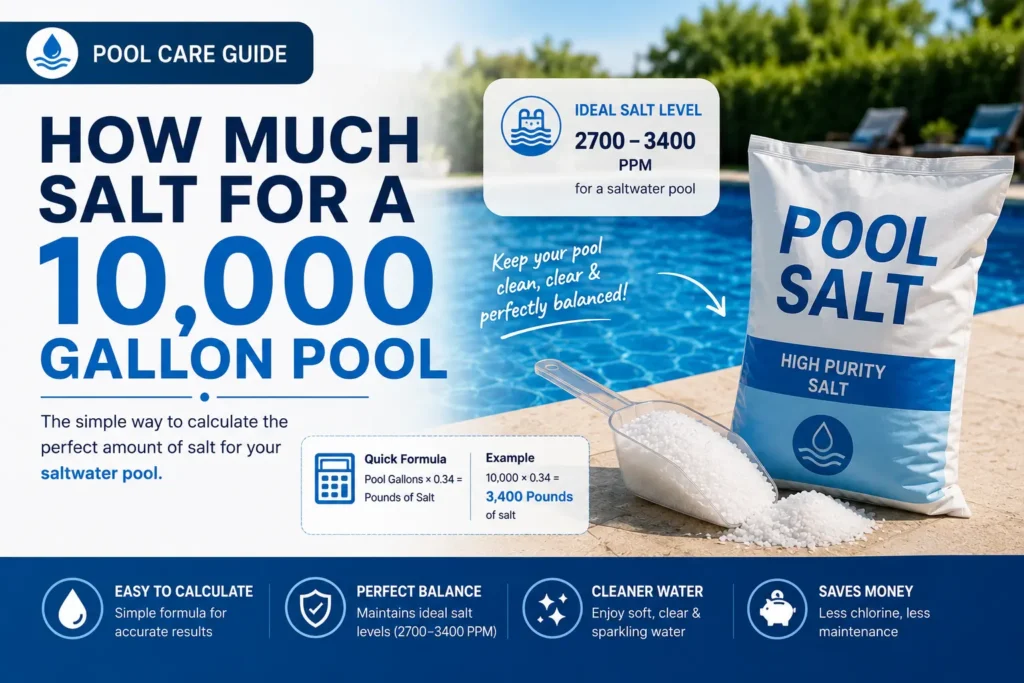
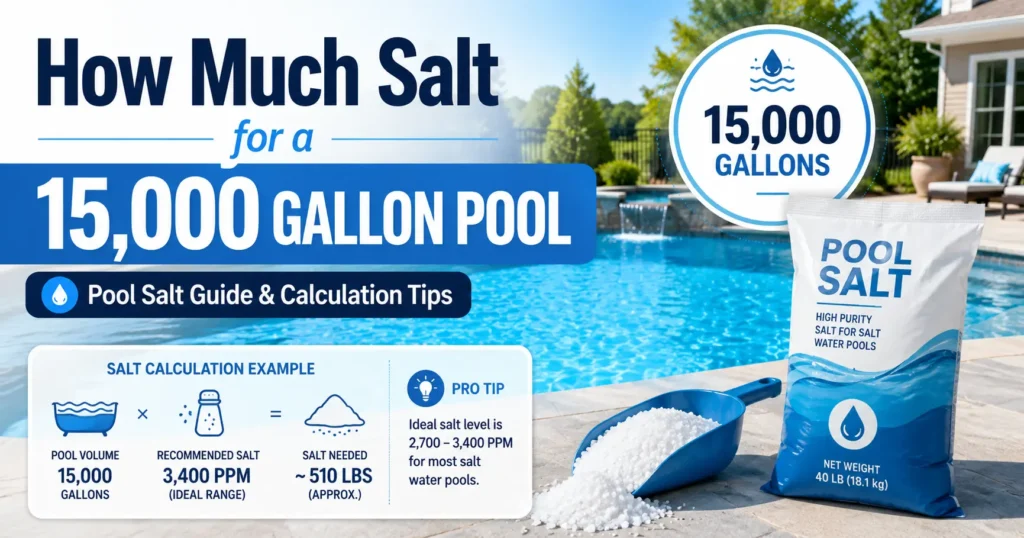
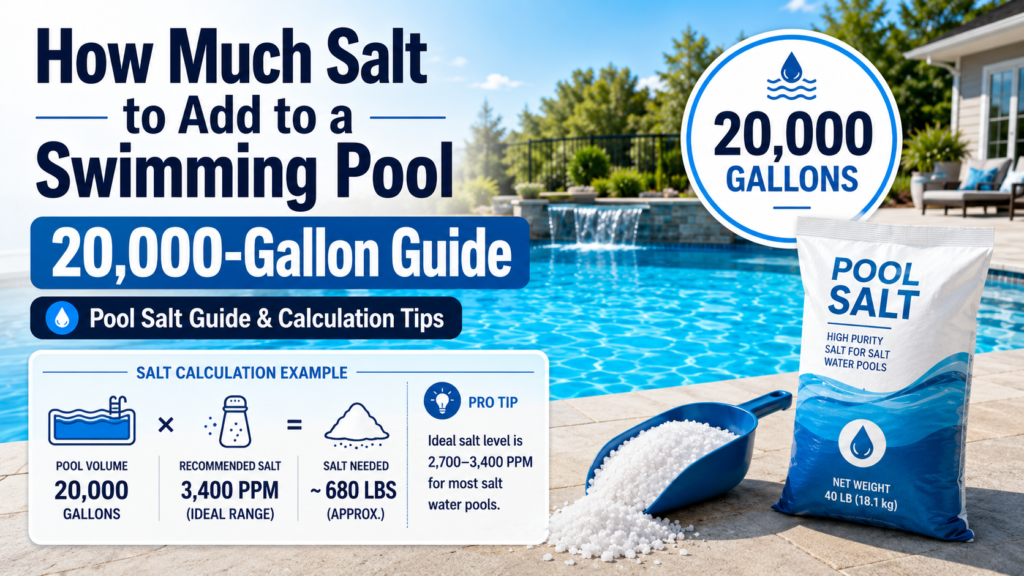
Use the Pool Salt Calculator with current ppm, target ppm, water volume, and bag size. The result shows pounds and bags. When adding salt to the water in a large correction, plan to hold back part of the final bag.
For example, a 10000 gallon pool moving from 2200 to 3200 ppm needs about 83.4 pounds.
How to Add Salt to Pool Water Step by Step
37. Read the salt bag and salt chlorine generator instructions.
38. Remove debris and confirm normal circulation.
39. Turn the generator off during the addition if the manual requires it.
40. Open only the amount needed for the first stage.
41. Spread the salt across the shallow end or around the perimeter as directed.
42. Keep concentrated salt out of the skimmer.
43. Brush crystals from the floor and steps.
44. Run circulation until the product is fully dissolved.
45. Retest salinity before adding the remaining amount.
46. Return the generator to normal operation only when the manual allows it.
Where Should Salt Be Poured
Distribute it over a broad area rather than making one pile. This allows water to contact more crystals and reduces the chance of concentrated material sitting on a liner, plaster, or other finish. To answer how to add salt to a saltwater pool, start with current measurements and reliable test results.
Do not pour a bag into the skimmer unless the specific product and equipment instructions explicitly direct that method.
How Long Does Salt Take to Dissolve
Dissolving time depends on crystal size, water temperature, circulation, and brushing. Fine crystals in warm moving water dissolve faster than large crystals in cold water. Do not rely on a fixed hour count when visible crystals remain.
The salinity reading may also take time to stabilize throughout the entire pool. Test after full mixing, not immediately beside the addition area.
How Do I Add Salt to My Pool After a Partial Drain
Test after the pool is refilled and circulated. The salt loss depends on how much water was replaced. A 25 percent water replacement removes roughly 25 percent of the salt when the water was well mixed.
Use the new measured reading in the calculator. Do not automatically add the same number of bags used during original startup. When working out how to add salt to a saltwater pool, make changes gradually and verify the outcome.
Safety and Equipment Protection
· Wear footwear and use safe lifting technique for heavy bags.
· Keep salt separate from chlorine and acid storage.
· Brush salt away from metal drains, ladders, and fittings.
· Do not let wet bags remain on a deck.
· Follow the equipment instructions for generator shutdown and restart.
· Keep swimmers out during addition when the product or equipment label requires it.
Common Mistakes
· Adding salt without a test.
· Targeting the system maximum.
· Opening every bag before the first retest.
· Leaving crystals on the surface.
· Using unsuitable salt with additives.
· Assuming more salt will always create more chlorine.
What to Check After the Salt Has Dissolved
A correct salinity reading does not automatically mean the pool is ready. Test free chlorine and pH, check that the cell has normal flow, and review the output percentage. A new salt addition may restore generator operation, but the cell still needs enough run time to meet chlorine demand.
During startup or a major correction, test again the following day. If salinity changes sharply after appearing stable, the original water may not have been fully mixed or the pool volume may be inaccurate.
Adding Salt to Different Pool Surfaces
The same broad addition method may need extra care on vinyl, plaster, fiberglass, or painted surfaces. Follow the pool and salt instructions and do not allow a concentrated pile to remain on any finish. Brush gently with a tool approved for the surface.
Inspect the pool after the crystals dissolve. Any unusual discoloration, residue, or metal staining should be investigated before another bag is added. Before deciding how to add salt to a saltwater pool, repeat the check whenever conditions change.
Frequently Asked Questions
Can salt be added directly to the pool?
Pool grade salt is commonly distributed directly across the water surface under label directions. Do not pour it into the skimmer.
Should the pump be running?
Follow the equipment and salt labels. Circulation is generally needed for mixing, while the generator may need to remain off.
Can I swim while salt is dissolving?
Follow the product and equipment directions. Wait until crystals are dissolved and water chemistry is in range.
How soon should salt be retested?
After the entire pool is fully mixed and the equipment instructions permit testing.
Can salt damage a liner?
Concentrated piles and impurities can create risk. Spread the product and brush promptly.
What if I added too much?
Confirm the reading. High salt is normally corrected through controlled water replacement.
Conclusion
The correct method for how to add salt to a saltwater pool is test, calculate, spread, brush, circulate, and retest. Using the Pool Salt Calculator and holding back part of a large dose makes the process safer and more accurate.