Quick Answer
How to clean a pool filter depends on the filter type. Cartridge filters usually need to be removed and rinsed, sand filters are commonly cleaned through backwashing, and DE filters require backwashing plus fresh DE when appropriate. Cleaning the filter regularly helps maintain water flow and filtration performance.
Introduction
Knowing how to clean a pool filter is an important part of keeping your pool water clear and your circulation system working properly. A dirty filter can collect leaves, dust, oils, algae particles, and other debris, making it harder for water to pass through.
Your cleaning method depends on whether you have a cartridge, sand, or DE filter. Before starting, identify the filter type and follow its manufacturer’s instructions.
If your current filter is heavily worn or no longer cleaning efficiently, choosing the right pool cleaners and vacuums equipment can also help support the overall pool cleaning routine.
Why Pool Filter Cleaning Matters
A pool filter continuously removes unwanted particles from circulating water. As debris builds up, the filter becomes less efficient.
Regular cleaning can help:
- Maintain better water circulation
- Reduce unnecessary pressure on the pump
- Improve filtration performance
- Keep pool water looking clearer
- Extend the useful life of filter components
- Make routine pool maintenance easier
However, cleaning too frequently can also be unnecessary. The best schedule depends on pool usage, debris levels, weather, filter type, and pressure readings.
How to Clean a Pool Filter by Filter Type
There are three common residential pool filter types, and each requires a different cleaning method.
Cartridge Pool Filters
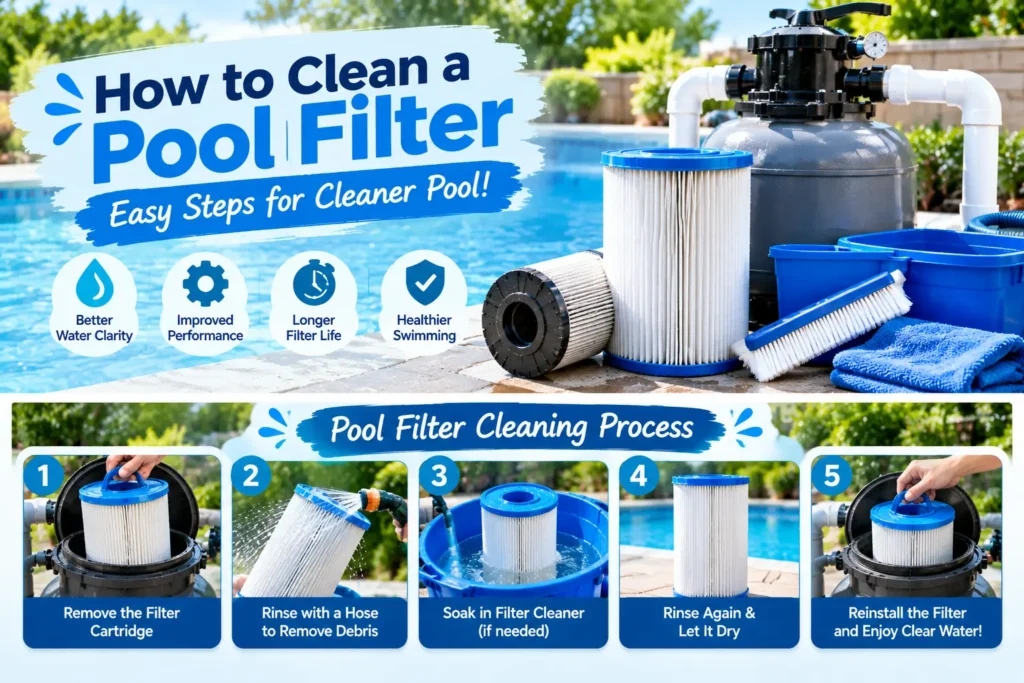
For cartridge filters, how to clean a pool filter usually involves removing the cartridge and rinsing it thoroughly.
- Turn off the pool pump.
- Release pressure according to the filter instructions.
- Open the filter housing.
- Remove the cartridge carefully.
- Rinse between the pleats with a garden hose.
- Inspect the cartridge for tears or damaged pleats.
- Clean the housing if necessary.
- Reinstall the cartridge correctly.
- Close the housing and restart the system.
- Check for leaks and confirm normal pressure.
A standard hose can remove loose debris, but heavily contaminated cartridges may need a suitable pool filter cartridge cleaner according to the product instructions.
Sand Pool Filters
Sand filters are commonly cleaned using a backwashing process.
When the pressure rises above the normal operating level specified for your system, backwashing may be necessary. The process reverses water flow through the filter media and sends dirty water to waste.
A typical process includes:
- Turn off the pump.
- Move the multiport valve to the backwash setting.
- Restart the pump.
- Continue until the discharge water becomes clear or the manufacturer’s instructions indicate the process is complete.
- Turn off the pump.
- Set the valve to rinse if required.
- Run the rinse cycle.
- Turn off the pump and return the valve to filter mode.
Never change multiport valve positions while the pump is running.
How to Clean a Pool Filter When Pressure Is High
A pressure increase can be one sign that the filter is becoming restricted.
If you are learning how to clean a pool filter, first compare the current pressure with the normal clean-filter reading for your system. A higher reading can indicate accumulated debris, but pressure problems can have other causes.
Check:
- Filter condition
- Pump basket
- Skimmer basket
- Return flow
- Valves
- Water level
- Filter pressure gauge
If cleaning does not return the pressure to its normal range, inspect the rest of the circulation system rather than repeatedly cleaning the filter.
When Should You Clean a Pool Filter?
There is no single schedule that works for every pool. A filter may require attention sooner when the pool experiences heavy swimming, storms, landscaping debris, algae problems, or unusually high dirt loads.
Pressure is often a useful maintenance indicator. Keep a record of your normal clean-filter pressure so you can recognize changes.
You should also inspect the filter when:
- Water flow becomes noticeably weaker
- Pool water becomes cloudy
- Pressure rises above its normal range
- The filter has handled a major debris load
- The pool has recently experienced an algae problem
Common Pool Filter Cleaning Mistakes
Even when you understand how to clean a pool filter, a few mistakes can reduce the effectiveness of the process.
Cleaning Without Turning Off the Pump
Always follow the manufacturer’s shutdown and pressure-release procedure before opening a filter housing.
Using Excessive Water Pressure
Very strong water pressure can damage cartridge pleats. Use a suitable hose pressure and rinse carefully.
Ignoring Damaged Filter Media
A cracked cartridge, damaged grid, or worn filter component may need replacement rather than another cleaning.
Changing Valve Positions While Running
For systems with multiport valves, turn off the pump before changing settings.
Cleaning Without Checking the Cause
If pressure quickly rises again after cleaning, investigate the pool water, debris load, circulation, and equipment instead of repeatedly washing the filter.
Choosing Products for Easier Pool Maintenance
Understanding how to clean a pool filter is only one part of maintaining a clean swimming pool. The right maintenance products can make routine cleaning more manageable.
Before buying a replacement filter or cleaning product, check:
- Your filter type
- Manufacturer and model
- Pool size
- Existing plumbing connections
- Recommended maintenance method
- Replacement component availability
For routine maintenance, you can also explore the pool cleaners and vacuums product page to find equipment that complements your filtration system.
How Often Should You Clean a Pool Filter?
The correct frequency depends on actual pool conditions rather than a fixed calendar. A lightly used pool with little debris may need less frequent cleaning than a pool surrounded by trees or used heavily.
Instead of cleaning simply because a certain number of days have passed, monitor pressure, water clarity, circulation, and the filter manufacturer’s maintenance recommendations.
A maintenance log can make this easier. Record the clean-filter pressure, cleaning dates, unusual debris, and any changes in water flow.
Frequently Asked Questions
Can I clean every pool filter the same way?
No. Cartridge, sand, and DE filters have different cleaning procedures. Always use the method designed for your specific filter.
Can a dirty filter make my pool cloudy?
Yes. Restricted or poorly maintained filtration can contribute to water-quality problems, although cloudy water can have several causes.
Should I replace a cartridge instead of cleaning it?
Replace it when the cartridge is damaged, badly worn, or no longer performs properly after appropriate cleaning.
What if filter pressure stays high after cleaning?
Check the filter, valves, pump, baskets, water flow, and pressure gauge. Persistent problems may require professional inspection.
Final Takeaway
Learning how to clean a pool filter helps you maintain proper circulation and support clearer pool water. Cartridge filters are generally rinsed, while sand filters commonly use backwashing, and DE systems require their own maintenance procedure.
Clean according to your filter type, monitor pressure, inspect worn components, and follow the manufacturer’s instructions. For a complete maintenance setup, combine proper filtration with suitable pool cleaning equipment and regular water care.