Quick Answer
Knowing how much salt to add to pool water depends on three things: pool volume, current salt level, and the target level recommended by your salt chlorine generator. Test the water first, calculate the required increase, add pool grade salt gradually, circulate the water, and retest before making another adjustment. In this article, we will discuss all about how much salt to add to pool water .
Introduction
If you have a saltwater pool, adding the correct amount of salt is important for keeping the salt chlorine generator working within its recommended range. Simply adding a few bags because the water “looks low” can result in an unnecessarily high salt level.
The best way to determine how much salt to add to pool water is to measure the current salinity and compare it with your equipment’s recommended target.
If you need pool salt or related maintenance products, visit the [Pool Salt / Saltwater Pools product page] for suitable options.
What Determines the Amount of Pool Salt You Need?
The amount of salt required is not the same for every pool. The main factors are:
- Pool water volume
- Current salt concentration
- Recommended target level
- Salt concentration of the product
- Amount of water recently added or removed
A 10,000 gallon pool and a 20,000 gallon pool will require different amounts of salt even when both have the same starting and target readings.
Check Your Salt System First
Before adding anything, check the manufacturer’s recommended operating range. Many residential salt systems operate somewhere around 2,700 to 3,400 ppm, but the correct target varies by equipment.
Do not automatically use a generic target when your generator specifies a different range.
How to Calculate How Much Salt to Add to Pool
The basic calculation compares your current salt level with your desired level and considers the amount of water in the pool.
For example, suppose a 10,000 gallon pool has a current salinity of 2,200 ppm and the desired level is 3,200 ppm. The required increase is 1,000 ppm.
For this example, the approximate salt requirement is 83.4 pounds.
The actual amount should always be adjusted according to your measured water volume, current reading, product instructions, and salt system requirements.
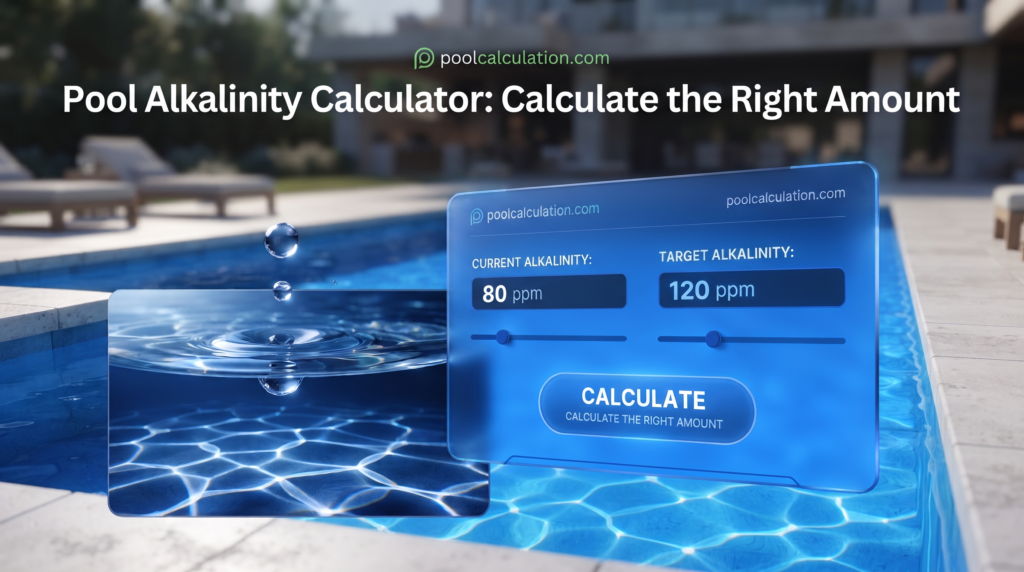
Use a Pool Salt Calculator
A calculator can make dosing easier because it can account for:
- Pool size
- Current salt level
- Target salt level
- Required pounds of salt
- Available bag sizes
Instead of estimating from the number of bags, enter the measured information first. This helps prevent overestimating the amount required.
A calculator is especially useful when your pool already contains salt because you should not calculate the dose as though the starting level were zero.
How to Add Salt to Your Pool
Once you know how much salt to add to pool water, use a careful process.
1. Test the Current Salt Level
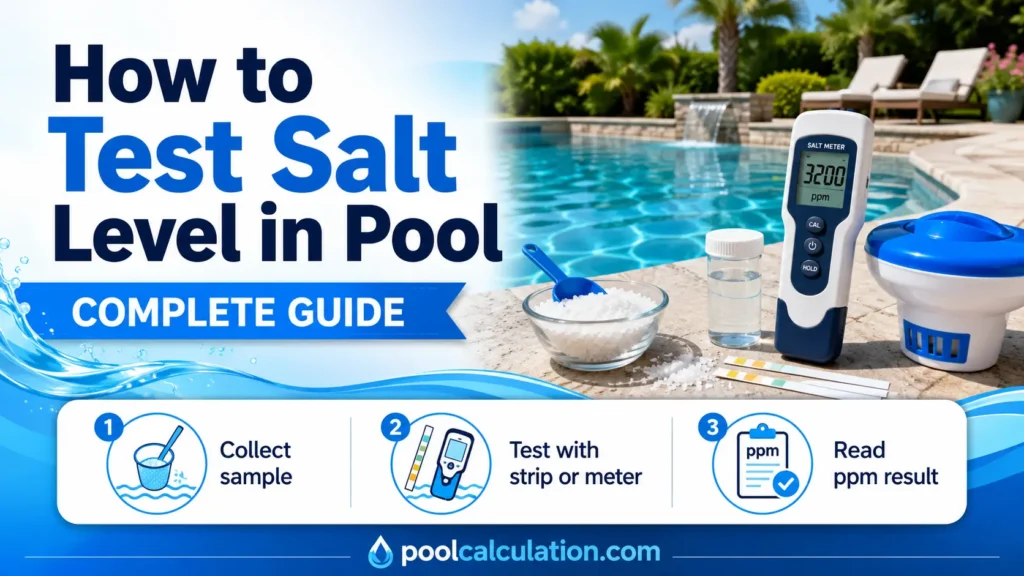
Use a suitable salt test or reliable digital tester. Record the result before adding anything.
2. Confirm the Pool Volume
Use the most accurate volume estimate available. An incorrect volume can lead to an incorrect salt dose.
3. Calculate the Required Amount
Compare the current reading with the target recommended by your salt system. For a large adjustment, consider adding the salt in stages.
4. Use Pool Grade Salt
Choose salt intended for swimming pool use and check the product label before adding it.
5. Distribute the Salt
Spread the salt over the pool according to the product and equipment instructions. Avoid creating one concentrated pile in a single location.
6. Circulate the Water
Run the circulation system as recommended. Brushing the pool floor can help distribute and dissolve the salt.
7. Retest
Allow the salt to dissolve and mix thoroughly before checking the salinity again. Only make another adjustment if the new reading shows that it is necessary.
Ideal Salt Level for Pool Systems
The target level depends on the salt chlorine generator. Many systems operate around 3,000 to 3,500 ppm, but this should not be treated as a universal rule.
Your equipment manual should be the final reference.
Keeping the level near the recommended range helps the system operate as designed. Adding excessive salt does not necessarily improve chlorine production.
Pool Salt Level Can Change Over Time
Salt does not disappear through normal evaporation in the same way water does. When water evaporates, the salt remains behind and becomes more concentrated.
However, salt can be lost when water leaves the pool through:
- Splashing
- Backwashing
- Leaks
- Draining
- Overflow
- Water replacement
After adding significant amounts of fresh water, test again before deciding whether additional salt is needed.
Ideal Salt Level for Pool Maintenance
The ideal salt level for pool operation is the range specified by your particular salt system. Keeping records of previous readings can make future adjustments easier.
For example, if you know the salt level before and after a large water replacement, you can use that information when planning the next adjustment.
Avoid adding salt simply because the generator displays a warning. Test the water first and confirm the actual salinity.
Common Salt-Dosing Mistakes
Even when you understand how much salt to add to pool water, several mistakes can lead to an incorrect result.
Avoid:
- Assuming the pool starts at zero salt
- Guessing the pool volume
- Using the wrong target level
- Adding several bags without testing
- Ignoring salt already present in the water
- Using unsuitable salt
- Testing before the salt has fully mixed
- Confusing a low chlorine reading with a low salt reading
Taking a few extra minutes to test can prevent a much larger correction later.
How Much Salt Does a 10,000 Gallon Pool Need?
The answer depends on the starting salt level and the target.
For example, raising a 10,000 gallon pool by approximately 1,000 ppm requires about 83.4 pounds of salt.
If the pool already has 2,200 ppm and the target is 3,200 ppm, you need only the amount required for that 1,000 ppm increase.
This is why testing the starting level is essential.
When Should You Add More Salt?
Do not automatically add more salt after the first dose. Allow sufficient time for the salt to dissolve and circulate throughout the pool.
Then test again.
If the reading is still below the equipment’s recommended range, calculate the remaining adjustment. A staged approach is particularly useful when the required correction is large.
Frequently Asked Questions
Can I add salt without testing first?
It is better to test first. Without knowing the current salinity, you cannot accurately determine the required amount.
How much salt to add to pool, should I add at once?
The amount depends on the calculated requirement and your equipment instructions. For large adjustments, adding a portion, circulating, and retesting can reduce the risk of overshooting the target.
Can I use regular table salt?
Use a salt product specifically intended and labeled for swimming pool systems. Check the product instructions before use.
How long should I wait before retesting?
Wait until the salt has dissolved and circulated adequately throughout the pool. The required time depends on circulation, water conditions, and the product instructions.
Final Takeaway
Knowing how much salt to add to pool water starts with accurate testing rather than guessing. Measure the current salinity, confirm the pool volume, check your salt generator’s recommended range, calculate the required adjustment, and add pool grade salt carefully.
Concluding all about how much salt to add to pool water , After circulation, retest the water before making another adjustment. For convenient saltwater pool maintenance products, check the [Pool Salt / Saltwater Pools product page].