Quick Answer
Knowing how to test pool water starts with collecting a clean sample, using a suitable testing method, checking the key chemistry levels, and comparing the results with recommended ranges. Regular testing helps you identify problems with chlorine, pH, alkalinity, and other important water chemistry levels before they become difficult to manage.
Introduction
Learning how to test pool water is one of the simplest ways to stay ahead of common pool chemistry problems. Water can look clear while its chemical balance is outside the recommended range.
Regular testing helps you understand what your pool actually needs instead of adding chemicals based on guesswork. With the right testing method, you can quickly check important levels and make more informed maintenance decisions.
If you need reliable testing supplies, visit the [Pool Test Kits product page] to find products suitable for regular pool water checks. In this article, we will discuss all about how to test pool water.
Why Should You Test Pool Water?
Pool water chemistry changes throughout the week. Rain, sunlight, swimmers, evaporation, fresh water, and chemical additions can all affect your readings.
Regular testing can help you:
- Monitor chlorine levels
- Check pH balance
- Track total alkalinity
- Identify unusual changes
- Adjust chemicals more accurately
- Maintain comfortable swimming conditions
- Protect pool surfaces and equipment
Testing is particularly important after heavy rain, adding chemicals, opening the pool, or replacing a significant amount of water.
What Should You Test in Pool Water?
A basic pool test should usually include the main chemistry measurements that affect water balance.
| Test | What It Helps You Monitor |
| Free chlorine | Sanitizing performance |
| pH | Water balance and swimmer comfort |
| Total alkalinity | pH stability |
| Cyanuric acid | Chlorine protection from sunlight |
| Calcium hardness | Water balance and surface protection |
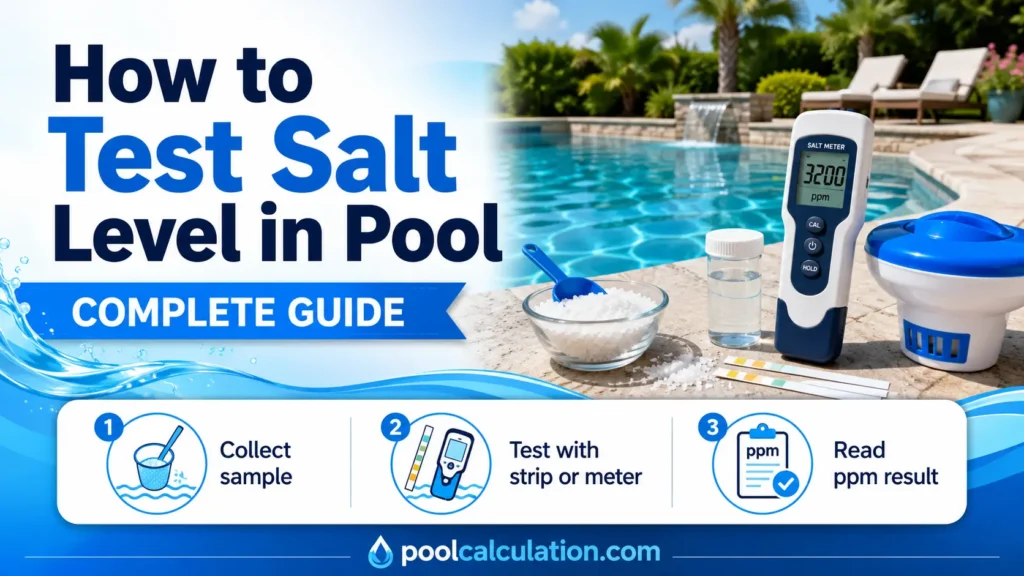
| Salt | Saltwater generator operation |
Not every pool requires the same testing schedule. Saltwater pools, for example, also need their salinity monitored.
How to Test Pool Water Step by Step
1. Choose a Clean Sample Location
Take your sample from the pool water rather than directly from the surface.
Avoid collecting water immediately next to a chemical dispenser, return jet, or recently added chemical. A sample from a representative area gives you a more useful reading.
2. Use the Correct Testing Method
There are several ways to test pool water, including test strips, liquid reagent kits, and digital testing devices.
Follow the instructions for the specific product you are using. Different products can use different sample sizes, testing procedures, and reading methods.
3. Collect the Water Correctly
Use the supplied testing container when one is provided.
Collect the sample according to the product instructions and avoid touching the test area of strips or contaminating the sample container.
4. Perform the Test
Follow the required steps carefully.
For test strips, dip the strip for the specified amount of time and compare the colors within the recommended reading window.
For liquid kits, add the required number of drops or reagents and follow the stated procedure.
5. Compare the Results
Once you have your readings, compare them with the recommended range for your pool and equipment.
Do not automatically add chemicals just because one number looks different from another pool’s results. Your equipment, pool type, and manufacturer’s recommendations should also be considered.
Using Pool Water Testing Kits
Pool water testing kits are available in different formats, from simple strips to more detailed testing systems.
Test Strips
Test strips are convenient for frequent checks. They can provide several readings from one test and are easy to store.
They are particularly useful for routine monitoring when you want a quick overview of the water.
Liquid Test Kits
Liquid kits can provide more detailed testing and are useful when you need to investigate a chemistry problem.
They require more steps than strips, so following the instructions carefully is important.
Digital Testers
Digital testers can display readings numerically and may be useful when you want easier-to-read results.
However, digital equipment still needs to be used and maintained correctly. Follow the manufacturer’s instructions for calibration, cleaning, and testing.
How to Read Pool Test Strip Results
When using strips, compare each test pad with the color chart provided with the product.
A pool test strip chart is designed to help you match the color on the strip with the corresponding chemical range.
For the most reliable comparison:
- Read the strip within the specified time
- Use natural or suitable lighting
- Keep the test container clean
- Do not compare colors long after the recommended reading time
- Follow the exact instructions on your test product
Color-based tests can be affected by lighting, so avoid making a judgment based on a quick glance.
How Often Should You Test Pool Water?
Knowing all about how to test pool water frequency depends on pool use, weather, water conditions, and the type of pool system.
A pool with heavy use may need more frequent testing than a pool that is rarely used.
You should also consider testing after:
- Heavy rainfall
- Large amounts of swimmer activity
- Significant water replacement
- Major chemical adjustments
- Opening or closing the pool
- Noticeable changes in water appearance
Keeping a simple record of your results can help you identify patterns over time.
Common Pool Testing Mistakes
Even when you understand how to test pool water, mistakes can affect the results.
Common problems include:
- Using expired testing products
- Taking a poor water sample
- Reading a test strip too late
- Adding chemicals before testing
- Using the wrong amount of reagent
- Ignoring the manufacturer’s instructions
- Comparing results under poor lighting
- Testing immediately after adding chemicals
Accurate testing is about consistency. Try to use the same reliable process each time.
What Should You Do After Testing?
How to test pool water? testing tells you what is happening in the water, but the next step should be based on the result.
If chlorine is low, determine the appropriate adjustment using your pool size and product instructions.
If pH is outside the recommended range, address the imbalance carefully rather than adding several chemicals at once.
If alkalinity or another measurement is unusual, consider how it relates to the rest of your water chemistry before making a large correction.
Avoid making multiple major adjustments at the same time unless the product instructions or a qualified professional recommends it.
Frequently Asked Questions
What is the easiest way to test pool water?
Test strips are often the simplest option for routine checks because they are quick and easy to use. More detailed testing methods may be useful when investigating specific chemistry problems.
How to test pool water with a home kit?
Yes. Home testing products are designed for regular pool maintenance. Follow the instructions for your specific kit to obtain useful results.
Should I test pool water before adding chemicals?
Yes. Testing first helps you understand the current water chemistry and reduces unnecessary chemical additions.
Can pool water look clear but still be unbalanced?
Yes. Clear water does not guarantee that chlorine, pH, alkalinity, or other chemical levels are within the desired range.
Final Takeaway
Understanding how to test pool water makes regular pool maintenance easier and more predictable. Start with a clean sample, use the correct testing method, check the important chemistry levels, and read your results according to the product instructions.
Concluding how to test pool water, For regular maintenance, choose suitable pool water testing kits and keep your testing supplies available so you can check the water whenever conditions change. With consistent testing and careful adjustments, you can keep your pool chemistry easier to manage throughout the swimming season.