Quick Answer
Pool shock treatment cost depends on the size of the pool, type of shock product, severity of the water problem, dosage required, and whether you treat the pool yourself or hire a professional. A routine shock treatment may require only one or a few containers of product, while a severe algae problem can require repeated treatments. Testing the water and calculating the required dosage before adding shock can help prevent unnecessary spending. In this article, we will cover all about Pool shock treatment cost.
What Is Pool shock treatment cost?
Pool shock treatment involves adding a concentrated sanitizer to pool water to quickly raise the chlorine level and address contaminants, algae, or unusually high chlorine demand.
Shock can be used for routine maintenance or when a pool develops problems such as cloudy water, algae, or heavy contamination.
The amount required is not the same for every pool. Pool volume, current chlorine level, stabilizer concentration, product strength, and the severity of the problem all affect the treatment.
This means pool shock treatment cost can vary considerably between pools.
What Affects Pool Shock Treatment Cost?
Pool shock treatment cost affects alot. Several factors determine how much you may spend.
| Factor | Effect on Cost |
| Pool size | Larger pools require more product |
| Shock type | Product prices vary |
| Water condition | Severe problems may require more treatment |
| Chlorine level | Determines treatment requirements |
| CYA level | Can affect chlorine management |
| Product concentration | Stronger products may require less quantity |
| DIY or professional service | Labor increases total cost |
| Number of treatments | Multiple treatments increase spending |
A small pool with a minor water-quality issue may require considerably less product than a large pool experiencing a severe algae problem.
Types of Pool Shock
Different shock products have different characteristics and prices.
Calcium Hypochlorite
Calcium hypochlorite is a common granular chlorine shock. It provides a strong chlorine boost and is often used for algae and other sanitation problems.
Because it adds calcium to the water, repeated use should be considered alongside calcium hardness management.
Dichlor Shock
Dichlor contains chlorine and cyanuric acid. It dissolves relatively quickly and can be useful in certain situations.
However, repeated use adds stabilizer to the water, so CYA should be monitored.
Non Chlorine Shock
Non chlorine shock is different from chlorine-based shock. It can help oxidize contaminants but does not provide the same sanitizing effect as chlorine shock.
The appropriate product depends on the purpose of treatment and your pool’s existing chemistry.
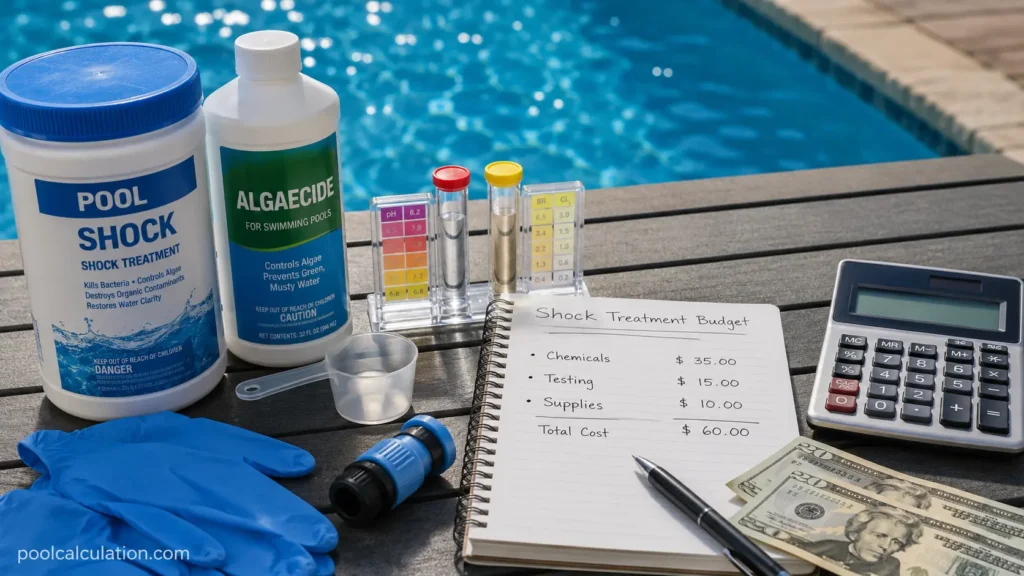
Average Treatment Budget
There is no universal price for a shock treatment because products are sold in different package sizes and concentrations.
For budgeting purposes, consider the amount of product needed rather than simply comparing the price of one container.
| Pool Situation | Product Requirement | Expected Budget |
| Routine maintenance | Small treatment | Lower |
| Mild cloudy water | Moderate treatment | Moderate |
| Heavy contamination | Larger treatment | Higher |
| Green algae | Potentially repeated treatment | Higher |
| Professional treatment | Product plus labor | Highest |
These are relative budget categories rather than fixed prices. Actual expenses depend on product prices, pool volume, and treatment requirements.
How Much Shock Does a Pool Need?
The amount of shock required depends on the pool’s water volume and the treatment objective.
If you’re wondering green pool how much shock, there is no single amount that works for every green pool. A heavily algae-filled pool can require a different treatment than a pool with only mild discoloration.
Before adding shock, determine:
- Pool volume
- Current free chlorine
- CYA level
- Type and concentration of shock
- Severity of the water problem
- Manufacturer’s dosage instructions
Never estimate dosage simply by looking at the water color.
Using a Pool Shock Calculator
A pool shock calculator can make dosage calculations easier by using your pool volume, current chlorine level, desired chlorine increase, and product strength.
The basic principle is to determine how much chlorine is needed to reach the intended treatment level and then convert that requirement into the appropriate amount of the selected product.
Always compare calculated results with the product label. Different shock products have different concentrations, so the same weight of two different products may not provide the same amount of available chlorine.
DIY vs Professional Shock Treatment
Doing the treatment yourself can reduce labor costs, but it requires accurate testing and careful chemical handling.
DIY Treatment
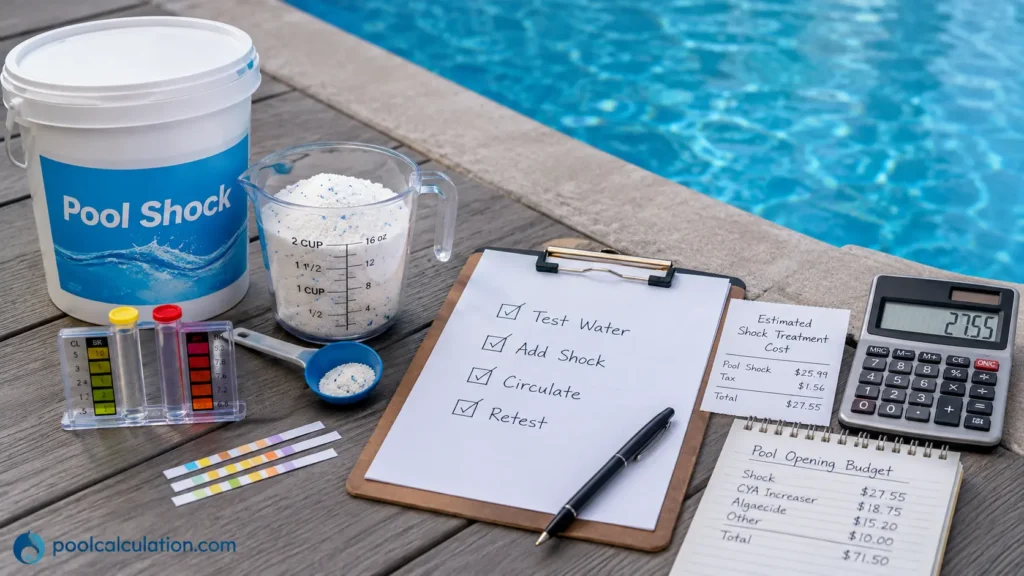
A DIY approach may involve:
- Testing the pool
- Brushing surfaces
- Calculating the required shock
- Adding the product correctly
- Running the circulation system
- Monitoring chlorine
- Retesting afterward
This option can be more affordable when the pool owner is comfortable with routine chemical maintenance.
Professional Treatment
Professional service adds labor costs but may be useful for severe algae problems, difficult water chemistry, or situations where the owner is unsure how to treat the pool.
Before hiring a professional, ask whether the quoted price includes chemicals, brushing, testing, circulation management, follow-up visits, and other required services.
Green Pool Treatment Costs
A green pool may require more than a single shock treatment.
Algae can consume chlorine rapidly, and severe contamination may require repeated treatment along with brushing and filtration.
Other factors may also need attention, including pH, stabilizer, circulation, and filter condition.
For this reason, the total pool shock treatment cost for a green pool can be higher than the cost of routine preventive shocking.
How to Reduce Shock Treatment Costs
Regular maintenance can help prevent expensive corrective treatments.
Test Regularly
Testing helps identify low chlorine and changing water chemistry before the problem becomes severe.
Maintain Proper Circulation
A properly operating pump and filter help distribute chemicals throughout the pool.
Brush the Pool
Regular brushing can help prevent algae from becoming established on surfaces.
Avoid Overusing Stabilized Shock
If your shock product adds CYA, monitor stabilizer levels to prevent excessive accumulation.
Treat Problems Early
Cloudy or slightly discolored water can become more difficult to correct if ignored.
Important Safety Considerations
Always read the product label before using pool shock. Follow the manufacturer’s instructions for dosage, application, storage, and handling.
Never mix different pool chemicals together unless the manufacturer specifically states that they are compatible.
Keep chemicals away from children and pets, store products in their original containers, and use appropriate protective equipment when required.
Do not enter the pool until the product instructions indicate that swimming is safe and the water chemistry has returned to an appropriate level.
Frequently Asked Questions
Is pool shock expensive?
The Pool shock treatment cost varies based on pool size, product type, dosage, water condition, and whether professional labor is involved.
Does a green pool require more shock?
A severe algae problem can require significantly more chlorine than routine maintenance because algae consumes sanitizer.
Can I calculate shock dosage myself?
Yes, if you know your pool volume, current chemistry, desired treatment level, and product concentration. Always verify the result against the product label.
Does shock treatment replace normal chlorine?
No. Shock is generally used as a high-dose treatment. Regular sanitizer maintenance is still necessary afterward.
Conclusion
Pool shock treatment cost depends on several factors, including pool size, shock product, concentration, water condition, dosage, and whether the treatment is completed professionally or as a DIY task.
Covering all about Pool shock treatment cost, the most reliable way to control expenses is to test the water first, calculate the required dosage, choose the appropriate product, and address water-quality problems early. Regular cleaning, proper circulation, and consistent chemical testing can also reduce the likelihood of expensive corrective treatments.