Quick Answer
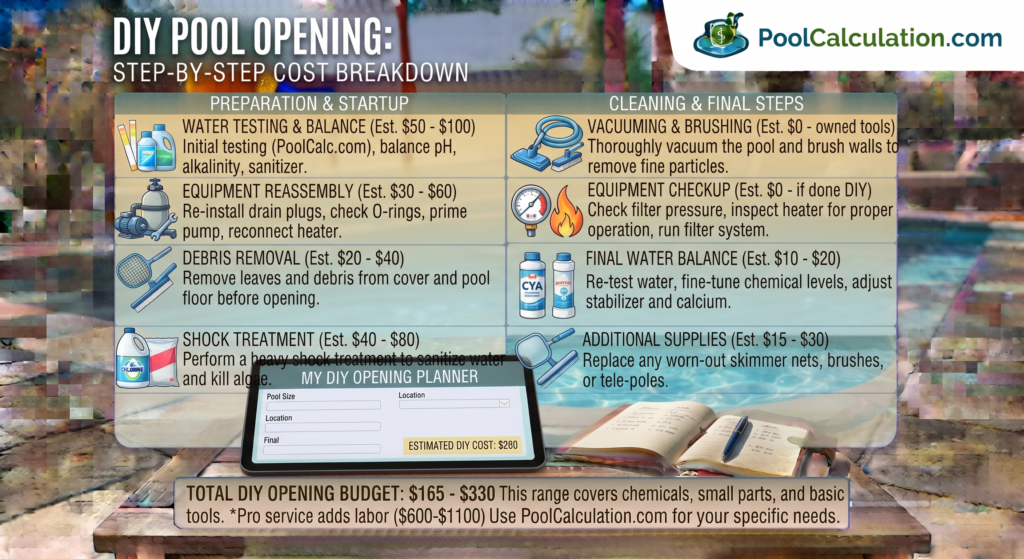
A pool opening cost guide helps estimate the expenses involved in getting a swimming pool ready for the new season. Common costs include cleaning, water testing, chemicals, equipment inspection, filter maintenance, and professional labor. The final price depends on pool size, pool condition, equipment, location, and whether you complete the opening yourself or hire a professional. In this article, we will cover all about Pool Opening Cost Guide.
What Does It Cost to Open a Pool?
Opening a pool after winter usually involves more than removing the cover. The pool may need cleaning, water testing, chemical balancing, equipment preparation, and filtration before it is ready for swimming.
A pool opening cost guide should separate these expenses because not every pool requires the same level of service.
For example, a Pool Opening Cost Guide that was properly winterized and covered may need only basic cleaning and chemical adjustment. A pool with cloudy or green water may require additional treatment, filtration, brushing, and possibly professional service.
| Opening Expense | What It Covers | Cost Impact |
| Cover removal | Removing and storing the cover | Low to moderate |
| Cleaning | Debris, brushing, vacuuming | Moderate |
| Water testing | Checking chemistry | Low |
| Chemicals | Balancing and treatment | Variable |
| Equipment setup | Pump and filter preparation | Variable |
| Repairs | Fixing damaged equipment | Potentially high |
| Professional labor | Full opening service | Higher |
Actual prices vary by pool size, location, equipment, and water condition.
Main Pool Opening Expenses
Pool Cover Removal
Pool Opening Cost Guide ,The first step is generally removing the winter cover carefully.
Debris and standing water should be handled appropriately so that contaminants do not unnecessarily enter the pool. After removal, inspect the cover for damage before cleaning and storing it.
If the cover is damaged and needs replacement, that can add a significant seasonal expense.
Pool Cleaning
Cleaning is one of the most common opening tasks.
Depending on the pool condition, cleaning may include:
- Removing leaves and debris
- Skimming the water
- Brushing walls and surfaces
- Vacuuming the pool floor
- Cleaning baskets
- Inspecting visible buildup
A clean pool is easier to test and balance than one containing large amounts of debris.
Water Testing and Chemical Costs
Testing should be performed before adding chemicals.
Important readings may include:
- Free chlorine
- pH
- Total alkalinity
- Cyanuric acid
- Calcium hardness
- Salt, if applicable
The required chemicals depend on the test results. Avoid adding products simply because they were used during the previous season.
A pool chemical dosage chart can help organize common dosage information, but product labels and pool-specific calculations should always take priority.
Equipment Preparation
A pool opening cost guide should also include equipment preparation.
Depending on your setup, you may need to:
- Reinstall drain plugs or fittings.
- Reconnect equipment.
- Check valves and plumbing.
- Prepare the pump.
- Start the filtration system.
- Inspect the filter.
- Check the heater.
- Inspect the salt chlorine generator if installed.
Equipment should be started according to the manufacturer’s instructions.
If the system does not prime correctly or shows unusual pressure, leaks, or noises, investigate the issue before continuing normal operation.
Does Pool Condition Affect Opening Cost?
Yes. In Pool Opening Cost Guide, Pool condition can have a major impact on the final expense.
A clean and properly winterized pool may require relatively little work. However, algae, cloudy water, heavy debris, or equipment problems can increase both chemical and labor requirements.
| Pool Condition | Typical Work Required |
| Clean water | Basic testing and balancing |
| Mildly cloudy | Cleaning and chemical adjustment |
| Heavy debris | Extended cleaning |
| Green water | Algae treatment and filtration |
| Equipment issue | Inspection and possible repair |
This is why a fixed opening price may not represent the total amount you eventually spend.
DIY vs Professional Pool Opening
One of the biggest factors affecting pool opening cost guide estimates is labor.
DIY Pool Opening
Opening the pool yourself can reduce labor expenses. You may need to purchase chemicals, testing supplies, cleaning equipment, and replacement parts if required.
DIY opening works best when you understand your equipment and are comfortable testing and balancing pool water.
Professional Pool Opening
Professional service can save time and may be useful for large pools, complicated equipment, or severe water problems.
A professional opening package may include cover removal, cleaning, equipment startup, chemical balancing, and inspection.
Before booking a service, ask what is included in the quoted price. Some companies charge separately for chemicals, repairs, or additional cleaning.
Pool Opening Cost by Service
A pool opening cost guide becomes easier to use when services are separated.
| Service | Usually Needed? | Cost Category |
| Cover removal | Yes | Basic |
| Debris removal | Usually | Basic |
| Water testing | Yes | Basic |
| Chemical balancing | Usually | Variable |
| Equipment startup | Usually | Moderate |
| Filter cleaning | As needed | Variable |
| Repairs | Only if required | Variable to high |
| Algae treatment | If necessary | Additional |
This structure helps you compare DIY expenses with professional quotes.
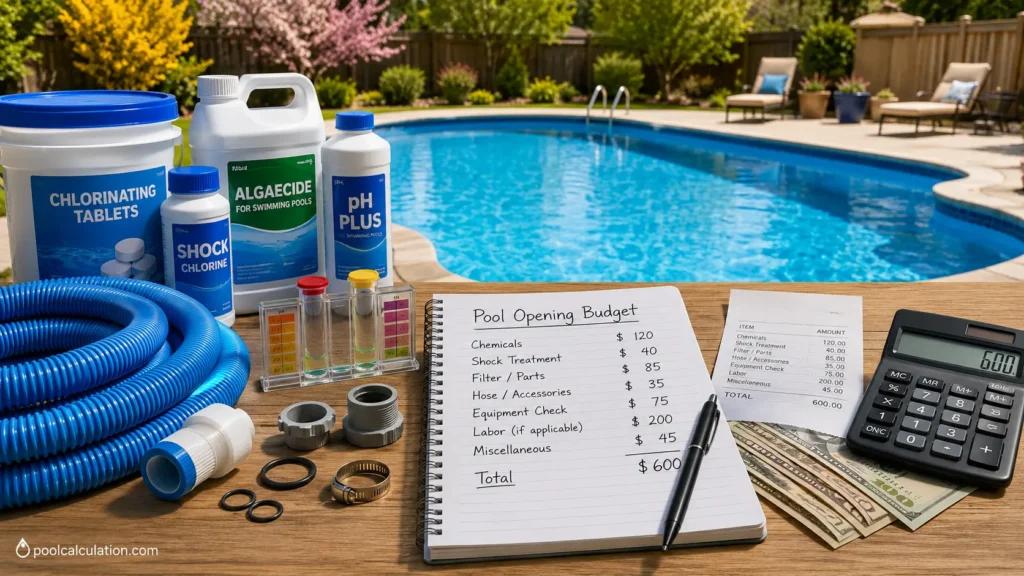
How to Reduce Pool Opening Costs
Planning ahead can help keep seasonal expenses under control.
Maintain the Pool Before Closing
A clean pool is generally easier to reopen than one that was left with poor water quality.
Inspect Equipment Early
Check equipment before the swimming season begins. Identifying problems early gives you more time to compare repair or replacement options.
Test Before Adding Chemicals
Testing prevents unnecessary chemical purchases and helps you determine what the water actually needs.
Reuse Good Equipment
If your cover, plugs, cleaning tools, and other accessories are still in good condition, inspect and reuse them rather than replacing them automatically.
Compare Professional Quotes
If hiring a professional, compare what each service package includes rather than comparing only the advertised starting price.
Pool Maintenance After Opening
Once the pool is reopened, ongoing maintenance becomes important.
Regular testing helps you monitor sanitizer and pH levels. Cleaning the pool and maintaining proper circulation can also reduce the chance of major water-quality problems.
A good pool maintenance cost guide can help homeowners organize recurring expenses such as chemicals, cleaning supplies, electricity, and equipment maintenance.
Common Pool Opening Mistakes
Avoid these mistakes when reopening your pool:
- Adding chemicals before testing
- Ignoring heavy debris
- Starting equipment without checking connections
- Failing to inspect the filter
- Ignoring leaks
- Using outdated chemical dosage assumptions
- Opening the pool too late in warm weather
- Assuming professional service includes repairs
Taking a systematic approach can prevent unnecessary expenses.
Frequently Asked Questions
When should I open my pool?
The ideal timing depends on your local climate and water temperature. Opening before the water becomes warm enough for rapid algae growth can make maintenance easier.
Do I need to replace all my pool chemicals?
No. Test the water first and purchase only the products needed to correct the actual readings.
Is it cheaper to open a pool myself?
DIY opening can reduce labor costs, although you may still need chemicals, testing supplies, and replacement parts.
Can I swim immediately after opening the pool?
Not necessarily. The water should be properly circulated, tested, and balanced. Follow chemical product instructions and make sure the water is safe before swimming.
Does a green pool cost more to open?
It can. A green pool may require additional chemicals, brushing, filtration, cleaning, and potentially professional treatment.
Conclusion
A pool opening cost guide helps homeowners understand the expenses involved in preparing a pool for the swimming season. Cleaning, water testing, chemicals, equipment preparation, repairs, and professional labor can all affect the final budget.
Covering all about Pool Opening Cost Guide, The best way to control opening expenses is to maintain the pool before winter, inspect equipment early, test the water before adding chemicals, and handle simple maintenance tasks yourself when appropriate. For more complicated problems, professional assistance can help restore the pool safely and efficiently.