Quick Answer
A Liquid Chlorine Calculator estimates how many ounces or gallons of liquid chlorine to add based on pool volume, current free chlorine, target free chlorine, and the available chlorine percentage on the jug. A 10,000 gallon pool typically needs roughly 13 fluid ounces of 10 percent liquid chlorine for a 1 ppm increase, though this scales directly with pool size and target.
Introduction
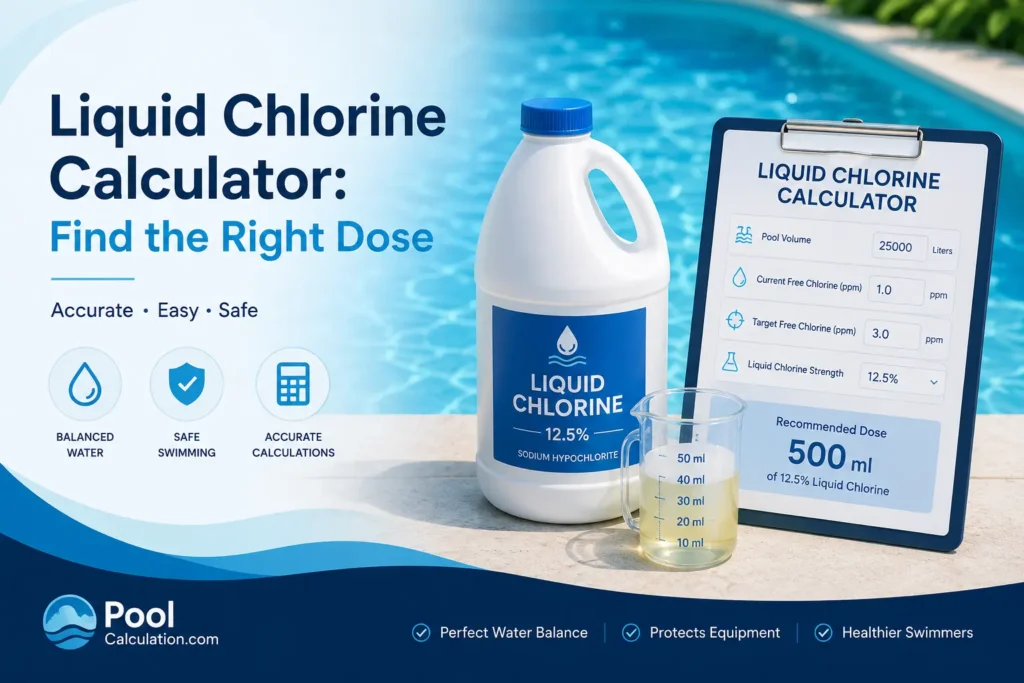
Use this Liquid Chlorine Calculator to work out a dose before topping off a pool that has drifted below its target sanitizer level. Liquid chlorine, sometimes labeled as pool bleach or sodium hypochlorite, is one of the most common ways to maintain daily free chlorine because it dissolves instantly and leaves no residue behind.
The tricky part is strength. Liquid chlorine is sold anywhere from about 6 percent up to 12.5 percent available chlorine, and household bleach is weaker still. A dose sized for a 12.5 percent jug will fall far short if the bottle on hand is actually 8.25 percent, so the calculator asks for the exact percentage printed on the label rather than assuming a standard number.
Use the Calculator Below
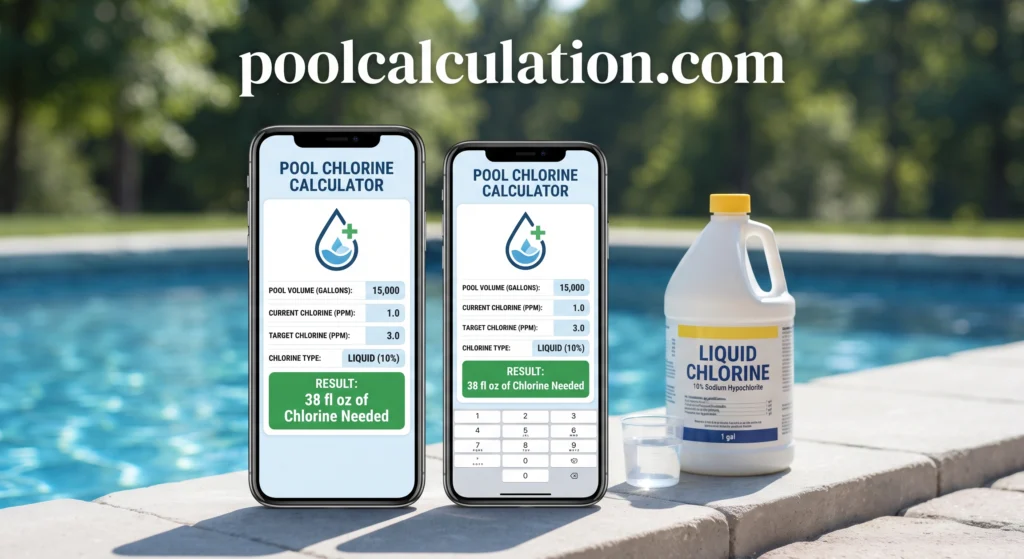
| Enter your pool volume, current free chlorine, target free chlorine, and the exact percentage from your liquid chlorine label to get an estimated dose in fluid ounces or gallons. |
Test free chlorine first with a reliable kit, since dosing from an old or estimated reading is one of the most common reasons a calculated result does not match reality. Confirm pool volume before entering it, especially for irregularly shaped pools.
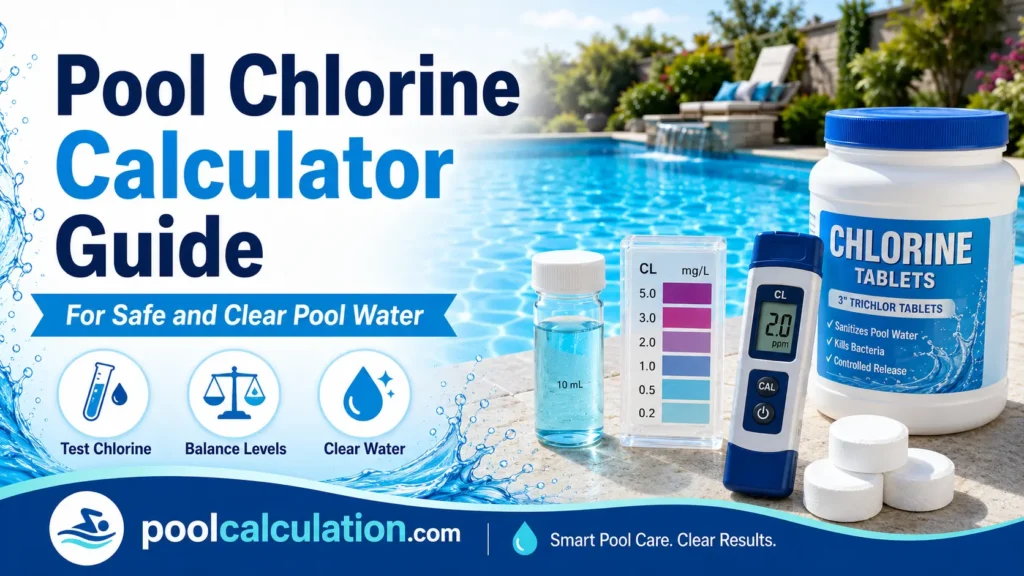
Pool Chlorine Calculator
Calculate how much liquid chlorine, bleach, cal hypo, dichlor, trichlor, or another chlorine product is needed to reach your selected free chlorine level.
Quick Answer
A pool chlorine calculator estimates liquid or granular product from pool volume, current free chlorine, target free chlorine, and the available chlorine percentage on the label. For 10,000 gallons, about 12.8 fluid ounces of 10% liquid chlorine supplies an approximate 1 ppm increase. Test again after full circulation because sunlight and contamination can consume chlorine during treatment.
Introduction
Use this pool chlorine calculator to estimate the amount of liquid chlorine or granular chlorine needed to raise free chlorine from the current reading to a selected target. The calculator should ask for pool volume, current free chlorine, target free chlorine, and product strength.
Free chlorine targets depend on pool type, cyanuric acid use, local rules, and the product label. CDC guidance for home pools describes a typical chlorine range of 1 to 4 ppm and advises following the manufacturer’s instructions. Outdoor residential pools using stabilizer may follow a CYA aware target recommended by the chosen maintenance method.
Use the calculator below with a fresh free chlorine result, not total chlorine. Select the exact product and percentage shown on the container. The result should explain the dose, the unit, the expected ppm increase, and the need to follow label application and swimmer re entry instructions.
How the Formula Behind This Tool Works
The Liquid Chlorine Calculator uses a standard liquid dosing relationship: the required fluid ounces roughly equal pool gallons multiplied by the desired ppm increase, divided by the available chlorine percentage multiplied by a conversion constant. In practice this means doubling the concentration roughly halves the volume needed for the same ppm increase.
Practical Example: Routine Top Off
A 15,000 gallon pool tests at 2 ppm free chlorine, with a target of 4 ppm to stay comfortably within range for the rest of the week. Using 12.5 percent liquid chlorine, the Liquid Chlorine Calculator returns an estimated dose of just under a gallon. The owner pours the product slowly around the perimeter with the pump running, then waits about thirty minutes before retesting.
Because liquid chlorine mixes into pool water almost immediately, results are usually reliable sooner than with slower dissolving granular products, though a full circulation cycle still gives the most accurate reading.
Choosing the Right Concentration
Liquid chlorine is commonly available at around 6, 8.25, 10, and 12.5 percent available chlorine, along with unscented household bleach at roughly 5 to 6 percent. Higher concentrations cost more per gallon but require less product and less storage space for the same sanitizing power, while lower concentrations are gentler to handle but degrade in strength faster once opened.
Always check the percentage on the current jug rather than relying on a past purchase, since manufacturers periodically adjust concentration and bottle size without changing the product name.
Pool supply stores and warehouse retailers often carry different concentrations of the same basic product, so two jugs bought a few months apart may not be interchangeable at the same dose. Reading the label each time takes only a moment and avoids a noticeably under strength or over strength treatment.
Storage and Handling
Liquid chlorine loses strength over time, especially in heat, so store it in a cool, shaded area and use older stock first. Never mix it with acid, other chlorine types, or any other pool chemical in the same container, and always add it to water rather than adding water to it. Keep it away from children and pets, and rinse any spills promptly from skin, clothing, or pool decking.
A dark, ventilated storage spot away from direct sun extends shelf life noticeably compared with a hot shed or an uncovered patio. Buying smaller quantities more often, rather than stockpiling a large jug for months, also helps keep the strength closer to what the label states when it is actually used.
Common Dosing Examples
| Pool Size | FC Increase | Strength | Estimated Dose |
| 10,000 gal | 1 ppm | 10% liquid chlorine | ~13 fl oz |
| 15,000 gal | 2 ppm | 12.5% liquid chlorine | ~31 fl oz |
| 20,000 gal | 3 ppm | 10% liquid chlorine | ~1 gal |
| 25,000 gal | 2 ppm | 8.25% liquid chlorine | ~1 gal |
Common Mistakes to Avoid
A few habits quietly throw off an otherwise accurate calculation.
● Assuming a fixed percentage instead of checking the current label.
● Dosing from a stale or inaccurate free chlorine reading.
● Pouring product into a single spot instead of spreading it around the pool.
● Adding liquid chlorine during peak sun, which accelerates loss.
● Storing opened jugs in a hot garage or direct sunlight.
Related Calculators and Guides
Pair this tool with the Pool Chlorine Calculator for a broader look across product types, the Pool Shock Calculator for larger corrective doses, the Pool Volume Calculator to confirm gallons, and the Pool Chemical Dosage Chart for a full chemical reference table.
Frequently Asked Questions
Is liquid chlorine the same as bleach?
They are chemically similar, but pool grade liquid chlorine is typically stronger than household bleach and free of added scents or thickeners.
How long does liquid chlorine stay effective once opened?
Expect noticeable strength loss within a few weeks, faster in heat, so buy only what you will use in the near term.
Can I use liquid chlorine in a saltwater pool?
Yes, it is a common way to boost chlorine quickly alongside a salt cell’s steady daily output.
Why does my dose seem larger than expected?
Lower percentage products require proportionally more volume for the same ppm increase, so double check the label strength.
Is it safe to swim right after dosing?
Wait until free chlorine settles into a safe range and the product has fully circulated, typically fifteen to thirty minutes for liquid chlorine.
Does liquid chlorine raise stabilizer or calcium levels?
No, unlike cal hypo or dichlor, liquid chlorine does not add calcium hardness or cyanuric acid to the water.
Conclusion
The Liquid Chlorine Calculator turns a guessing game into a repeatable process built on your pool’s real numbers. Confirm the label percentage, test before dosing, add the product evenly, and retest after circulation to see whether the result lines up with the estimate.