Quick Answer
A pool chlorine calculator guide helps estimate how much chlorine your pool needs based on its water volume, current chlorine level, desired chlorine level, and chlorine product strength. It gives you a practical dosage estimate so you can avoid guessing. Always test the water first and follow the product manufacturer’s instructions.
Introduction
Maintaining the correct chlorine level is essential for clean and properly sanitized pool water. However, deciding how much chlorine to add can be difficult because every pool has a different water volume, starting chlorine level, and treatment requirement.
A pool chlorine calculator guide makes chlorine dosing easier by using your pool’s actual measurements to estimate the amount needed. Instead of adding a random amount based only on pool size, you can calculate the increase required to reach your desired chlorine level.
This can be particularly useful when correcting low chlorine, preparing for heavy pool use, or adjusting the water after testing.
What Does a Pool Chlorine Calculator Guide Do?
A pool chlorine calculator guide estimates the amount of chlorine required to increase the free chlorine level in a specific volume of pool water.
The calculation generally uses these inputs:
| Input | Purpose |
| Pool volume | Determines how much water needs treatment |
| Current chlorine level | Shows the starting point |
| Target chlorine level | Determines the required increase |
| Chlorine strength | Determines the amount of product needed |
Accurate inputs are important. A calculation based on an incorrect pool volume or chlorine concentration may result in an unsuitable dosage.
How to Calculate Chlorine for a Pool
Start by determining your pool’s actual water volume. If the volume is inaccurate, the calculated chlorine dose will also be inaccurate.
Next, test the water and record the current free chlorine level. Then determine the target chlorine level appropriate for your pool and the treatment you are performing.
The basic difference can be expressed as:
Chlorine increase needed = Target chlorine − Current chlorine
For example, if your current chlorine level is 1 ppm and your target is 3 ppm, the required increase is 2 ppm.
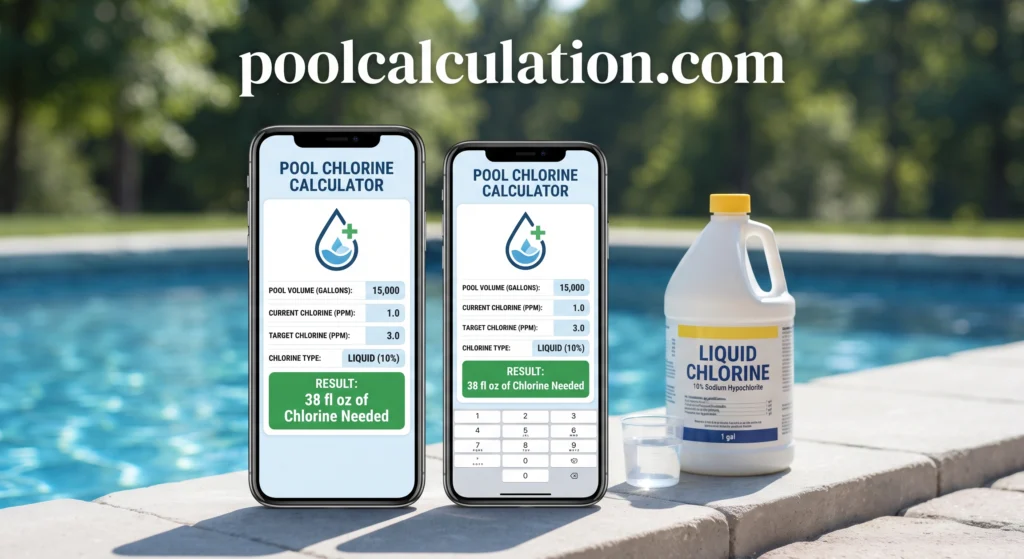
The actual amount of chlorine product required will depend on your pool volume and the strength of the product you are using. Enter the appropriate information into the calculator, review the result, and compare it with the manufacturer’s instructions before adding the product.
Example Inputs
| Pool Information | Example |
| Pool volume | 10,000 gallons |
| Current chlorine | 1 ppm |
| Target chlorine | 3 ppm |
| Required increase | 2 ppm |
This gives you a starting point for determining the treatment amount rather than relying on guesswork.
Why Pool Volume Matters
Pool volume directly affects chlorine dosage. A small pool and a large pool may have the same chlorine reading, but the larger pool contains considerably more water and therefore requires more product to produce the same concentration increase.
If you do not know your pool volume, estimate it using the pool’s length, width, and average depth. For irregular pools, divide the pool into simpler sections and calculate the volume of each section.
The more accurate your volume estimate is, the more useful your calculator result will be.
When Should You Use a Chlorine Calculator?
A calculator can be useful in several common pool-maintenance situations.
When Chlorine Is Low
If testing shows that your chlorine is below the desired level, you can calculate the approximate amount required to make the correction.
After Heavy Pool Use
A high number of swimmers can increase chlorine demand. Test the water after heavy use and determine whether additional treatment is needed.
After Adding Fresh Water
Replacing or adding a significant amount of water can change chemical concentrations. Test again before deciding whether another chlorine adjustment is necessary.
When Treating a Problem Pool
Pools with algae or other water-quality problems may require a stronger treatment. If you’re searching for green pool how much shock is needed, there isn’t one universal dosage. The amount depends on pool volume, current chemistry, product strength, and the product’s directions.
Chlorine and Saltwater Pools
Saltwater pools still use chlorine for sanitation. A salt chlorine generator produces chlorine from dissolved salt, so a saltwater system does not mean the pool is chlorine-free.
Understanding pool chlorine salt systems can therefore help prevent a common maintenance mistake: assuming that adding more salt will automatically fix low chlorine.
If chlorine production is low, the cause could be generator output, circulation, water balance, or another maintenance issue. Test the water before making adjustments and follow the generator manufacturer’s recommended operating range.
Calculator vs. Guessing Chlorine Dosage
Guessing how much chlorine to add can result in inconsistent water chemistry. Using measured information provides a more controlled approach.
Follow these steps:
- Determine the pool volume.
- Test the current free chlorine level.
- Set the appropriate target level.
- Enter the measurements into the calculator.
- Select the correct chlorine product information.
- Measure the recommended amount carefully.
- Allow the water to circulate.
- Retest before making another adjustment.
This process helps you make smaller, more informed corrections instead of repeatedly adding chemicals without knowing the current level.
Common Chlorine Calculation Mistakes
Several simple mistakes can affect the final result:
- Guessing the pool volume
- Skipping the initial water test
- Entering the wrong chlorine product strength
- Confusing free chlorine with another measurement
- Adding another dose before the first one has circulated
- Assuming every pool has the same target level
- Ignoring the manufacturer’s instructions
- Adding salt when the actual problem is low chlorine production
The pool chlorine calculator guide is most useful when the information entered into it is accurate.
How to Use the Calculator Safely
Always test the water before adding chlorine. Check the product label and make sure you are using the correct concentration when calculating the dose.
Never mix chlorine with other pool chemicals or combine different products in the same container. Follow each product’s instructions separately and store chemicals safely.
After adding the calculated amount, allow adequate circulation before testing again. If the chlorine level still needs adjustment, use the new test result to determine the next step rather than automatically repeating the original dose.
Frequently Asked Questions
How accurate is a pool chlorine calculator guide?
It can provide a useful dosage estimate when pool volume, current chlorine, target chlorine, and product strength are entered correctly. Always compare the result with the product label.
Can I use a chlorine calculator for a saltwater pool?
Yes. Saltwater pools still require chlorine. The salt chlorine generator produces chlorine from dissolved salt while operating.
Does pool size affect chlorine dosage?
Yes. Larger pools generally require more chlorine to achieve the same concentration increase because they contain more water.
Should I add chlorine without testing?
Testing first is recommended. Your current chlorine reading helps determine whether additional chlorine is needed and how much adjustment may be appropriate.
Can a calculator tell me how much shock to use?
It can help estimate dosage when the required measurements and product information are available. However, shock products vary in strength, so follow the specific product label.
Conclusion
A pool chlorine calculator guide provides a practical way to estimate chlorine dosage using your pool volume, current chlorine level, target level, and product strength. It helps reduce guesswork and makes routine pool maintenance easier to manage.
For the best results, start with accurate water measurements, enter the correct information into the calculator, follow the chlorine product instructions, and retest after circulation. Accurate testing and measured dosing are key to keeping pool water clean, balanced, and properly maintained.