Quick Answer
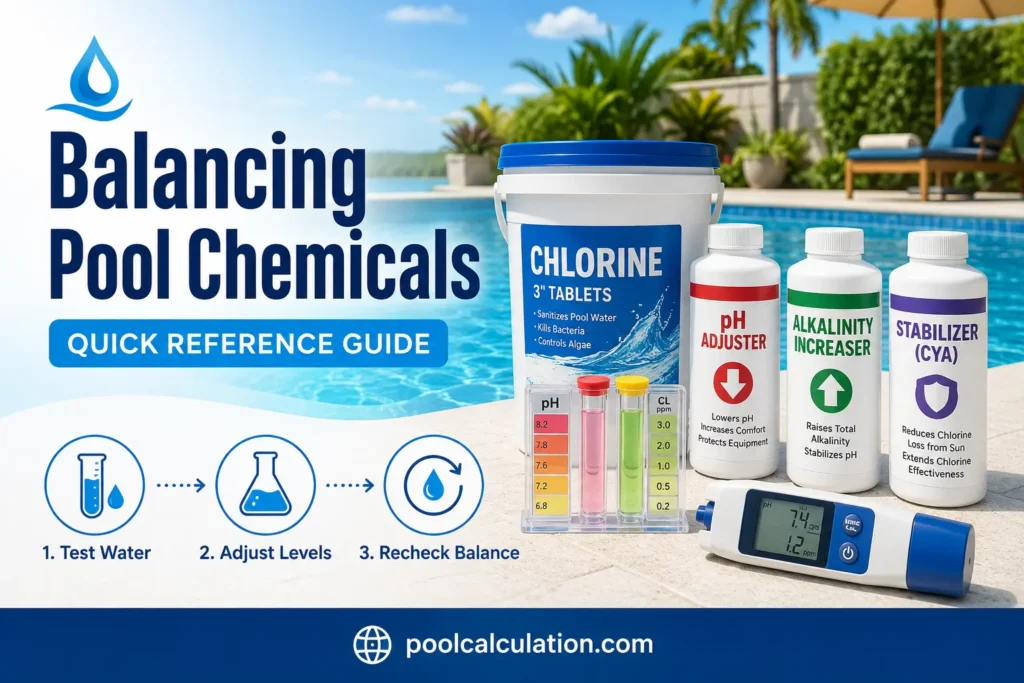
Learning how to balance pool chemicals starts with testing the water before adding anything. Check total alkalinity, pH, sanitizer, calcium hardness, and cyanuric acid when applicable. Correct readings that are outside the recommended range one at a time, allowing the water to circulate before retesting. The exact targets can vary depending on the pool surface, sanitizer system, and product instructions.
Introduction
Keeping pool water balanced is an important part of regular pool maintenance. When pH, alkalinity, chlorine, or other readings move outside their recommended ranges, the water may become difficult to maintain. Knowing how to balance pool chemicals gives pool owners a simple method for identifying problems and correcting them without unnecessary chemical additions.
The process does not mean adding several products at the same time. Instead, test the water first, understand which readings need attention, make the appropriate adjustment, and retest after circulation. This approach makes routine maintenance more predictable and helps prevent one chemical adjustment from creating another problem.
What Does Balanced Pool Water Mean?
Balanced pool water means the major chemical levels are within appropriate operating ranges for the pool and its treatment system. The most important readings commonly include:
- Free chlorine or another sanitizer
- pH
- Total alkalinity
- Calcium hardness
- Cyanuric acid for many outdoor chlorine pools
Each measurement has a different purpose. Chlorine helps control microorganisms, while pH affects swimmer comfort and how effectively chlorine works. Total alkalinity helps resist rapid changes in pH, while calcium hardness is particularly relevant to protecting pool surfaces and equipment.
How to Balance Pool Chemicals Step by Step
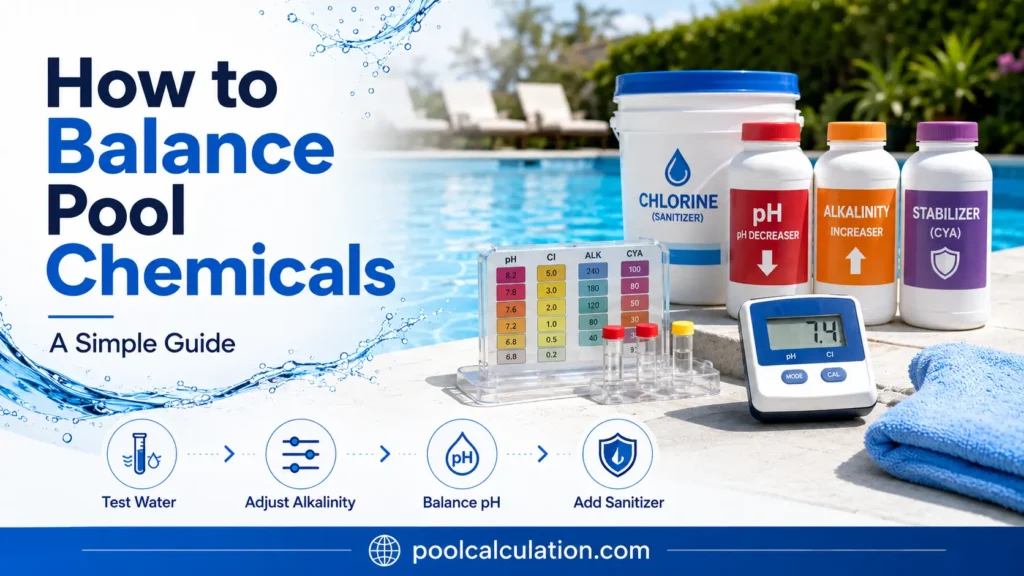
1. Test the Pool Water
The first step in how to balance pool chemicals is always testing. Use a suitable test kit or testing method to measure the important water parameters.
Record the results before adding any product. If a reading seems unusually high or low, consider repeating the test before making a significant adjustment.
Knowing the starting point is important because chemical dosage depends on the current level, desired target, pool volume, and product concentration.
2. Check Total Alkalinity
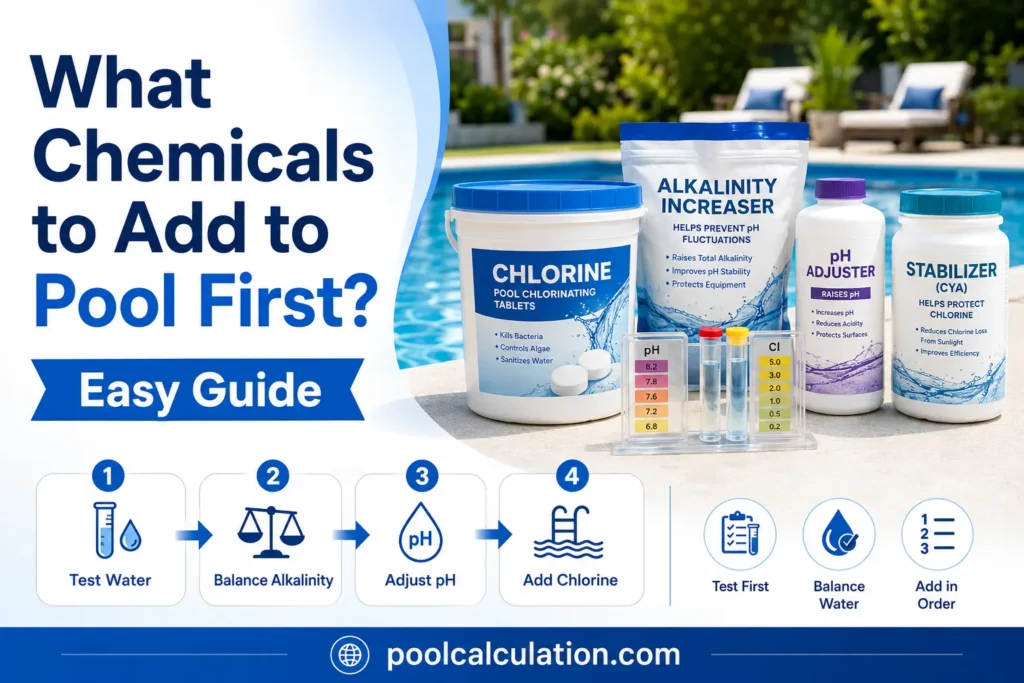
Total alkalinity is commonly considered before making fine pH adjustments because it helps stabilize pH.
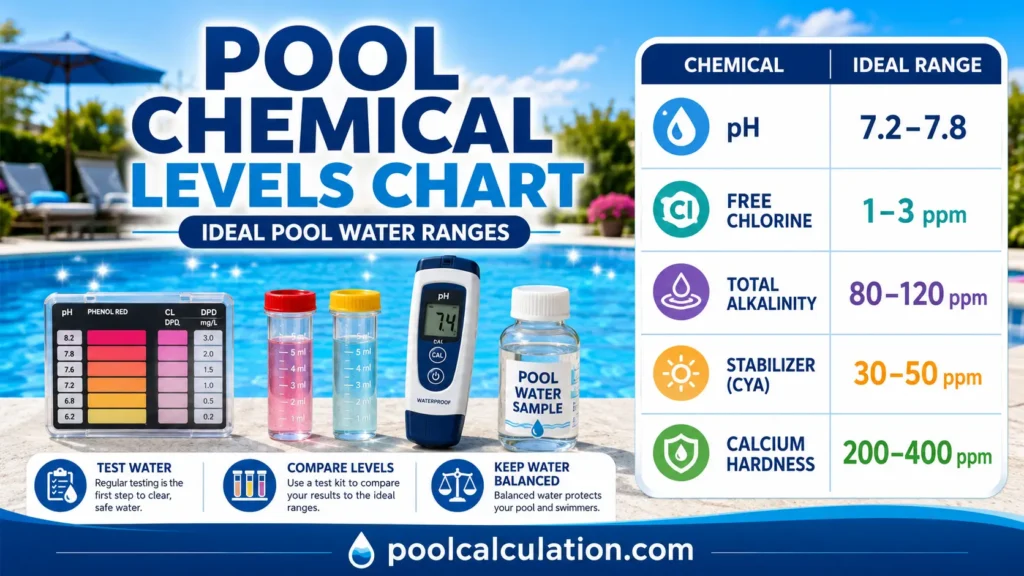
A commonly used residential target is approximately 80–120 ppm, although the appropriate range can vary depending on the pool and treatment system. If alkalinity is outside the recommended range, use the appropriate product according to its label.
Avoid guessing the amount. The required dosage depends on the pool’s water volume and current test result.
3. Adjust the pH
Once alkalinity has been addressed, test the pH again. Many residential pools aim for a pH around 7.2–7.8, but the ideal target can depend on the sanitizer and pool setup.
If the pH is too high, an appropriate pH-lowering product may be required. If it is too low, a suitable pH increaser can be used.
Following the product label is important because different products have different strengths and dosing instructions.
4. Check Chlorine or Sanitizer
After the primary balance readings have been reviewed, check the sanitizer level. For many residential chlorine pools, free chlorine is commonly maintained within a range around 1–3 ppm, although the appropriate level depends on factors such as cyanuric acid and the type of chlorine system.
If chlorine is too low, correct it according to the product instructions. If the sanitizer level is significantly outside the appropriate range, swimmers should stay out of the pool until the water is properly treated and safe according to applicable guidance.
5. Review Calcium Hardness
Calcium hardness does not usually need to be adjusted as frequently as pH or chlorine, but it should still be tested periodically.
The correct range depends on the pool surface and treatment system. Maintaining appropriate calcium hardness can help reduce the risk of water becoming too aggressive toward certain pool surfaces or forming excessive scale.
Do not add calcium products simply because they are part of a standard maintenance routine. Test first and adjust only when needed.
6. Check Cyanuric Acid
For many outdoor chlorine pools, cyanuric acid helps protect chlorine from degradation caused by sunlight. However, adding too much can create its own water-management problems.
If you are learning how to balance pool chemicals, remember that stabilizer should be tested before adding more. The recommended level depends on the pool and sanitizer system, so follow the manufacturer’s guidance.
How to Balance Pool Water Without Overcorrecting
Understanding how to balance pool water is not only about knowing which chemicals to use. It is also about making controlled adjustments.
Avoid adding several large doses at once. Make one appropriate correction, allow the water to circulate according to the product instructions, and test again.
This method helps you determine whether the adjustment worked. It also reduces the chance of accidentally pushing another reading too far in the opposite direction.
Pool Chemicals for Beginners: Common Mistakes to Avoid
For people learning pool chemicals for beginners, a few simple rules can make maintenance easier:
- Do not add chemicals without testing the water.
- Know your pool’s approximate water volume.
- Follow the product label for dosage and application.
- Do not assume every pool has the same chemical requirements.
- Retest after allowing sufficient circulation.
- Avoid making several major chemical adjustments simultaneously.
- Never mix pool chemicals together.
- Store chemicals according to their product labels.
Pool chemicals should always be handled carefully. In particular, never mix chlorine products with acids or other incompatible chemicals.
How to Fix Pool Chemical Levels
If your test results are outside the recommended ranges, how to fix pool chemical levels depends on which measurement is affected.
For example, low alkalinity requires a different treatment from high pH, while low chlorine requires a sanitizer adjustment rather than a pH product. Start by identifying the specific problem instead of adding chemicals based on guesswork.
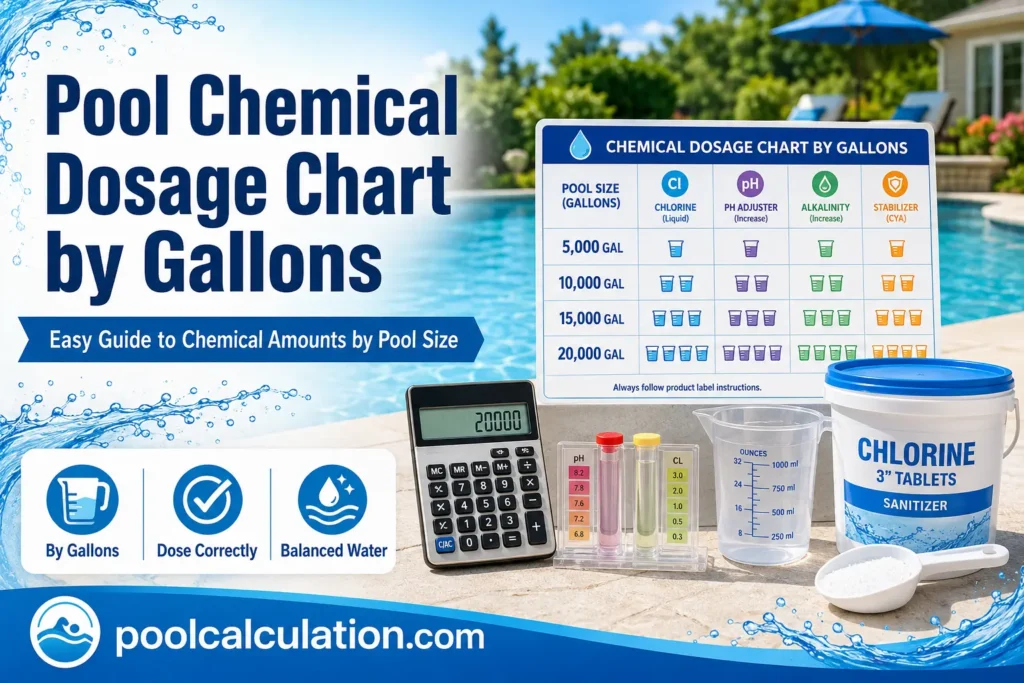
Pool volume also matters. A chemical dose suitable for a small pool may be inappropriate for a larger one. Always use the product’s instructions and your actual test results when calculating an adjustment.
Pool Water Chemistry for Beginners
Understanding pool water chemistry for beginners becomes easier when you think of each measurement as part of one system.
Alkalinity helps stabilize pH. pH influences water balance and chlorine effectiveness. Chlorine provides sanitation, while cyanuric acid can protect outdoor chlorine from sunlight. Calcium hardness is important for maintaining appropriate water conditions for many pool surfaces.
Because these factors interact, correcting them in a controlled sequence is generally easier than trying to change everything at once.
How Often Should Pool Chemicals Be Tested?
Testing frequency depends on pool usage, weather, sanitizer system, and other conditions. During periods of heavy swimming or hot weather, water chemistry may change more quickly.
A regular testing routine helps you identify changes before they become larger problems. Test after unusual events such as heavy rain or significant increases in pool use when appropriate.
Keep a record of your readings if possible. Tracking results can help you recognize recurring patterns and understand how your pool responds to chemical adjustments.
Frequently Asked Questions
What should I test first when balancing a pool?
Start with a complete water test. Check the key readings before deciding which chemical, if any, needs adjustment.
Can I add multiple pool chemicals together?
Avoid making multiple major chemical additions at the same time. Follow individual product instructions and allow appropriate circulation before retesting.
Should I adjust alkalinity or pH first?
In routine balancing, total alkalinity is commonly addressed before fine-tuning pH because alkalinity helps stabilize pH. However, the appropriate priority can depend on the actual test results and pool system.
How long should I wait after adding pool chemicals?
The required circulation and waiting time varies by chemical and product. Follow the manufacturer’s instructions and retest when directed rather than relying on one universal waiting period.
Can I swim immediately after balancing the water?
Not necessarily. Check the product instructions and verify that the water parameters, particularly sanitizer levels, are within the appropriate operating range before swimming.
Conclusion
Learning how to balance pool chemicals becomes much easier when you follow a consistent testing-and-adjustment process. Start by testing the water, review alkalinity and pH, check sanitizer levels, and monitor calcium hardness and cyanuric acid when applicable. Make adjustments carefully rather than adding multiple products at once, allow proper circulation, and retest before making additional changes. With regular testing and careful dosing, maintaining balanced pool water can become a straightforward part of routine pool care.