Quick Answer
A pool closing cost guide helps you estimate the expenses involved in preparing a swimming pool for the off season. Typical costs can include chemicals, cleaning supplies, winterizing equipment, a pool cover, water testing, and professional closing services. The final amount depends on pool size, climate, equipment, cover type, and whether you close the pool yourself or hire a professional. In this article, we will cover all about pool closing cost guide.
What Does It Cost to Close a Pool?
Pool closing cost guide involves more than simply putting on a cover. The water normally needs to be cleaned and balanced, equipment prepared, plumbing protected where necessary, and the pool covered securely.
The total expense can vary significantly between homeowners. A small above ground pool with a reusable cover may require fewer supplies, while a large in ground pool with complex plumbing can require more preparation.
A pool closing cost guide is most useful when expenses are divided into individual categories rather than treated as one fixed price.
| Expense | DIY Cost Type | Professional Option |
| Water testing | Low | Usually included |
| Closing chemicals | Recurring seasonal | Usually included |
| Cleaning | Your time | Labor charge |
| Plumbing preparation | Equipment dependent | Labor and service |
| Pool cover | One time or replacement | May be supplied |
| Equipment preparation | Variable | Often included |
| Winter accessories | Occasional | May be included |
Actual prices vary by location, pool type, equipment, and service provider.
Main Pool closing cost guide, All Expenses
Closing Chemicals
Chemicals are an important part of seasonal pool preparation. The water should be tested before adding anything.
Depending on the pool and its chemistry, you may need sanitizer, pH adjustment products, alkalinity products, or other treatments.
Do not automatically add every winterizing chemical. Test first and follow the product label for dosage and application.
Pool Cleaning
The pool should be cleaned before closing. Leaves, dirt, algae, and other debris can create problems when left in the water throughout the off season.
Cleaning may include:
- Skimming the surface
- Brushing pool walls
- Vacuuming the floor
- Emptying baskets
- Cleaning the surrounding area
DIY cleaning mainly costs time, while professional cleaning adds labor to your seasonal budget.
Winterizing the Pool
Knowing how to winterize a pool is important if you plan to handle the closing yourself.
The process generally involves cleaning the pool, testing and balancing the water, lowering the water level when appropriate for your pool and cover system, preparing equipment, protecting plumbing where necessary, and installing the cover.
The exact process depends on your pool design and local winter conditions.
Pools exposed to freezing temperatures may require special attention to plumbing, pumps, filters, heaters, and other equipment.
Pool Cover Costs
The pool cover is one of the most important seasonal expenses.
Different pools require different cover systems, and prices can vary according to material, size, design, and durability.
| Cover Type | General Cost Level | Key Consideration |
| Basic winter cover | Lower | Affordable seasonal protection |
| Heavy duty cover | Moderate | Greater durability |
| Safety cover | Higher | Designed for added security |
| Replacement cover | Variable | Depends on pool dimensions |
If you already own a suitable cover, you may only need to inspect it before installation. A damaged or incorrectly sized cover may need to be replaced.
Equipment Preparation
Equipment preparation is another important part of a pool closing cost guide.
Depending on your system, you may need to prepare:
- Pump
- Filter
- Heater
- Salt chlorine generator
- Automatic cleaner
- Plumbing lines
- Valves and fittings
Follow the manufacturer’s instructions for winter preparation. Some equipment may need to be drained, disconnected, protected, or stored depending on the system and local temperatures.
DIY vs Professional Pool Closing
One of the biggest differences in seasonal expenses is whether you perform the work yourself.
DIY Closing
DIY closing can reduce labor costs. However, you need the time, tools, knowledge, and supplies required to complete each step correctly.
You may still need to purchase chemicals, testing supplies, plugs, cover accessories, or other winterizing materials.
Professional Closing
Professional service is more convenient and may be useful for large or complex pools.
A service package may include water testing, chemical treatment, cleaning, equipment preparation, plumbing protection, and cover installation.
Before accepting a quote, ask exactly which services and materials are included.
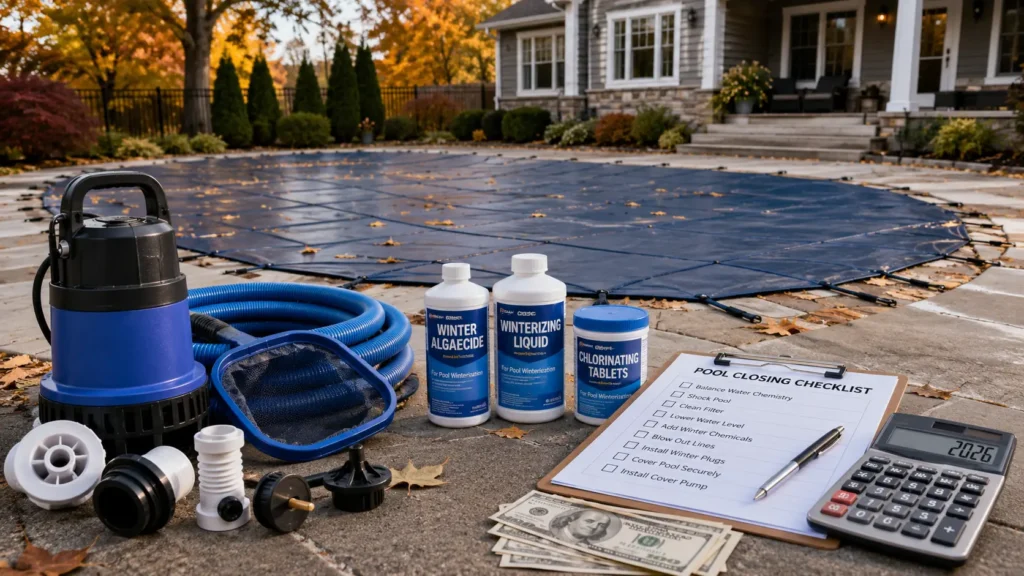
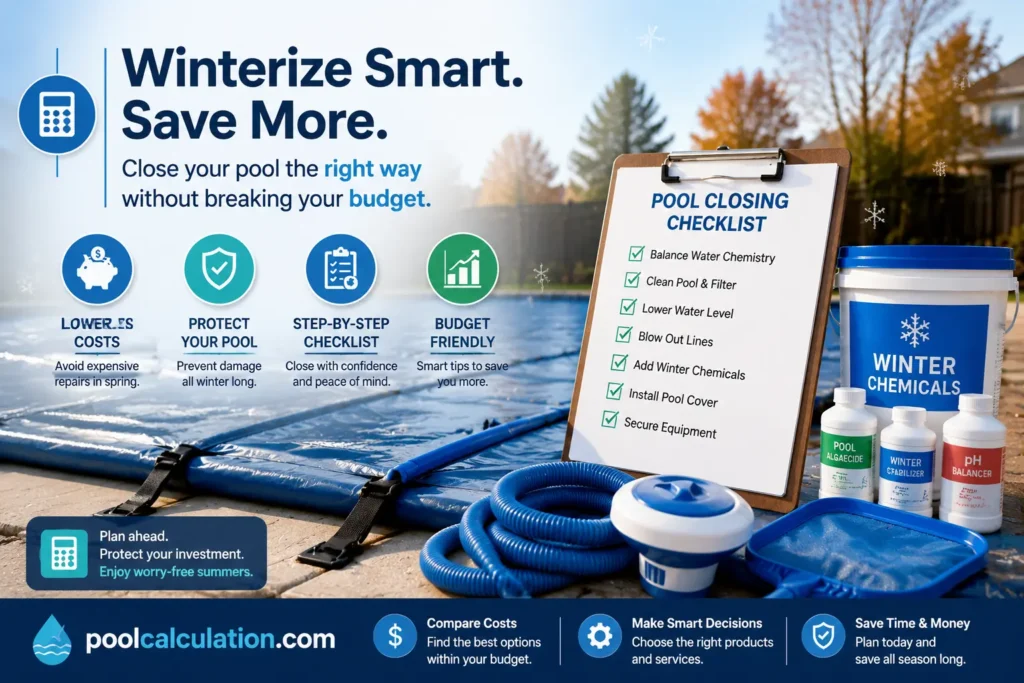
Pool Closing Checklist
Use this pool closing checklist to organize your seasonal preparation:
- Remove leaves and debris
- Brush and vacuum the pool
- Test water chemistry
- Adjust chemistry when required
- Clean baskets
- Prepare the filter
- Prepare the pump
- Protect plumbing if necessary
- Prepare the heater
- Clean and inspect the pool cover
- Install the cover securely
- Store removable accessories
Not every pool requires every step. Always follow the instructions for your specific equipment and cover.
Factors That Change Closing Costs
A pool closing cost guide should account for the factors that can increase or decrease your final expense.
Pool Size
Larger pools may require more chemicals, cleaning time, and larger covers.
Pool Type
Above ground and in ground pools have different equipment and winterization requirements.
Climate
Pools in areas with freezing temperatures generally require more extensive winter preparation than pools in mild climates.
Equipment
Complex plumbing, heaters, saltwater systems, and other equipment can increase preparation requirements.
Professional Labor
Hiring a professional increases the upfront closing expense but can save time and reduce the risk of incorrectly preparing equipment.
How to Reduce Pool Closing Costs
Showing you all about pool closing cost guide, You can often reduce seasonal expenses with proper planning.
Buy Reusable Equipment
A durable cover and reusable winterizing accessories can reduce replacement costs over multiple seasons.
Close the Pool on Time
Waiting until the water becomes heavily contaminated can make cleaning and chemical treatment more difficult.
Maintain Equipment
Proper maintenance throughout the swimming season can reduce the likelihood of expensive repairs during closing.
Do Simple Tasks Yourself
Even if you hire a professional for equipment preparation, you may be able to handle basic cleaning and debris removal yourself.
Common Pool Closing Mistakes
Avoid these common problems:
- Closing a dirty pool
- Ignoring water chemistry
- Using incorrect chemical dosages
- Installing a damaged cover
- Forgetting equipment preparation
- Leaving plumbing exposed to freezing conditions
- Failing to inspect the cover
- Choosing a service without checking what is included
Correct preparation can help reduce problems when the pool is reopened.
Frequently Asked Questions
Is closing a pool expensive?
The cost depends on pool size, equipment, climate, chemicals, cover requirements, and whether the work is DIY or professional.
Can I close my pool myself?
Yes, it is already defined in pool closing cost guide, many homeowners handle basic seasonal preparation themselves. However, complex equipment or freezing conditions may require additional knowledge and precautions.
Do I need chemicals when closing my pool?
You should test the water first. Any chemical treatment should be based on the actual water chemistry and the product manufacturer’s instructions.
Does every pool need to be drained for winter?
No. Draining requirements depend on the pool type, construction, cover system, climate, and manufacturer’s recommendations. Improper draining can cause serious damage.
Should I replace my pool cover before winter?
Replace it if it is damaged, no longer fits correctly, or cannot provide the protection required for your pool.
Conclusion
A pool closing cost guide helps you plan the seasonal expenses involved in preparing your pool for winter. Chemicals, cleaning, equipment preparation, cover costs, and professional labor can all contribute to the final budget.
Covering all about pool closing cost guide, The most effective approach is to test and clean the pool before closing, prepare equipment according to manufacturer instructions, use an appropriate cover, and plan ahead for seasonal supplies. Whether you choose DIY preparation or professional service, understanding each expense category makes pool closing easier to budget for.