| Quick Answer When the salt level in pool water is below the generator range, confirm it with an independent test, check for recent water loss, calculate the required dose, and add salt in stages. Do not add salt only because free chlorine is low. |
Introduction
Salt Level In Pool: this article gives a practical overview before the detailed steps, examples, and safety guidance below.
Confirm That Salt Is Actually Low
A low salt warning can be caused by true dilution, but it can also come from cold water, scale on the cell, calibration, low flow, or an aging sensor. Compare the control panel with a separate salinity test before buying bags.
Take the sample away from return jets and use the test instructions carefully. If two methods disagree by a large amount, inspect the cell and review the manual.
Common Causes of a Low Salt Level in Pool Water
- Backwashing or cleaning a filter with water sent to waste.
- Rain overflow or pumping water out after a storm.
- Splash out from frequent swimming.
- A leak followed by automatic refill.
- Partial draining for repairs or high stabilizer.
- Starting with fresh water after opening or resurfacing.
Understanding Pool Salt ppm
Pool salinity in ppm shows how much dissolved salt is present relative to water. A change from 3200 ppm to 2700 ppm is a loss of 500 ppm. The amount of product required for that correction depends on pool volume. Some owners search salt ppm pool when comparing the reading with the generator range. Salt Level In Pool: start with current measurements and reliable test results.
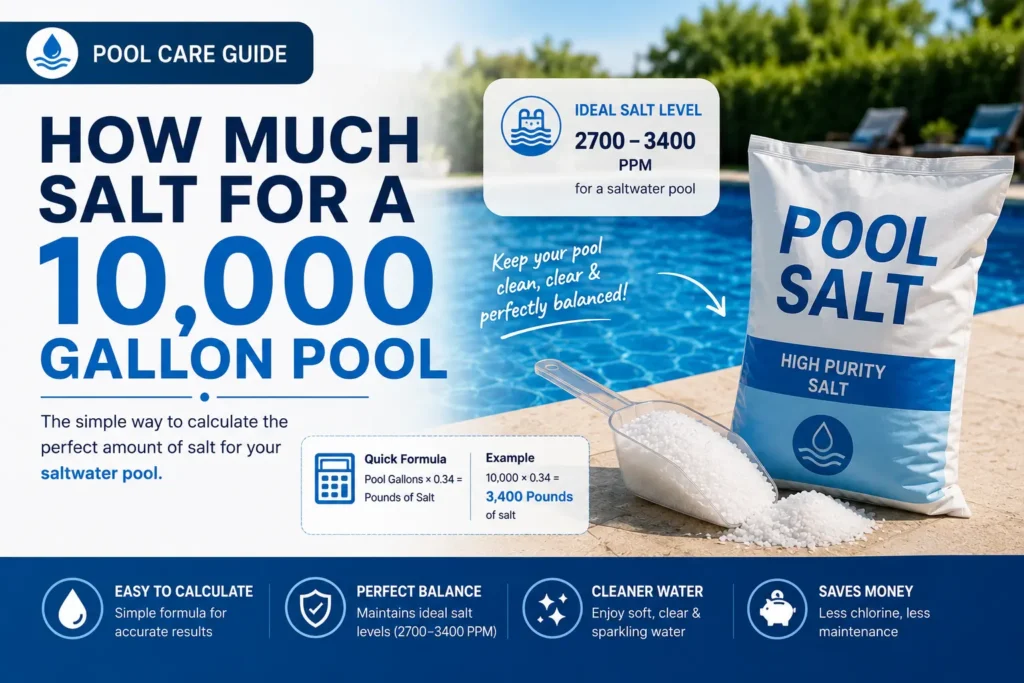
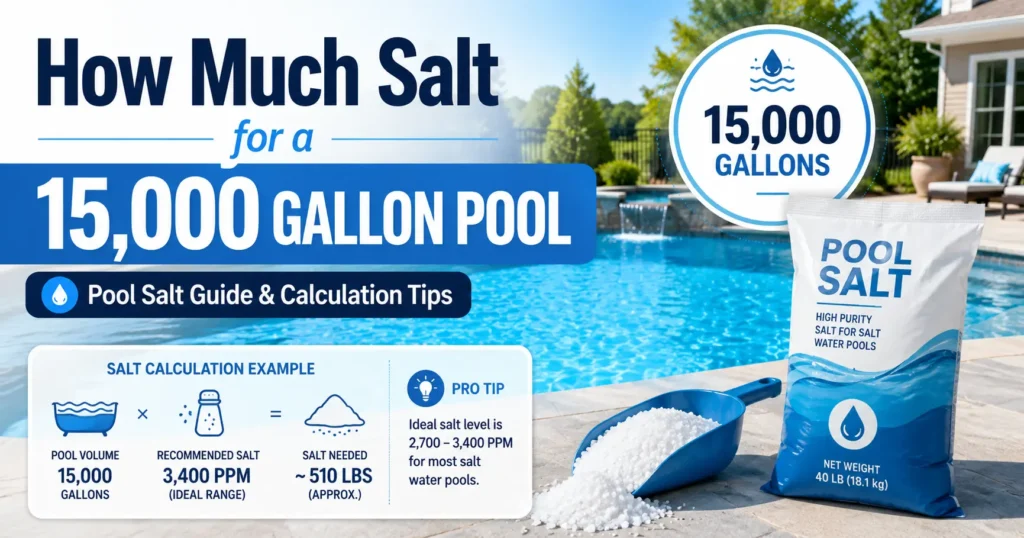
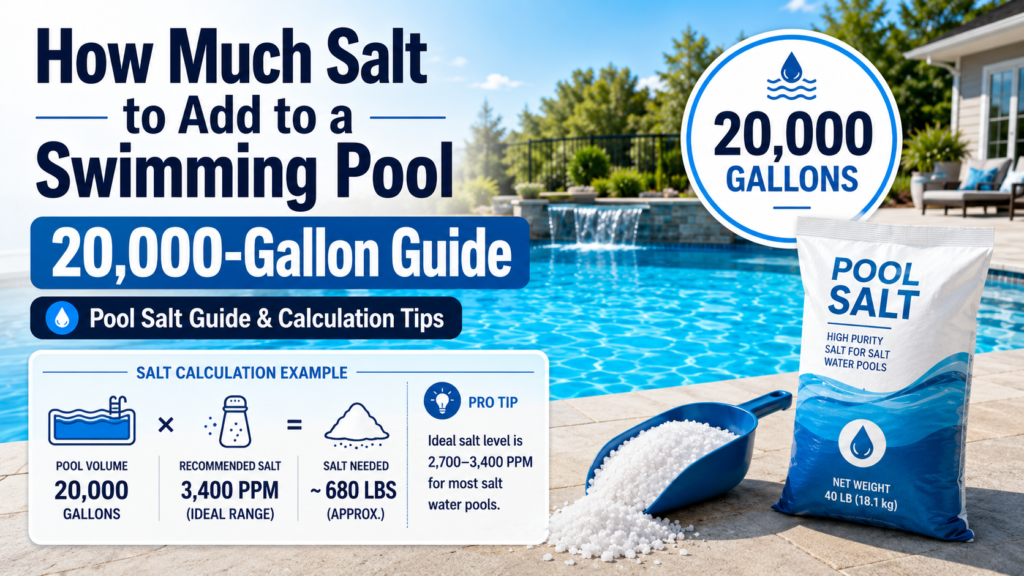
In 10000 gallons, a 500 ppm increase needs about 41.7 pounds. In 20000 gallons, the same ppm increase needs about 83.4 pounds.
Use the Pool Salt Calculator
Enter the pool volume, the confirmed current reading, and the target from the salt system manual. The calculator converts the saltwater pool salt level difference into pounds and bags.
Choose a target near the middle of the operating range rather than the highest allowed value. This creates a cushion without increasing corrosion exposure unnecessarily.
How to Correct Low Salt
- Verify salinity with an independent test.
- Inspect the equipment for flow warnings or visible cell scale.
- Confirm the pool volume and equipment target.
- Calculate the required amount.
- Add most of the salt across the pool as directed by the label.
- Brush the floor and circulate until dissolved.
- Retest before adding the final portion.
- Check free chlorine separately and adjust cell output or run time if needed.
When Low Salt Is Not the Real Cause of Low Chlorine
A salt system can show normal salinity while free chlorine remains low. Causes include heavy swimmer load, algae, low stabilizer, strong sunlight, short pump run time, a low output setting, poor circulation, cold water, or a worn cell. Salt Level In Pool: make changes gradually and verify the outcome.
Do not keep raising salt when the reading is already in range. Use the Pool Chlorine Calculator for a controlled supplemental dose and investigate the reason the cell is not meeting demand.
Low Salt Troubleshooting Table
| Observation | Possible Cause | Next Check |
| Low display and low independent test | True dilution | Calculate and add salt |
| Low display and normal independent test | Temperature, scale, sensor, or cell age | Inspect and follow manual |
| Normal salt and low chlorine | Demand, output, run time, CYA, algae | Test full chemistry |
| Salt drops repeatedly | Leak or water replacement | Check water level and refill pattern |
| Salt normal after addition but warning remains | Cell or control issue | Allow mixing, clean only if required, seek service |
Prevention
Record pool salinity in ppm after major water events and track how much water is replaced. Fix leaks promptly. Avoid keeping the target near the minimum during a rainy season if the manual allows a comfortable middle range.
Check for a Leak When Salt Keeps Falling
Salt should not fall quickly in a pool that is not losing water. A repeated decline can point to a hidden leak, frequent automatic refill, a leaking backwash valve, or water being discharged from a feature. Mark the water level, review the refill schedule, and inspect the equipment area before treating another low reading.
When a leak is repaired, allow the new water to circulate and take a fresh test. The amount of salt needed after the repair depends on how much water was replaced, not on the number of bags used during the previous correction. Salt Level In Pool: repeat the check whenever conditions change.
Frequently Asked Questions
How low is too low for a saltwater pool?
A reading below the installed generator's minimum operating level is too low for normal production.
Can I run the salt cell with low salt?
Follow the manual. Some systems reduce output or shut down to protect the cell.
How quickly does salt dissolve?
It depends on product, temperature, circulation, and brushing. Follow the label and wait for full mixing before testing.
Why did rain lower the reading?
Rain lowers salt mainly when diluted water overflows or is pumped out.
Can low salt make the pool green?
Low salt can reduce chlorine production, which can allow algae when free chlorine becomes inadequate.
Should I add a bag every month?
No. Add salt only when testing shows it is needed.
Conclusion
A low salt level in pool water should be confirmed before treatment. Find the cause, use the Pool Salt Calculator, add the correction in stages, and test free chlorine separately. This prevents unnecessary salt additions and helps identify equipment or water balance problems.