Quick Answer
Learning how to winterize a pool involves cleaning the water, balancing pool chemistry, protecting the plumbing and equipment, and installing a secure winter cover. The exact process depends on your pool type and local climate. Pools exposed to freezing temperatures need extra protection because water left inside pipes or equipment can freeze and cause expensive damage. I will cover all about How to Winterize a Pool in this article.
Why Should You Winterize Your Pool?
How to Winterize a Pool can properly helps protect it during the months when it will not be used regularly.
Cold temperatures can create several problems. Water inside plumbing can freeze and expand, potentially damaging pipes, pumps, filters, and heaters. Unbalanced or dirty water can also develop algae and stains while the pool is covered.
Knowing how to winterize a pool can help you:
- Protect pool plumbing
- Reduce algae growth
- Protect pumps and filters
- Keep debris out of the water
- Reduce potential repair costs
- Make spring opening easier
When Should You Winterize a Pool?
Knowing about How to Winterize a Pool, The ideal timing depends on your local weather.
If your area experiences regular freezing temperatures, begin preparing the pool before prolonged cold weather arrives. Waiting until temperatures are already below freezing can increase the risk of equipment and plumbing damage.
In warmer climates, complete winterization may not be necessary. You may be able to continue basic circulation, cleaning, and water testing throughout the colder season.
Check your local forecast and prepare the pool before the first extended freeze.
How to Winterize a Pool Step by Step
1. Clean the Pool Thoroughly
Start by removing leaves, insects, dirt, and other debris from the water.
Use a pool net to remove floating debris, then brush the walls and floor. Vacuum the pool thoroughly to remove material that could contribute to algae growth during winter.
Clean the skimmer and pump baskets as well.
Starting with clean water makes the winter maintenance process easier.
2. Test the Water
Before adding winterizing chemicals, test the major water chemistry levels.
Check:
- pH
- Total alkalinity
- Calcium hardness
- Chlorine or sanitizer level
Testing gives you a clear idea of what needs adjustment. Avoid adding chemicals based only on guesswork.
Balanced water can help protect the pool surface and equipment while the pool remains closed.
3. Balance the Pool Chemistry
Adjust the water chemistry according to your test results.
Proper pH and alkalinity levels can help reduce the risk of scaling, staining, and corrosion. The sanitizer level should also be appropriate before the pool is covered.
Allow the chemicals to circulate properly according to product instructions.
4. Shock the Pool if Necessary
A final shock treatment may help reduce contaminants before the pool is closed.
Choose an appropriate product for your pool and follow the manufacturer’s dosage instructions. Allow sufficient circulation time before shutting down the system.
Do not assume that using more chemical provides better protection. Always follow the product label.
5. Clean the Filtration System
Clean your pool filter before shutting down the system.
The process differs depending on whether you have a cartridge, sand, or DE filter. Remove dirt and buildup and follow the manufacturer’s instructions.
A clean filtration system gives you a better starting point when you reopen the pool.
6. Lower the Water Level if Required
The appropriate water level depends on your pool and winter cover.
Some pools require the water to be lowered below the skimmer, while others should maintain a higher water level.
Do not completely drain an in ground pool unless a qualified professional specifically recommends doing so. Groundwater pressure can cause structural problems in some pools.
7. Protect the Plumbing
This is one of the most important steps when learning how to winterize a pool in a freezing climate.
Water trapped inside plumbing can freeze and expand. Depending on your pool system, winterization may involve blowing water from the plumbing lines and protecting vulnerable connections.
The exact process varies between pool systems. If you are not comfortable working with pool plumbing, professional winterization can help reduce the risk of damage.
8. Prepare the Pump and Equipment
Inspect the pump, filter, heater, chlorinator, and other equipment.
Remove water from components that require freeze protection and follow the manufacturer’s instructions for winter shutdown.
Look for visible cracks, leaks, damaged connections, or other issues before closing the system. Fixing these problems before winter can be easier than dealing with them in spring.
Winterization Checklist
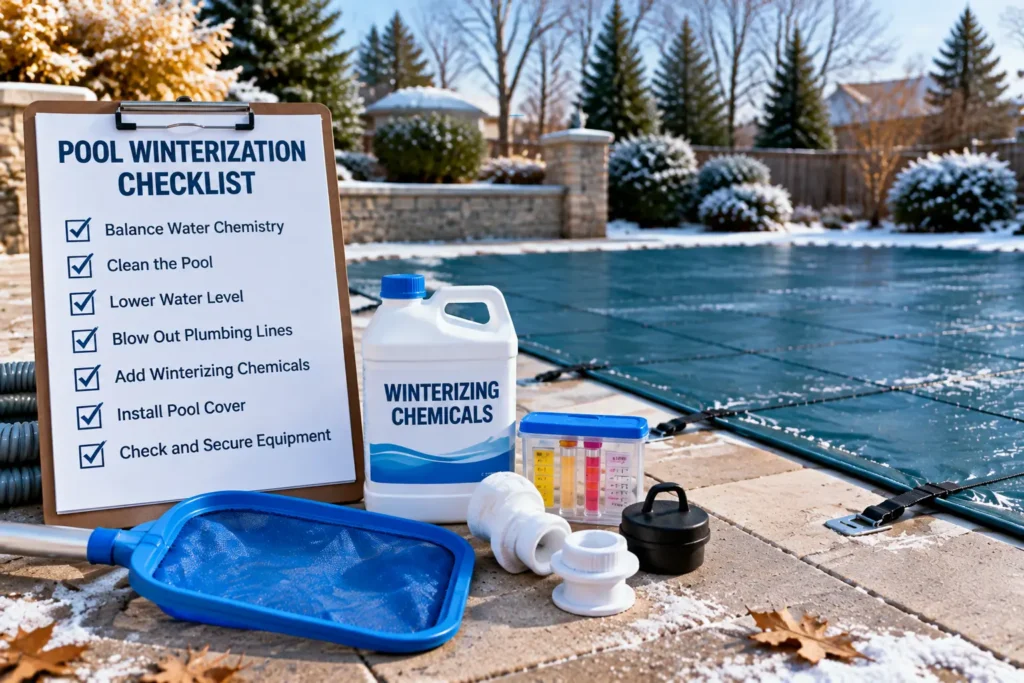
A pool closing checklist can help you to make sure How to Winterize a Pool and every important task has been completed.
| Task | Completed |
| Remove leaves and debris | ✓ |
| Brush pool walls and floor | ✓ |
| Vacuum the pool | ✓ |
| Clean baskets | ✓ |
| Test water chemistry | ✓ |
| Balance pH and alkalinity | ✓ |
| Adjust sanitizer | ✓ |
| Shock if necessary | ✓ |
| Clean the filter | ✓ |
| Prepare water level | ✓ |
| Protect plumbing | ✓ |
| Prepare equipment | ✓ |
| Install winter cover | ✓ |
| Secure the cover | ✓ |
Keep the list nearby while completing the closing process so you do not overlook an important step.
How to Protect Your Pool Cover
A properly installed cover is essential for protecting the pool from leaves, dirt, rain, and other debris.
Before installing the cover, inspect it for visible damage. Make sure anchors, straps, springs, or other attachment components are in good condition.
The cover should be properly secured according to the manufacturer’s instructions.
Do not allow people or pets to walk on a pool cover unless it is specifically designed and rated for that purpose.
What to Do With Pool Equipment
Pool equipment needs special attention in areas where temperatures fall below freezing.
Depending on the system, you may need to:
- Turn off the circulation system
- Drain appropriate equipment
- Protect exposed plumbing
- Prepare the filter
- Winterize the heater
- Remove or protect certain accessories
Always follow the instructions provided for your specific equipment.
Incorrect winterization can cause more problems than leaving the system alone, so seek professional help if you are unsure about a complicated setup.
Common Winterization Mistakes
Closing the Pool Too Early
Closing while temperatures are still warm can leave the pool exposed to algae growth and require additional maintenance.
Skipping Water Testing
Adding chemicals without testing can result in poor water balance.
Leaving Water in Vulnerable Plumbing
Freezing water can expand and damage pipes and equipment.
Using Too Many Chemicals
More chemicals do not necessarily provide better protection. Use the recommended product and dosage.
Forgetting the Cover
An improperly secured cover can allow debris into the pool and may become damaged during severe weather.
Ignoring the Pool All Winter
Even a closed pool should be inspected periodically. Check the cover, water level, and surrounding area for visible problems.
Winter Pool Maintenance After Closing
Following a winter pool maintenance guide can help you keep track of the pool after the main winterization process is complete.
Periodically inspect the cover for accumulated leaves, standing water, damage, or loose attachments. If your pool remains operational during winter, continue testing the water and checking the equipment as required.
Your maintenance routine should reflect the climate and whether the pool has been completely closed or remains in use.
Preparing for Spring
Proper winterization makes spring opening easier.
When warmer weather returns, remove the cover carefully and inspect the pool. Clean the water, restart the equipment according to manufacturer instructions, and test the chemistry.
Check the pump, filter, heater, and plumbing for signs of damage before returning the pool to normal operation.
A clean and properly winterized pool generally requires less corrective work when the swimming season begins.
Final Thoughts
Understanding how to winterize a pool can help protect your pool, equipment, and plumbing during cold weather. The process includes cleaning the pool, testing and balancing the water, preparing the filtration system, protecting plumbing, and securing the winter cover.
Covering all about How to Winterize a Pool, The exact steps depend on your pool type, equipment, and climate. Prepare before freezing temperatures arrive, follow manufacturer instructions, and inspect the pool periodically throughout the winter.
With proper preparation, you can reduce the risk of winter damage and make the next pool opening much easier.