Quick Answer
A winter pool maintenance guide helps you prepare and protect your pool during the colder months. Proper winter care includes balancing the water, cleaning the pool, lowering the water level when necessary, protecting equipment, and using a quality pool cover. The right winterization method depends on your climate, pool type, and whether you plan to use the pool during winter. In this article, we will cover all about Winter Pool Maintenance Guide.
Why Winter Pool Maintenance Matters
Cold weather can create several problems for an unprepared pool. Freezing temperatures may damage pipes, pumps, filters, and other equipment. Leaves and debris can also accumulate in the water, while poor chemical balance can encourage algae growth.
Following a winter pool maintenance guide gives you a clear routine for preparing your pool before temperatures drop.
Proper preparation can help:
- Protect plumbing and pool equipment
- Reduce algae growth
- Keep debris under control
- Maintain better water quality
- Make spring pool opening easier
- Reduce unexpected repair costs
When Should You Winterize Your Pool?
Knowing about Winter Pool Maintenance Guide, The best time to winterize depends on your local climate.
In areas where temperatures regularly fall below freezing, pool owners should prepare before prolonged freezing conditions begin. Waiting until a major freeze arrives can leave water inside plumbing lines and equipment vulnerable to damage.
In milder climates, you may not need to completely close the pool. Instead, you can continue reduced winter maintenance while monitoring water chemistry and equipment.
Knowing about Winter Pool Maintenance Guide, the key is to prepare based on actual weather conditions rather than a specific calendar date.
Steps for Winter Pool Maintenance
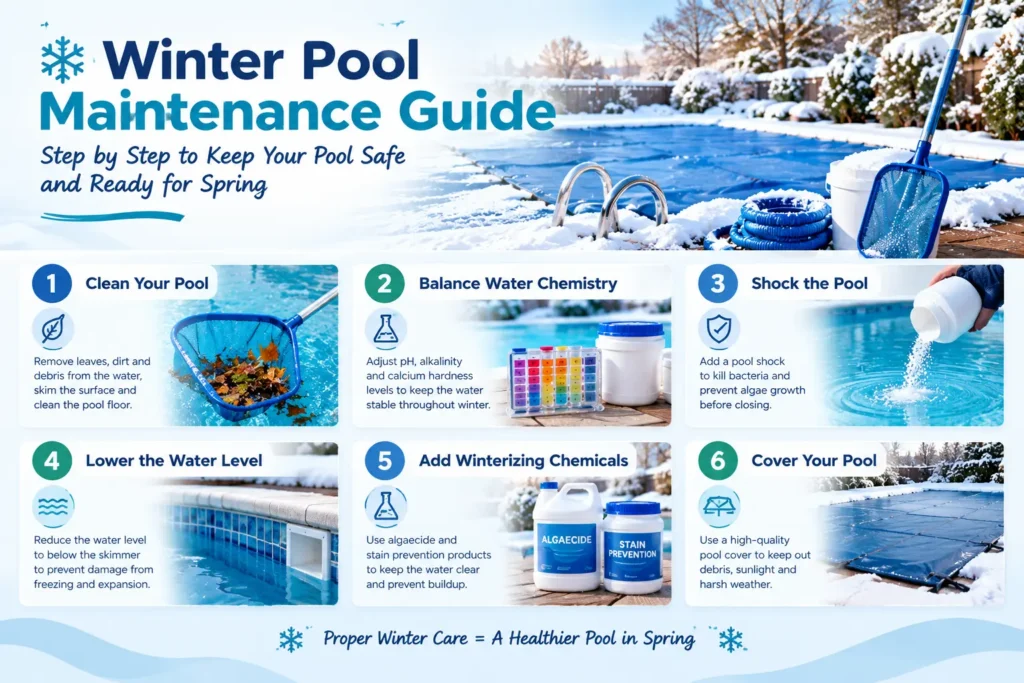
These are the steps regarding Winter Pool Maintenance Guide:
1. Clean the Pool Thoroughly
Start by removing leaves, dirt, insects, and other debris from the water. Brush the walls and floor, then vacuum the pool.
A clean pool is easier to maintain during the winter and reduces the amount of organic material available to support algae growth.
Also clean the skimmer baskets and inspect the pool area for loose debris that could enter the water later.
2. Test and Balance the Water
Before closing the pool, test the major water chemistry parameters.
Pay attention to:
- pH
- Total alkalinity
- Calcium hardness
- Sanitizer level
Balanced water helps protect the pool surface and equipment during the period when regular maintenance is reduced.
Avoid adding chemicals without testing first. Your water readings should determine which adjustments are actually needed.
3. Shock the Pool When Appropriate
Many pool owners use a shock treatment before closing to help reduce contaminants and control organic growth.
Follow the product label for the correct dosage based on your pool volume. Allow the sanitizer level to return to an appropriate range before covering the pool, according to the product instructions.
The goal is to start the winter with clean and properly treated water.
4. Lower the Water Level if Required
The appropriate water level depends on your pool type and winter cover.
Some pools require the water to be lowered below the skimmer, while others should remain closer to their normal operating level. Never assume that lowering the water as much as possible is always better.
Follow the recommendations for your specific pool and cover system.
5. Clean and Protect the Filter
Before shutting down the pool, clean the filter according to its type.
A cartridge filter may need thorough cleaning, while sand or DE filtration systems require their own maintenance procedures.
If freezing temperatures are expected, remove water from equipment where appropriate. Water left inside pumps, filters, heaters, or exposed plumbing can freeze and expand.
6. Drain or Protect Plumbing
This is one of the most important steps for pools in freezing climates.
Water trapped inside pipes can expand when it freezes and potentially cause cracks or other damage. Depending on the pool system, winterization may involve blowing water out of plumbing lines and using appropriate winterizing plugs.
If you are unfamiliar with your pool’s plumbing system, professional Winter Pool Maintenance Guide, can help prevent costly mistakes.
How to Winterize a Pool Safely
If you’re wondering how to winterize a pool, begin by checking the manufacturer’s recommendations for your pool, pump, filter, heater, and cover.
A typical process includes:
- Clean the pool.
- Test and balance the water.
- Apply appropriate winter chemicals.
- Clean the filtration system.
- Protect plumbing from freezing.
- Turn off equipment when appropriate.
- Install the winter cover securely.
- Inspect the pool periodically.
Do not treat every pool exactly the same. Above-ground and in-ground pools can have different winterization requirements.
Pool Closing Checklist
A simple pool closing checklist can help you avoid missing an important step.
| Task | Before Closing |
| Remove leaves and debris | ✓ |
| Brush and vacuum pool | ✓ |
| Test water chemistry | ✓ |
| Balance pH and alkalinity | ✓ |
| Treat the water as needed | ✓ |
| Clean filter | ✓ |
| Protect plumbing | ✓ |
| Prepare pump and equipment | ✓ |
| Install winter cover | ✓ |
| Secure cover | ✓ |
Keep this checklist available when preparing the pool so each task can be completed systematically.
Should You Keep the Pool Running During Winter?
Not every pool needs to be completely shut down.
In mild climates where freezing temperatures are uncommon, owners may continue running circulation equipment and performing basic water maintenance throughout winter.
In colder climates, complete winterization is usually more appropriate when the pool will not be used.
If temperatures are expected to freeze, monitor weather conditions carefully. Pool equipment and plumbing need appropriate protection from freezing water.
How to Protect Your Pool Cover
A pool cover is an important part of winter protection, but it also needs attention.
Check that the cover is properly installed and secured. Remove excessive leaves and debris when necessary so they do not accumulate throughout the season.
For safety covers, inspect anchors and straps for visible damage. Never allow people to walk across a cover unless it is specifically designed and rated for that purpose.
Common Winter Pool Maintenance Mistakes
Even experienced pool owners can make mistakes when preparing for winter.
Closing Without Testing the Water
Covering unbalanced water can create problems that become more difficult to correct in spring.
Ignoring the Plumbing
In freezing climates, leaving water in vulnerable plumbing can result in serious equipment damage.
Using Too Many Chemicals
More chemical does not automatically mean better protection. Always follow product directions and test the water before making adjustments.
Forgetting the Cover
A loose or damaged cover allows debris to enter and may not provide the protection your pool needs.
Completely Ignoring the Pool
Winterization reduces routine maintenance, but it does not always mean you should forget about the pool until spring. Periodic inspections can help you identify cover, debris, or water-level problems early.
Winter Pool Maintenance by Climate
| Climate | Recommended Approach |
| Mild winter | Continue light testing and circulation |
| Occasional freezing | Protect equipment and monitor temperatures |
| Frequent freezing | Complete winterization is recommended |
| Severe winter | Thorough plumbing and equipment protection is essential |
Your local weather conditions should determine how aggressively you prepare the pool.
Preparing for Spring Opening
Good winter preparation can make spring opening much easier.
Before closing, make sure the pool is clean, water chemistry is balanced, equipment is properly protected, and the cover is secure.
During winter, periodically inspect the cover and surrounding area. When warmer weather returns, remove the cover carefully, clean the pool, inspect equipment, and restart normal water maintenance.
Final Thoughts
A winter pool maintenance guide makes seasonal preparation easier by giving you a clear process to follow. Cleaning the pool, balancing the water, protecting plumbing, preparing equipment, and securing the cover are all important steps.
Knowing about Winter Pool Maintenance Guide, The right winterization routine depends on your pool and local climate. By preparing before freezing weather arrives and checking the pool periodically throughout winter, you can reduce the risk of damage and make your spring opening much simpler.