Quick Answer
Pool salinity refers to the amount of dissolved salt in swimming pool water. It is especially important for saltwater pools because the saltwater chlorine generator uses dissolved salt to produce chlorine. The correct level depends on the specific generator, so always compare your test result with the manufacturer’s recommended range. Testing before adding salt helps prevent excessive salt concentration and unnecessary adjustments.
What Is Pool Salinity?
Pool Salinity is the measurement of dissolved salt present in pool water, usually expressed in parts per million, or ppm.
Saltwater pools still contain chlorine. Instead of adding chlorine manually as the primary method, a saltwater chlorine generator uses electricity to convert dissolved sodium chloride into chlorine.
The amount of salt in the water needs to remain within the operating range recommended for the particular saltwater system. Too little salt can prevent the generator from working correctly, while excessive salt can create other water-management issues.
Why Is Pool Salinity Important?
Maintaining appropriate salinity helps a saltwater chlorine generator operate within its intended conditions.
Salt concentration can change because of:
- Water replacement
- Heavy rainfall
- Splash-out
- Pool draining
- Leaks
- Adding fresh water
- Previous salt additions
Evaporation alone generally does not remove salt because the water evaporates while dissolved salt remains behind. However, when water leaves the pool through splash-out or is drained and replaced, salt can be lost.
This is why testing is more reliable than estimating the salt level based on how much salt was previously added.
How Is Salt Measured?
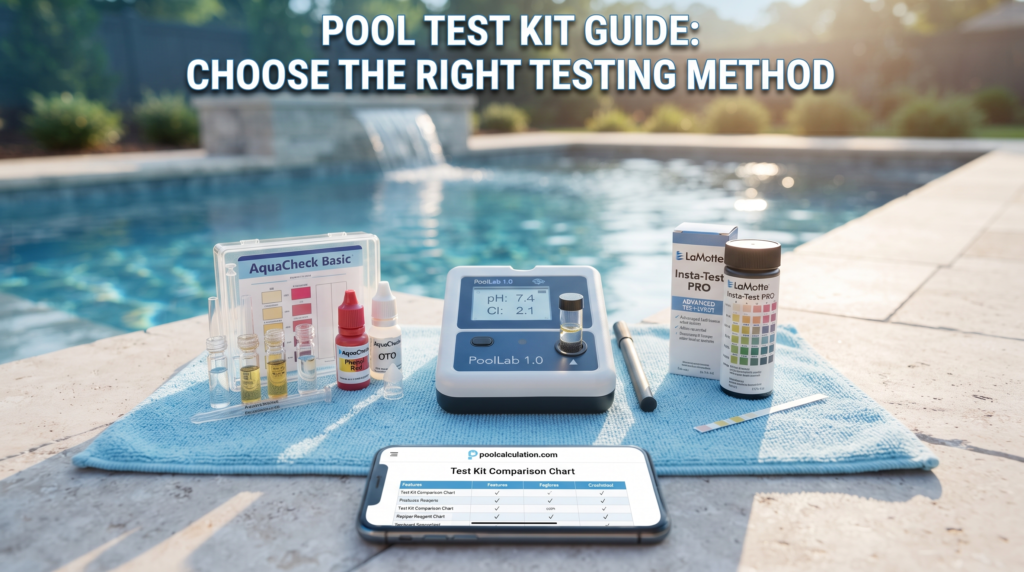
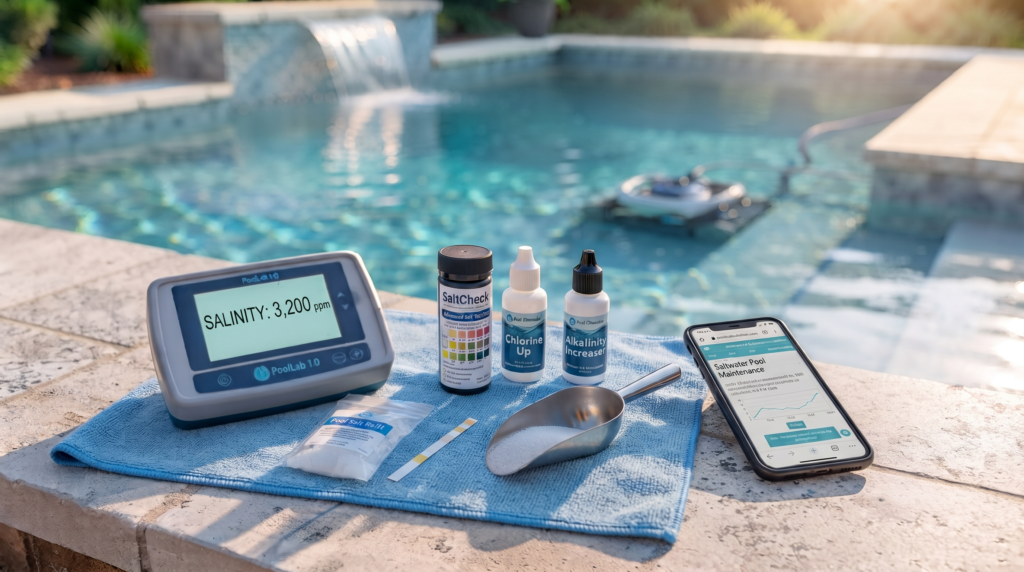
There are several ways to measure salt in pool water.
| Testing Method | General Use | Main Advantage |
|---|---|---|
| Digital salt meter | Saltwater pools | Quick numerical reading |
| Salt test strips | Routine checks | Convenient |
| Liquid salt test | Detailed testing | Uses a chemical testing process |
| Generator display | System monitoring | Convenient built-in reading |
Each method can produce different results depending on calibration, testing conditions, and equipment. If a reading seems unusual, verify it with an appropriate testing method before making a large adjustment.
What Is the Ideal Salt Level?
There is no single salt concentration that applies to every saltwater pool.
Many saltwater chlorine generators operate within a manufacturer-specified range, and the recommended target can vary between systems. Therefore, the number displayed by one generator should not automatically be treated as the correct target for another.
When checking pool salinity, use your generator’s manual or specifications as the primary reference.
| Pool System | Recommended Approach |
|---|---|
| Saltwater chlorine generator | Follow manufacturer range |
| Newly filled pool | Test before adding salt |
| After heavy rain | Retest salt |
| After draining | Retest and recalculate |
| Suspected low salt | Confirm with a reliable test |
Understanding Pool Salt Concentration
The pool salt concentration tells you how much dissolved salt is present in the water.
For example, a reading expressed as 3,000 ppm means approximately 3,000 parts of salt per million parts of pool water.
The required concentration is determined by the saltwater chlorine generator rather than by the pool’s size alone. Pool volume becomes important when calculating how much additional salt is required to move from the current concentration to the desired target.
Understanding Salt Water Pool PPM
Salt water pool ppm is simply a way of expressing the amount of dissolved salt in the water.
PPM stands for parts per million. It allows pool owners to describe relatively small concentrations using a standardized measurement.
For example:
- 1,000 ppm means 1,000 parts per million
- 2,000 ppm means 2,000 parts per million
- 3,000 ppm means 3,000 parts per million
- 4,000 ppm means 4,000 parts per million
Your saltwater generator may require a particular ppm range, so always use the system’s specifications when deciding whether salt needs to be added.
How Much Salt Does a Pool Need?
The ppm of salt in a Pool should be measured before deciding how much additional salt is necessary.
The basic calculation depends on:
- Current salt concentration
- Desired salt concentration
- Pool water volume
- Salt product being used
For example, if your current reading is below the generator’s recommended range, you need to determine the required increase first. The larger the pool, the more salt will generally be required to achieve the same ppm increase.
A salt calculator can simplify this calculation and reduce manual errors.
How to Increase Salt Safely
If testing confirms that the salt level is too low, follow these steps:
- Confirm the current salt reading.
- Check the generator’s recommended range.
- Determine your pool volume.
- Calculate the required salt amount.
- Follow the salt product’s instructions.
- Add the calculated amount gradually.
- Allow the pool water to circulate.
- Retest the salt concentration.
Avoid adding the entire amount based on a rough estimate. An inaccurate pool-volume measurement can result in too much or too little salt.
What Happens if Salt Is Too High?
High Pool Salinity cannot normally be corrected simply by adding another chemical.
If the salt concentration is significantly above the manufacturer’s recommended range, the solution may involve partially draining the pool and replacing some water with fresh water. The exact approach depends on the pool and the severity of the excess.
Do not attempt a large water replacement without understanding your pool’s construction, water chemistry, and local requirements.
Common Salt Testing Mistakes
Several mistakes can make salt management more difficult.
Testing Only When the Generator Shows an Error
A generator warning can be useful, but routine testing helps identify changes before they become serious.
Adding Salt Without Testing
Never assume salt is low because the generator is not producing chlorine as expected. Other chemistry or equipment issues may be responsible.
Using the Wrong Target
Do not use a generic salt target when your generator specifies a different operating range.
Ignoring Pool Volume
The amount of salt required depends heavily on the amount of water being treated.
Failing to Retest
Always allow adequate circulation after adding salt and verify the new reading.
Frequently Asked Questions
What does pool salinity mean?
It means the concentration of dissolved salt in pool water, normally expressed in ppm.
Is higher salt better for a saltwater pool?
No. The correct level depends on the saltwater chlorine generator. Adding more salt than recommended does not necessarily improve chlorine production.
Does evaporation lower salt levels?
Normal evaporation removes water rather than dissolved salt, so salt generally remains in the pool. Water replacement and splash-out can change the concentration.
How often should salt be tested?
Testing frequency depends on the pool system and conditions. Check it whenever water is added or removed and according to your generator’s maintenance recommendations.
Can high salt be fixed with chemicals?
Usually, excess salt is addressed through partial water replacement rather than adding another chemical.
Conclusion
Pool salinity is an important part of maintaining a saltwater swimming pool because the salt concentration directly affects the operation of a saltwater chlorine generator. Test the water regularly, use the manufacturer’s recommended range, and calculate additions based on your actual pool volume.