Quick Answer
A Pool Test Kit Guide helps you understand which testing tools are useful for checking pool water chemistry. A basic kit can measure important levels such as chlorine, pH, and alkalinity, while more advanced testing methods can measure CYA, calcium hardness, and salt. The right testing method depends on your pool type, sanitizer system, and the level of accuracy you need.
Why Do You Need a Pool Test Kit Guide?
Regular water testing helps you understand what is happening in your pool before you add chemicals. Water can look clean while chlorine, pH, alkalinity, or other chemistry levels are outside their preferred ranges.
Following a Pool Test Kit Guide makes it easier to choose a testing method based on the readings you actually need.
Testing can help you:
- Check sanitizer levels
- Monitor pH
- Track alkalinity
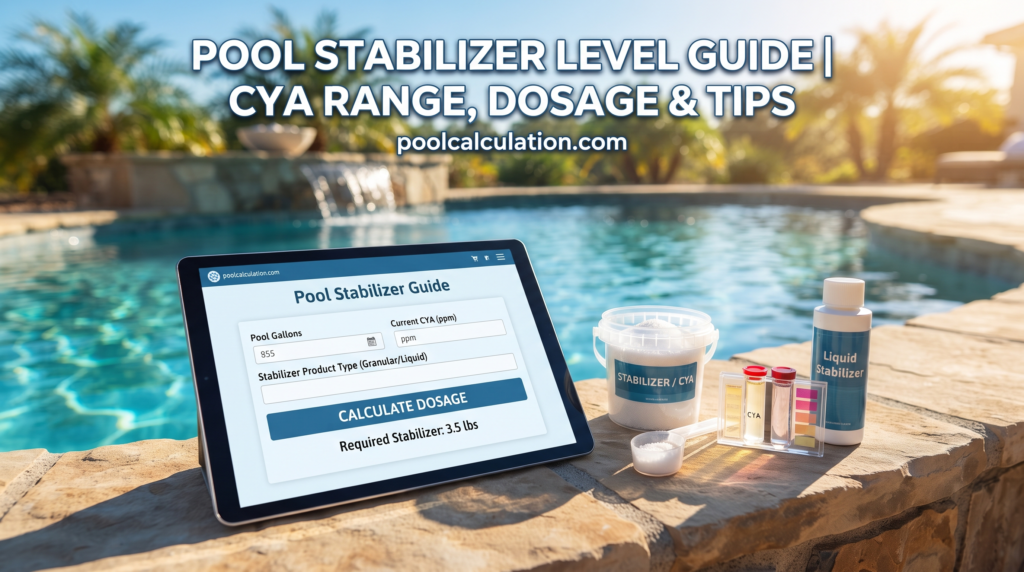
- Measure stabilizer or CYA
- Check calcium hardness
- Monitor salt in saltwater pools
- Identify chemistry changes early
- Avoid unnecessary chemical additions
The goal is not simply to test more often. It is to obtain useful and reliable readings so you can make informed adjustments.
Types of Pool Test Kits
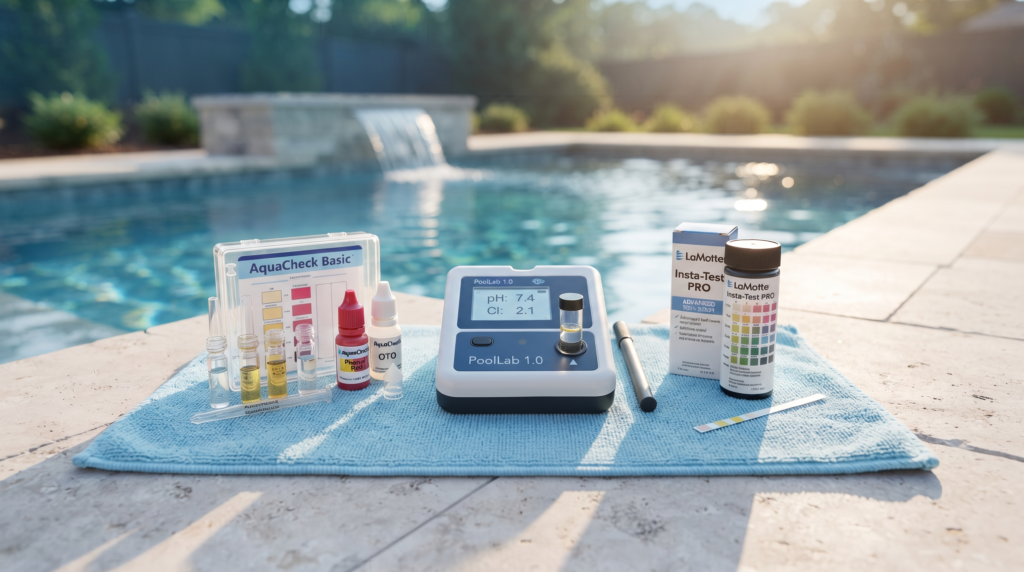
There are several common ways to test pool water. Each has advantages depending on your maintenance routine.
| Testing Method | Common Uses | General Benefit |
| Test strips | Chlorine, pH, alkalinity, and other readings | Quick and convenient |
| Liquid test kit | Chlorine, pH, alkalinity, CYA, and more | More detailed testing |
| Digital tester | Specific chemistry readings | Easy-to-read results |
| Salt testing meter | Salt concentration | Useful for saltwater systems |
A Pool Test Kit Guide should not treat one testing method as perfect for every pool. Your choice should depend on the chemistry your pool requires and how precise your readings need to be.
Test Strips vs. Liquid Test Kits
Test strips are popular because they are simple and fast. You dip the strip into the water and compare the resulting colors with the manufacturer’s chart.
They can be useful for routine checks, but color comparison can sometimes be difficult.
Liquid test kits use reagents that react with the water sample. Depending on the kit, you can test several important chemistry parameters and obtain more detailed readings.
For pool owners who regularly adjust chemicals, a liquid kit may provide more useful information than relying exclusively on strips.
What Should You Test?
The most important readings depend on your pool system, but common tests include:
Free Chlorine
Free chlorine indicates the amount of available sanitizer in the water. Regular monitoring helps you determine whether the sanitizer level is appropriate.
pH
pH affects swimmer comfort and chlorine performance. A commonly used range for many residential pools is around 7.2 to 7.8.
Total Alkalinity
Alkalinity helps buffer pH and reduce rapid changes. Testing it can be especially useful when pH repeatedly moves outside the desired range.
Cyanuric Acid
CYA, or stabilizer, helps protect chlorine from sunlight in outdoor pools. It should be monitored periodically rather than automatically adjusted every week.
Calcium Hardness
Calcium hardness is part of overall water balance. The appropriate level can depend on the pool surface and water-management approach.
Salt
Saltwater chlorine generators require a suitable salt concentration. Salt should be tested before adding additional salt to the pool.
Testing Saltwater Pools
Saltwater pools require an additional focus because the chlorine generator depends on an appropriate salt concentration.
A pool salt checker can be useful for quickly monitoring salt concentration. However, always understand the measurement range and instructions for the specific device you are using.
A digital salt meter for swimming pool can also provide a direct salt reading, making it convenient for owners who frequently monitor a saltwater system.
Another option is a salt water pool salt tester, which is specifically designed to measure the salt concentration in pool water.
The correct target should always come from your saltwater chlorine generator’s recommendations rather than a generic number.
How to Test Pool Water Correctly
A Pool Test Kit Guide is only useful when the testing process is performed correctly.
Follow these basic steps:
- Take the sample from the pool water rather than directly beside a chemical dispenser.
- Collect the sample at an appropriate depth according to the test kit instructions.
- Use a clean testing container.
- Add the required amount of water.
- Follow the test kit’s instructions exactly.
- Compare or read the result according to the testing method.
- Record the result.
- Decide whether an adjustment is actually required.
Avoid testing immediately after adding chemicals unless the product instructions specifically allow it. Give the chemicals enough time to circulate before relying on a new reading.
How Often Should You use Pool Test Kit Guide?
Testing frequency depends on pool use, weather, sanitizer type, and water conditions.
| Reading | Typical Monitoring Need |
| Chlorine | Frequent |
| pH | Frequent |
| Alkalinity | Regular |
| CYA | Periodic |
| Calcium hardness | Periodic |
| Salt | According to saltwater system needs |
Pools with heavy use, extreme weather, or noticeable chemistry changes may require more frequent testing.
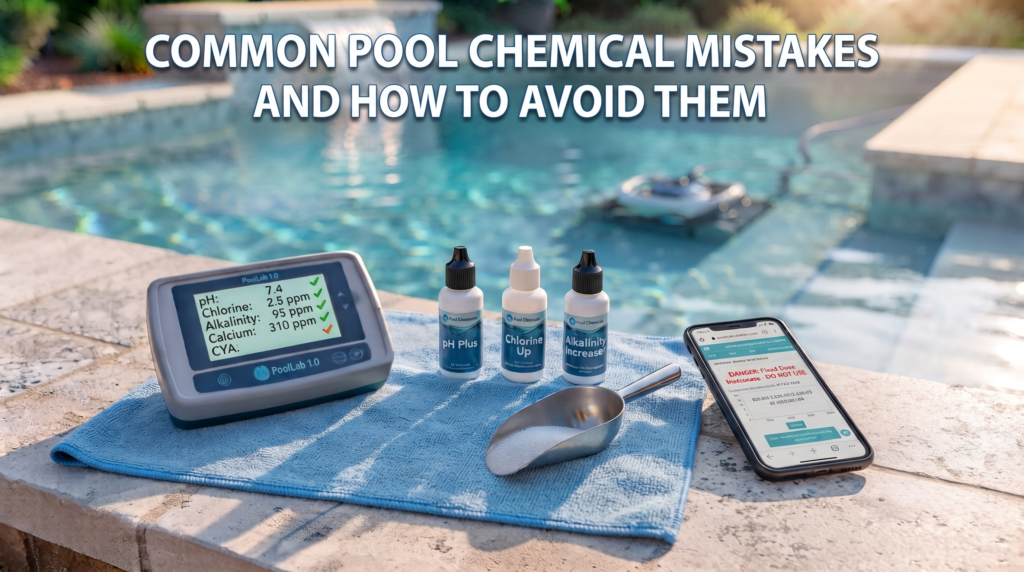
Common Testing Mistakes
A Pool Test Kit Guide should also help you avoid mistakes that can make test results unreliable.
Using Expired Products
Old reagents or damaged test strips may not provide dependable results. Check the manufacturer’s storage and replacement recommendations.
Testing With a Dirty Container
Residue from previous tests or chemicals can affect the sample.
Guessing Color Results
If using strips or color-based tests, follow the manufacturer’s comparison instructions carefully.
Testing in the Wrong Location
Take a representative water sample rather than collecting water from an area where chemicals have just been added.
Adding Chemicals Before Testing
Do not add chemicals simply because it is part of your usual routine. Test first.
Choosing the Right Test Kit
When comparing testing options, consider:
- Which chemicals you need to measure
- Whether your pool uses a saltwater generator
- How frequently you test
- Desired accuracy
- Ease of use
- Replacement reagent availability
- Testing range
- Cost of ongoing use
A basic kit may be enough for routine chlorine and pH monitoring, while Pool Test Kit Guide is a more comprehensive setup can be useful for pool owners who want to monitor several chemistry parameters.
Frequently Asked Questions
What is the best way to test pool water?
The best method depends on the readings you need and the level of accuracy required. Test strips are convenient, while liquid kits can provide more detailed testing.
Do saltwater pools need special testing?
Yes. In addition to normal pool chemistry, saltwater systems require monitoring of salt concentration to ensure the generator operates within its recommended range.
Can I test salt with regular pool strips?
Only if the strips are specifically designed to measure salt. Standard chlorine or pH strips do not automatically measure salt.
Should I test before adding chemicals?
Yes,in Pool Test Kit Guide we have told you in detail. Testing first helps you determine whether a chemical is actually needed and reduces the risk of unnecessary adjustments.
Conclusion
A Pool Test Kit Guide helps you choose the right testing approach for monitoring chlorine, pH, alkalinity, CYA, calcium hardness, and salt. The best option depends on your pool type and the chemistry readings you need.