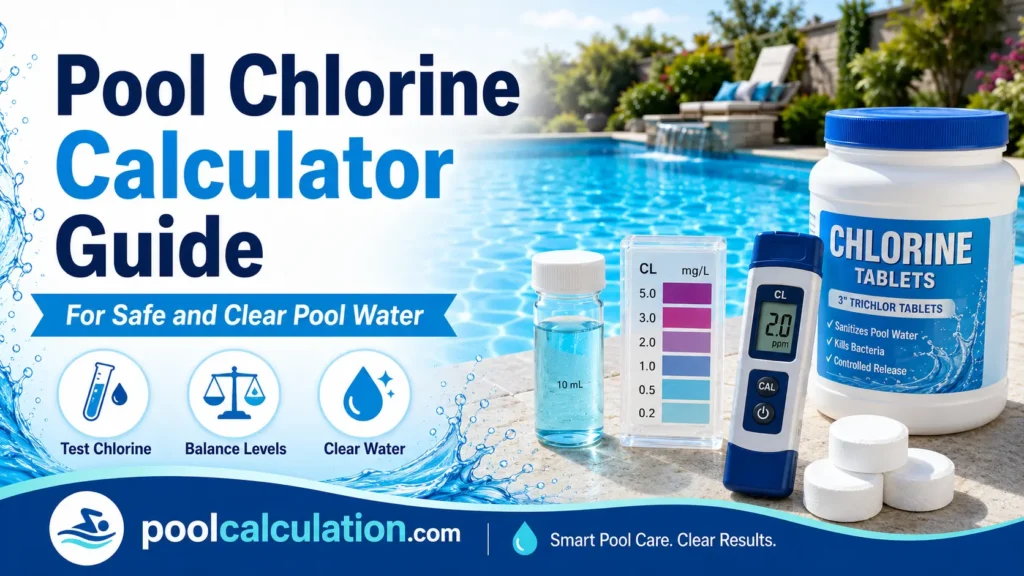
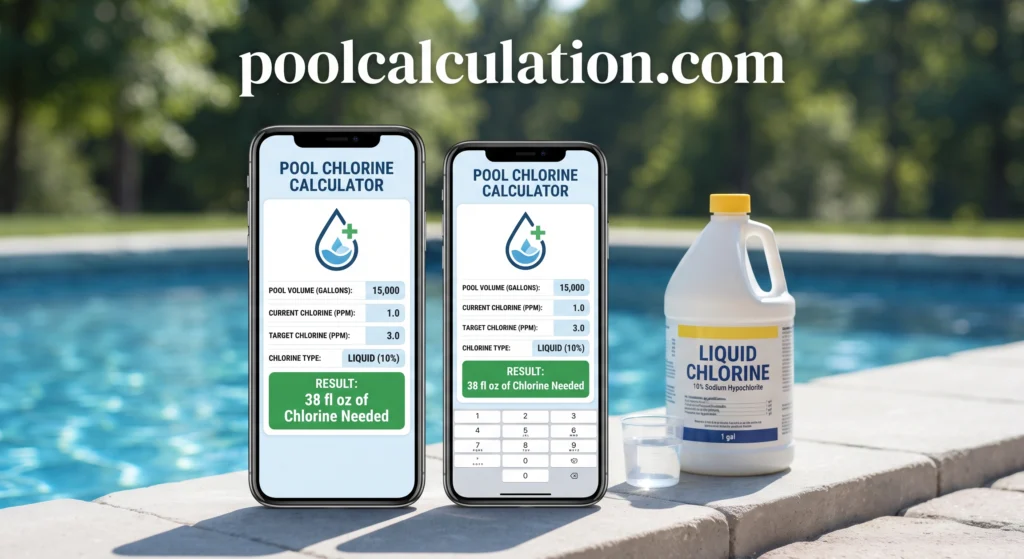
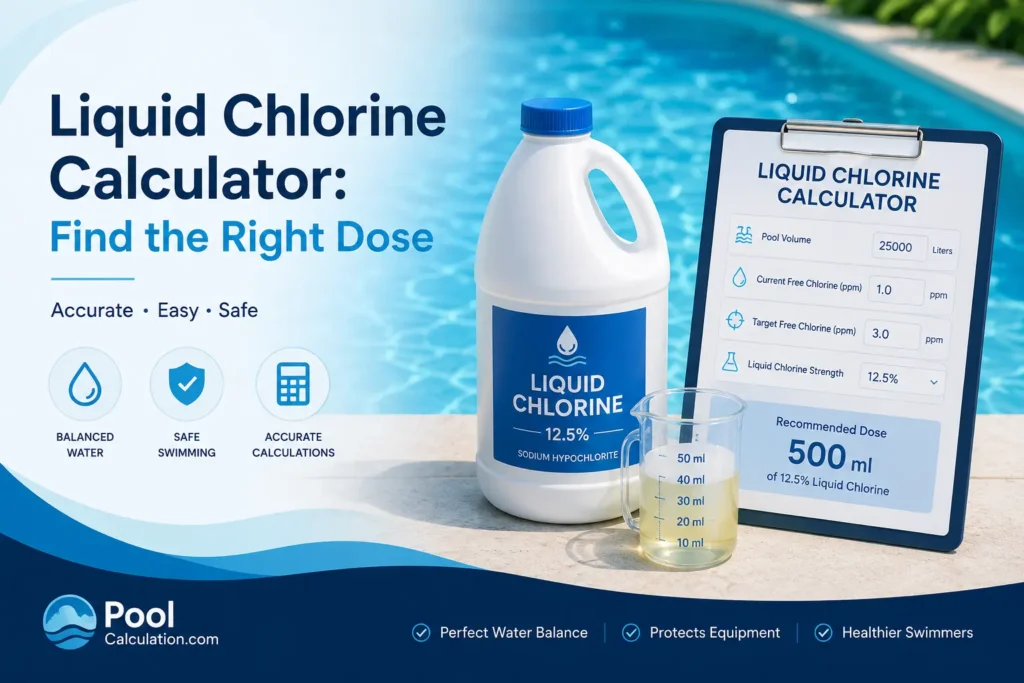
A pool chlorine calculator estimates how much chlorine your pool needs by using water volume current free chlorine target free chlorine product type and product strength. Test first. Enter accurate values. Add the calculated dose according to the product label. Allow complete circulation and test again before adding more.
Introduction
Correct chlorine levels are essential for healthy pool water. Too little chlorine can allow bacteria and algae to grow. Too much chlorine can waste chemicals and may cause swimmer discomfort. A pool chlorine calculator provides a practical starting dose based on your test result and the strength of the chlorine product.
This guide explains what to enter and how to read the result. It includes dosage guidance for routine maintenance cloudy water green water and saltwater pools.
Calculator
The pool chlorine calculator needs accurate pool and water information. Use a reliable test kit. Confirm the product type and strength before entering any value.
Accurate Product Specific Dosing
Pool Chlorine Calculator
Calculate how much liquid chlorine, bleach, cal hypo,
dichlor, trichlor, or another chlorine product is needed
to reach your selected free chlorine level.
Estimated Product Dose
—
—
Required FC Increase—
Alternative Unit—
Available Chlorine Needed—
Safety Warning:
Use only plain unscented bleach without splashless additives,
fragrances, detergents, or fabric protectors. Never mix
chlorine with acids, ammonia, or another pool chemical.
Follow the exact product label.
Quick Answer
Quick Answer
A pool chlorine calculator estimates liquid or granular product from pool volume, current free chlorine, target free chlorine, and the available chlorine percentage on the label. For 10,000 gallons, about 12.8 fluid ounces of 10% liquid chlorine supplies an approximate 1 ppm increase. Test again after full circulation because sunlight and contamination can consume chlorine during treatment.
10,000 Gallons
12.8 fl oz of 10% Liquid Chlorine
Important
Test Again After Full Circulation
Introduction
Introduction
Use this pool chlorine calculator to estimate the amount of liquid chlorine or granular chlorine needed to raise free chlorine from the current reading to a selected target. The calculator should ask for pool volume, current free chlorine, target free chlorine, and product strength.
Free chlorine targets depend on pool type, cyanuric acid use, local rules, and the product label. CDC guidance for home pools describes a typical chlorine range of 1 to 4 ppm and advises following the manufacturer’s instructions. Outdoor residential pools using stabilizer may follow a CYA aware target recommended by the chosen maintenance method.
!
Use the calculator below with a fresh free chlorine result, not total chlorine. Select the exact product and percentage shown on the container. The result should explain the dose, the unit, the expected ppm increase, and the need to follow label application and swimmer re entry instructions.
Calculator Input
Information Needed
Pool volume
Total water volume in gallons
Current free chlorine
Latest free chlorine test result
Target free chlorine
Desired free chlorine level
Product type
Liquid chlorine or granular chlorine
Product strength
Percentage shown on the product label
Take the water sample away from return jets and recently added chemicals. Let the pump mix the water before testing.
Step One
Find the chlorine increase needed.
Target free chlorine minus current free chlorine equals required chlorine increase
A pool with 1 part per million free chlorine and a target of 4 parts per million needs an increase of 3 parts per million.
Step Two
For liquid chlorine use this estimate.
Pool gallons multiplied by required increase multiplied by 0.0128 divided by product strength equals fluid ounces
Enter 10 when the label shows 10 percent chlorine.
For granular chlorine use this estimate.
Pool gallons divided by 10000 multiplied by required increase multiplied by 133.4 divided by product strength equals ounces by weight
These formulas provide a starting estimate. Product concentration and label directions should guide the final application.
Calculator Result
The pool chlorine calculator result should show the required chlorine increase and the estimated product amount.
Consider a 10000 gallon pool with a current free chlorine reading of 1 part per million. The target is 4 parts per million. The pool needs an increase of 3 parts per million.
Chlorine Product
Estimated Amount
10 percent liquid chlorine
38.4 fluid ounces
12.5 percent liquid chlorine
30.7 fluid ounces
65 percent calcium hypochlorite
6.2 ounces by weight
Confirm the pool volume and product strength before adding chlorine. Follow the label for circulation. Test again after the chlorine has mixed throughout the water.
An unusually high result may come from an incorrect volume or test reading. Recheck every input before making a large correction.
Chlorine Dosage Guide
Use this table as a quick reference for a 10000 gallon pool. Use the pool chlorine calculator when your pool volume or product strength is different.
Required Chlorine Increase
10 Percent Liquid Chlorine
65 Percent Granular Chlorine
1 part per million
12.8 fluid ounces
2.1 ounces
2 parts per million
25.6 fluid ounces
4.1 ounces
3 parts per million
38.4 fluid ounces
6.2 ounces
4 parts per million
51.2 fluid ounces
8.2 ounces
5 parts per million
64 fluid ounces
10.3 ounces
Use half of the listed amount for a 5000 gallon pool. Use twice the amount for a 20000 gallon pool. Divide large corrections into stages. Circulate the water and test again before adding the remaining amount.
Routine Pool Maintenance
Test free chlorine several times each week during active use. Test more often after heavy rain hot weather or high swimmer use. Small corrections are easier to control than one large addition.
Cloudy Pool Water
Cloudy water may result from low chlorine poor filtration high pH or fine debris. Test the complete water balance. Clean the filter and brush the pool before adding more chemicals.
Green Pool Water
Many pool owners search green pool how much shock when algae changes the water color. The correct amount depends on pool volume current free chlorine stabilizer level product strength and algae severity.
Brush every pool surface. Remove leaves and debris. Keep the filter operating and test repeatedly because one dose may not maintain the required treatment level.
Saltwater Pool Treatment
A pool chlorine salt system still needs regular free chlorine testing. A correct salt reading only shows that the generator has enough salt to operate. It does not confirm that enough free chlorine is present.
Heavy use sunlight algae and equipment problems may increase chlorine demand.
Important Chlorine Safety Tips
Never mix chlorine with acid or any other pool chemical. Store every product in its original container. Use a clean dry measuring tool. Follow the label directions for application circulation and swimmer return.
Add different chemicals separately. Allow enough circulation time between treatments. Do not pour chlorine into the skimmer unless the label and equipment manufacturer specifically allow that method.
Common Calculator Mistakes
Guessing the pool volume can produce a large dosing error. Use the manufacturer capacity when available. Make sure you enter free chlorine rather than total chlorine.
Do not enter 0.10 when the field asks for a 10 percent product. Enter 10. Recheck the test result when the calculated amount looks unusually high.
Frequently Asked Questions
What Chlorine Target Should I Use
Use the target recommended for your pool type and sanitation system. Consider the stabilizer level and follow the product label.
Can I Use Household Bleach
Use only a suitable unscented product when the label clearly shows sodium hypochlorite strength. Avoid products with fragrance thickeners or added cleaners.
Can the Calculator Measure Granular Chlorine
Yes. Enter the available chlorine percentage shown on the label. Measure the final result by weight instead of fluid volume.
Why Does Chlorine Disappear Quickly
Strong sunlight low stabilizer algae organic debris and heavy swimmer demand can consume chlorine. Test the complete water balance before repeating a large dose.
Does High pH Reduce Chlorine Performance
Yes. Chlorine generally becomes less effective as pH rises. Test pH and correct the water balance instead of relying only on additional chlorine.
How Accurate Is the Result
Accuracy depends on pool volume test readings product type and product strength. Treat the answer as a starting estimate and follow the product label.
When Should I Test Again
Follow the product label and allow complete circulation. Testing too soon may produce a misleading reading.
Should I Add the Full Amount at Once
A small routine correction may be added according to the label. Divide a larger correction into stages and retest after circulation.
Conclusion
A pool chlorine calculator makes dosing easier by connecting pool volume with current free chlorine target free chlorine and product strength. Test first and enter accurate measurements. Apply the estimated amount according to the label. Let the water circulate and test again before adding more.
A measured approach supports clearer water and helps prevent unnecessary chemical use.