
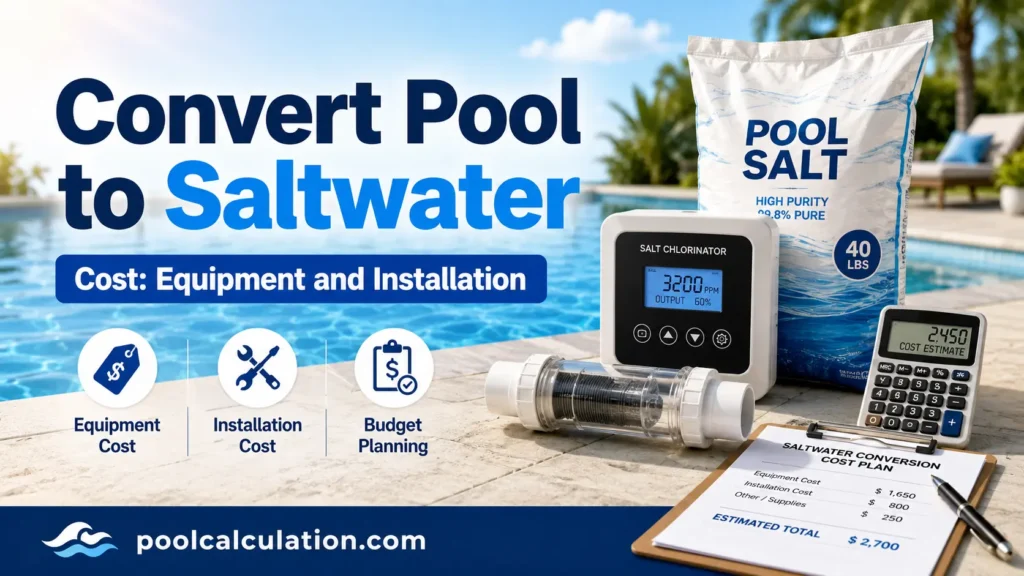
| Quick Answer The convert pool to saltwater cost is driven mainly by the generator and installation. The main conversion expense is the salt chlorine generator and installation. A residential generator alone often costs about $800 to $1000, while electrical work, plumbing, startup salt, automation, and professional labor increase the final total. |
Introduction
The convert pool to saltwater cost depends mainly on the generator, installation, and your pool size. What follows is a practical breakdown of equipment, installation, and running costs.
What the Conversion Actually Changes
Understanding convert pool to saltwater cost starts with one fact: the pool still uses chlorine. The difference is that salt cells for swimming pools create chlorine from dissolved sodium chloride instead of relying mainly on manually added tablets or liquid.
The existing pump and filter may remain, but the plumbing needs space for the cell and flow sensor. The electrical supply and bonding must meet the equipment instructions and local requirements.
Typical Cost Categories
| Cost Item | What It Covers | Budget Impact |
| Salt chlorine generator | Control unit and cell sized for the pool | Largest equipment purchase |
| Professional installation | Plumbing, wiring, setup, and testing | Varies by access and local labor |
| Startup salt | Several bags based on volume and current ppm | Usually a smaller cost |
| Electrical upgrades | Breaker, wiring, bonding, or automation work | May be minor or significant |
| Water testing and balance | Salt, pH, alkalinity, CYA, calcium | Needed before startup |
| Future cell replacement | A periodic ownership expense | Plan beyond the first year |
How to Convert Chlorine Pool to Salt
53. Confirm that the pool finish, heater, ladders, fixtures, and warranty are compatible.
54. Calculate the actual pool volume.
55. Choose a generator rated above the pool volume rather than exactly at the limit.
56. Have the plumbing and electrical installation completed correctly.
57. Balance the water before relying on the cell.
58. Test existing salinity because a chlorine pool may already contain salt.
59. Use the Pool Salt Calculator for the startup amount.
60. Circulate until dissolved and start the cell under the manufacturer procedure.
61. Test free chlorine and adjust output and run time over several days.
Sizing the Generator
A generator that is too small must operate at a high output for long periods and may struggle during hot weather or heavy swimming. Many buyers choose a system rated for more water than the pool contains, subject to manufacturer guidance. As this convert pool to saltwater cost explains, use local prices and actual equipment usage.
The cost difference between sizes should be compared with expected cell life, chlorine demand, climate, and pump schedule.
Above Ground Pool Conversion
A salt water pump for above ground pool use must be designed for the pool volume and compatible with the frame, liner, connections, and filter system. Metal walls, ladders, bolts, and other components need special attention because salt can increase corrosion risk.
Some above ground packages combine filtration and salt generation. Others add a separate cell after the filter. Follow the pool and system warranty requirements. As this convert pool to saltwater cost recommends, separate one-time expenses from recurring costs.
Ongoing Costs After Conversion
· Replacement salt after water loss.
· Acid or other pH control products.
· Water testing supplies.
· Electricity for circulation and chlorine production.
· Cell inspection and cleaning only when required.
· Cell replacement after its service life.
· Repairs to flow sensors, controls, or plumbing.
When Conversion May Not Be Worth It
A salt system may be a poor fit when the pool has vulnerable metal, incompatible stone, an unsuitable electrical setup, limited equipment space, or a short remaining pool life. Owners who rarely use the pool may not recover the convenience value.
Compare the total project and replacement cost with current chlorine spending, not only the price of salt.
Ways to Control Conversion Cost
· Measure volume accurately so the system is sized correctly.
· Get more than one qualified installation quote.
· Confirm whether the electrical panel needs changes before buying equipment.
· Use existing compatible automation when possible.
· Test salt before startup so fewer bags are purchased.
· Choose a model with clear warranty and locally available replacement cells.
Questions to Ask Before Accepting an Installation Quote
Ask which generator model and cell size are included, whether electrical and plumbing work are covered, and whether the quote includes startup testing and salt. Confirm the warranty for the control unit, cell, and labor. A lower quote may leave out a breaker, flow switch, bonding work, or automation connection.
Also ask what replacement cell is available locally and how much it currently costs. The long term cost of a system depends on replacement parts and service support, not only the original installation price. As this convert pool to saltwater cost outlines, update the estimate when rates or product prices change.
Frequently Asked Questions
Can any chlorine pool be converted to saltwater?
Many can, but compatibility with the pool structure, finish, heater, metal components, plumbing, electrical system, and warranty must be checked.
Do I need a new pump and filter?
Not always. The existing equipment may remain if it meets flow and compatibility requirements.
How much startup salt is needed?
It depends on volume, current salinity, and the generator target. Use the Pool Salt Calculator.
Are saltwater pools chlorine free?
No. The cell produces chlorine from salt.
How often are salt cells replaced?
Service life varies by model, output, water balance, cleaning, and operating hours.
Can I install the system myself?
Plumbing and electrical work must follow codes and manufacturer instructions. Professional installation is often the safer choice.
Conclusion
The convert pool to saltwater cost includes much more than salt. Budget for the generator, correct installation, electrical needs, water balance, and future cell replacement. A properly sized system and accurate Pool Salt Calculator result prevent expensive startup mistakes.