
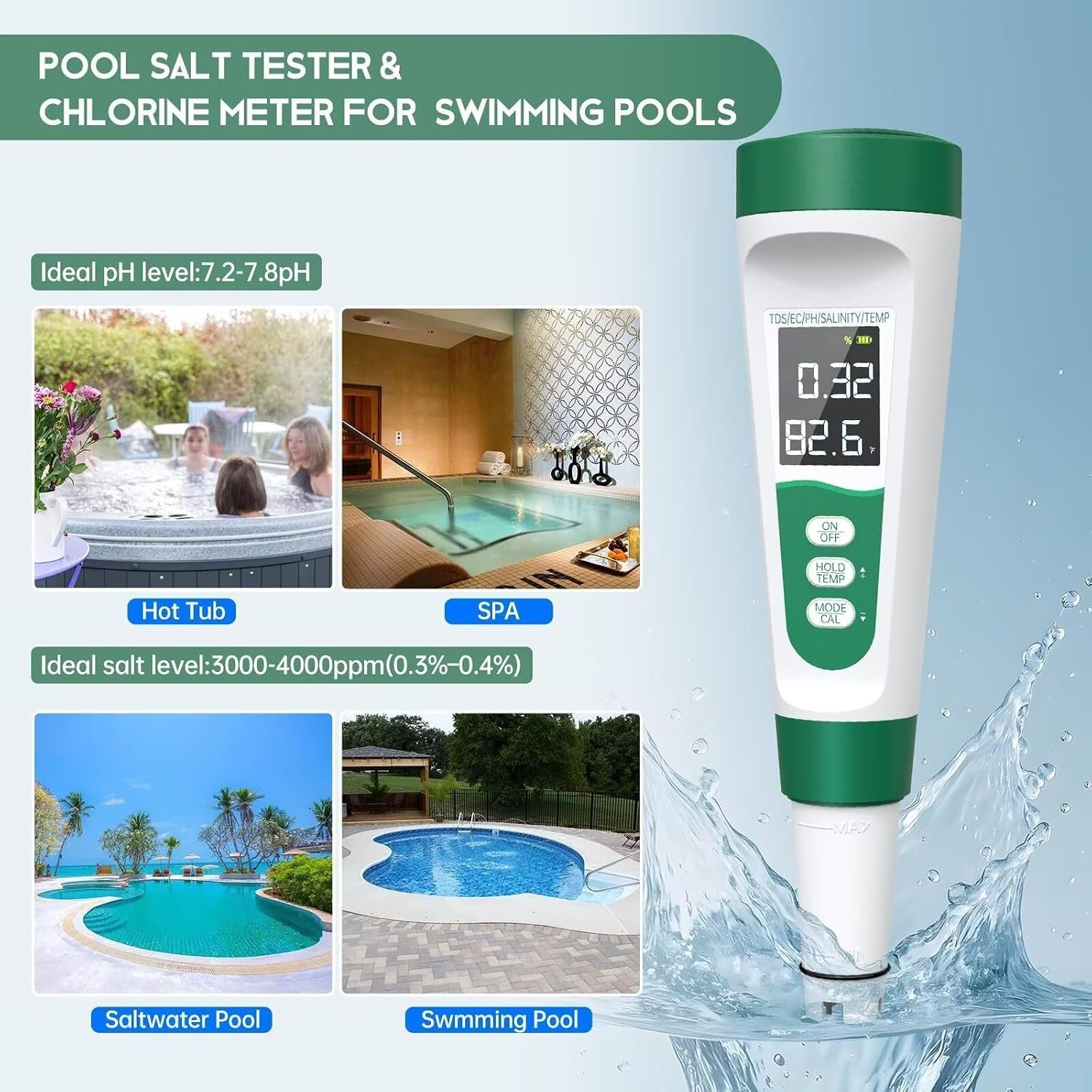
Digital Pool Water Tester for Pool & Spa Maintenance
Regular water testing is an important part of swimming pool maintenance. Before adding chlorine, salt, stabilizer, or other pool chemicals, you need to know the current condition of the water. A digital pool water tester provides an alternative to traditional test strips and reagent-based testing methods by using electronic measurement and displaying the results digitally.
Digital testers vary considerably in the number of parameters they measure and the technology they use. Some focus on one or two measurements, while more advanced systems can analyze several aspects of pool chemistry.
What Does a Digital Pool Tester Do?
A digital pool tester is designed to measure selected water parameters and provide the results electronically. Depending on the specific device, these measurements may include pH, chlorine, alkalinity, calcium hardness, cyanuric acid, salt, metals, phosphates, or temperature.
For example, the AccuBlue Home system from Leslie’s connects to a smartphone through Bluetooth and uses the Leslie’s app to display test results. Its current documentation states that it can test up to 10 key water-chemistry parameters, depending on the sanitizer used.
This makes a digital swimming pool water tester particularly useful for pool owners who want to monitor several water conditions without relying entirely on visual color comparison.
Digital Pool Tester vs. Test Strips
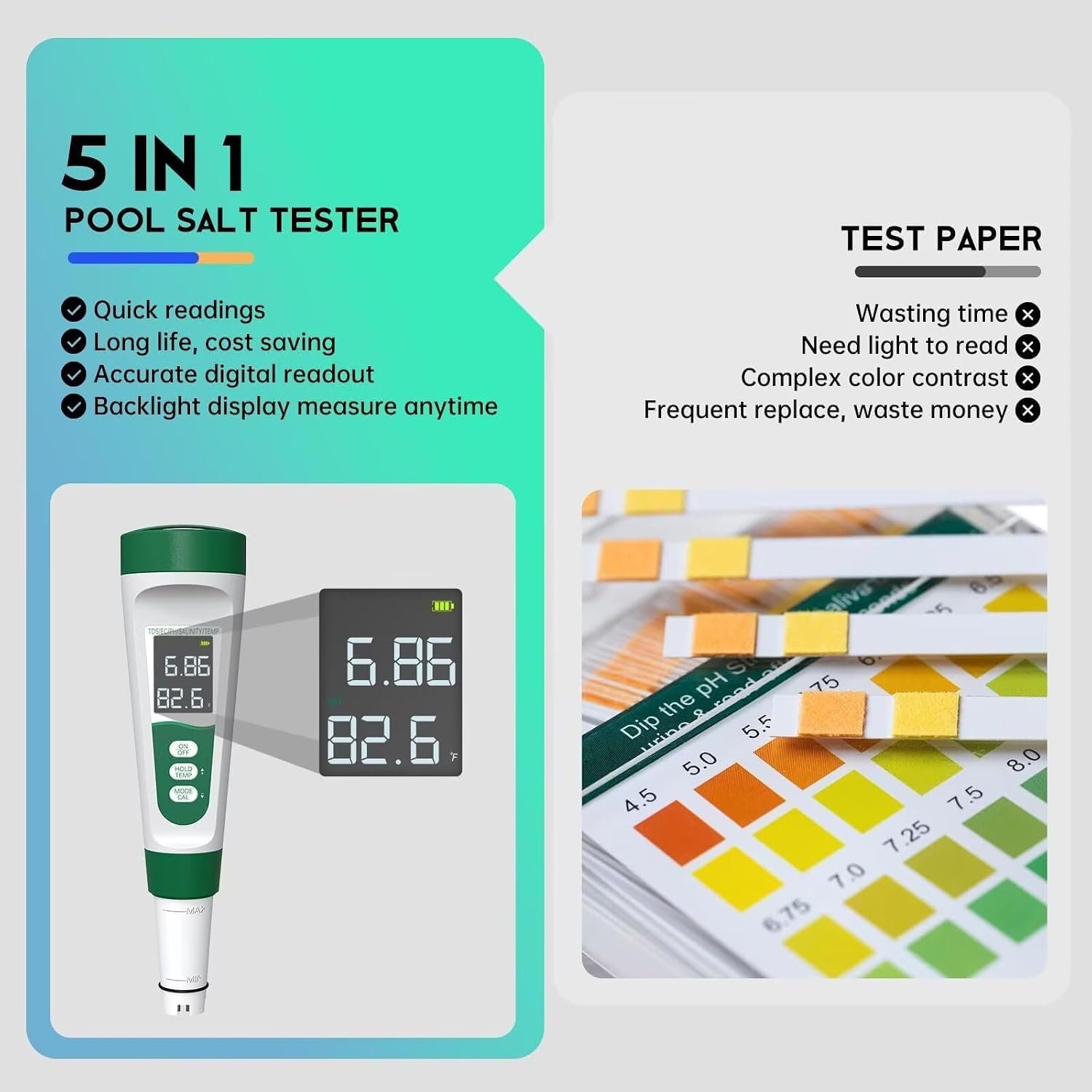
Traditional test strips are popular because they are quick and inexpensive. However, they require the user to compare color changes against a printed chart.
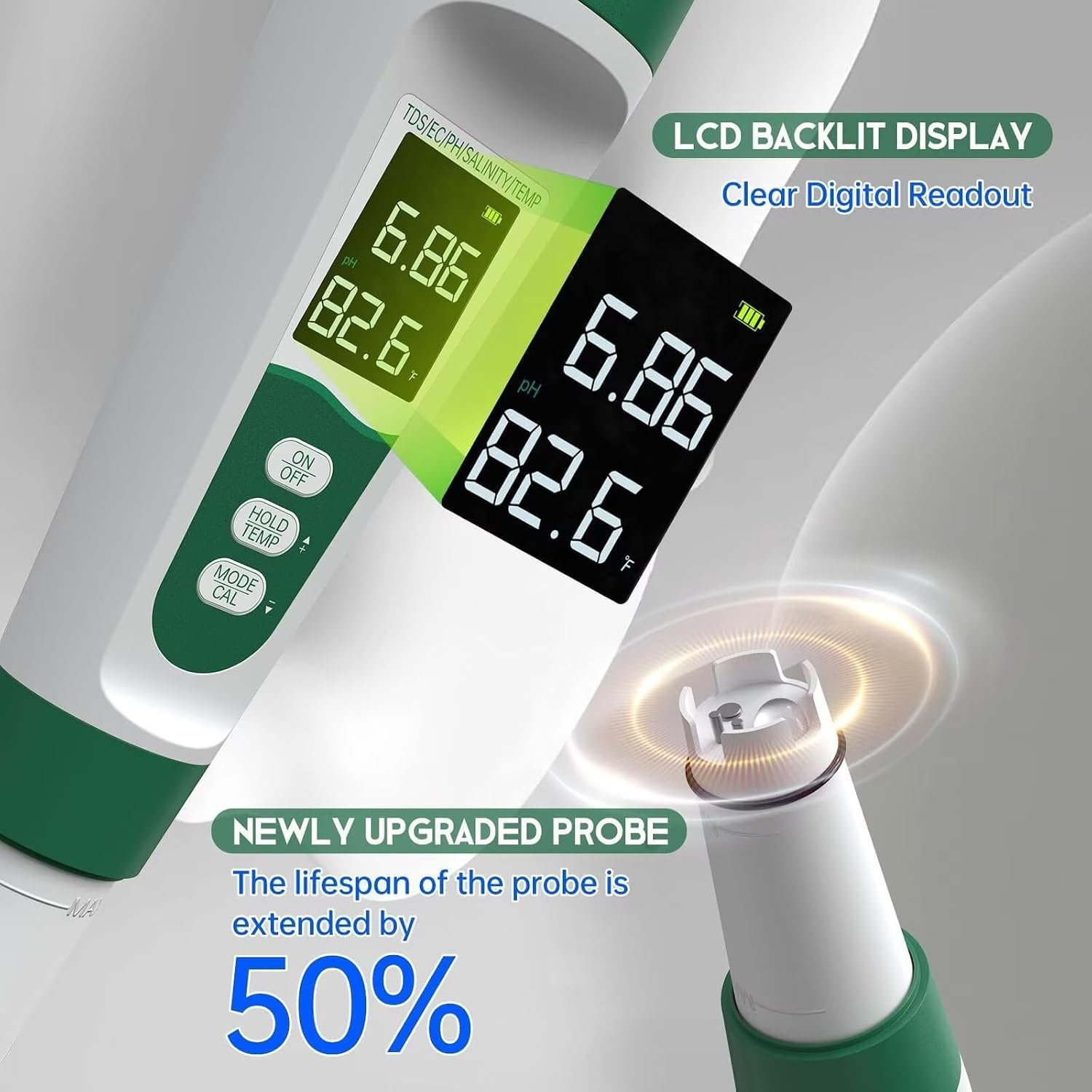
An electronic pool tester uses a digital measurement process instead. This can make results easier to read, particularly for people who find color matching difficult.
The right choice depends on your pool, testing frequency, budget, and the parameters you need to measure.
What Should You Test in Pool Water?
The exact parameters you should monitor depend on your pool type and sanitizer system. Common pool-water measurements include:
- Free chlorine
- Total chlorine
- pH
- Total alkalinity
- Calcium hardness
- Cyanuric acid
- Salt
- Temperature
Some advanced systems can also test additional parameters such as iron, copper, and phosphates. AccuBlue Home, for example, lists these among the parameters its system can measure.
Using a Digital Tester With a Pool Calculator
A water-testing device and a pool calculator can work together.
First, test the pool water to determine the current reading. Then enter that reading, along with your pool volume and desired target, into the appropriate calculator.
For example:
Current chlorine → target chlorine → pool volume → calculated chemical adjustment
The same approach can be used for salt, pH, alkalinity, stabilizer, and other pool-maintenance calculations.
Before adding any chemical, always verify the test result and follow the product label’s instructions.
Digital Testing for Saltwater Pools
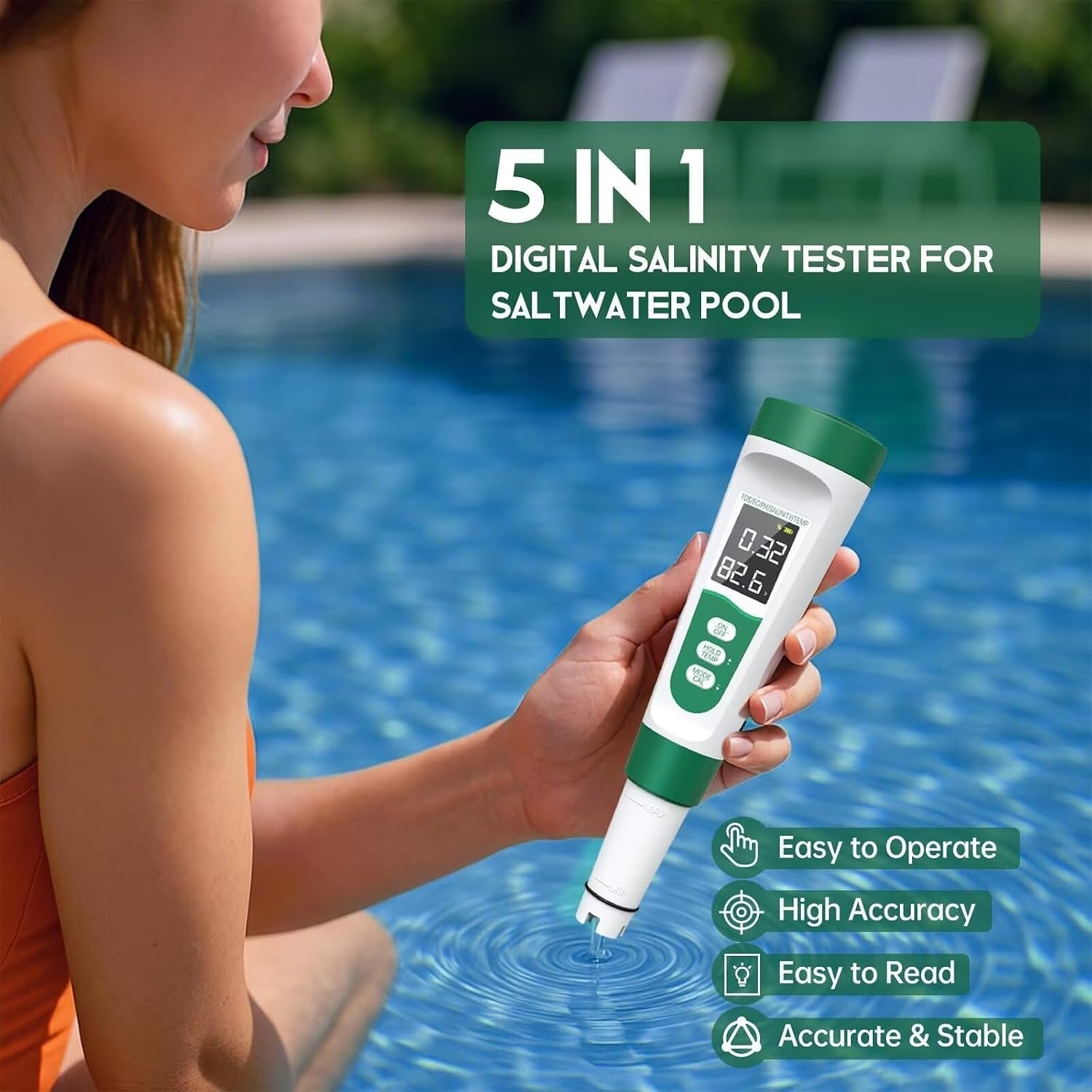
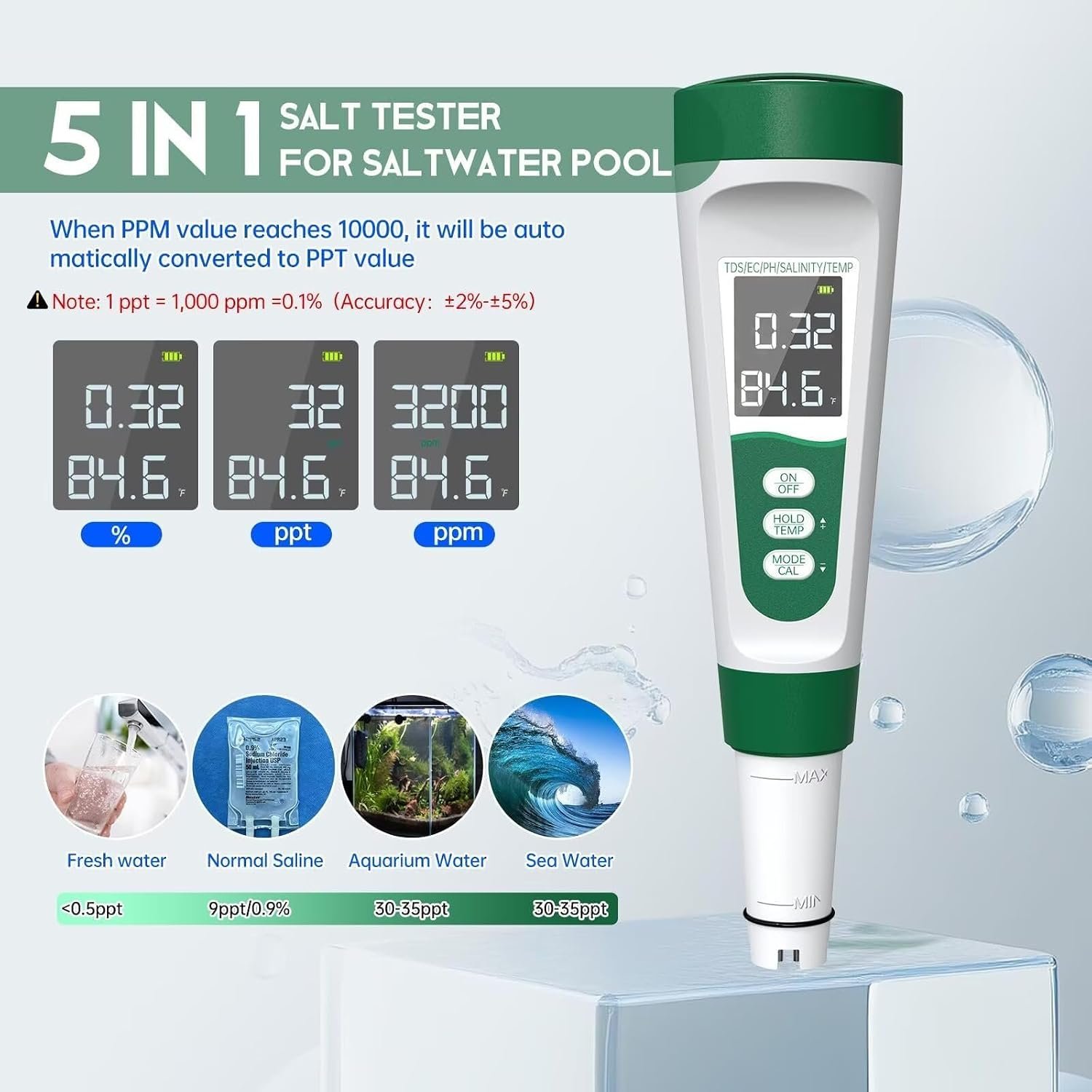
If you have a saltwater pool, choose a pool salt tester digital device that specifically supports salt measurement. Not every electronic pool tester measures salinity, so checking the product’s specifications before purchasing is important.
Salt testing is particularly useful when maintaining a salt chlorine generator because the system operates within a manufacturer-specified salt range.
Digital Testing for Hot Tubs and Spas
Some electronic testers are also designed for spas and hot tubs. If you are looking for a digital hot tub water tester or digital spa water tester, check that the device supports the water parameters relevant to your sanitizer system.
For example, AccuBlue Home documentation states that its device can be used for pools, hot tubs, and spas, with the appropriate profile and sanitizer selected in the app.
Before You Buy
Don’t choose a digital tester based only on the number of advertised functions. Check:
- Which parameters it actually measures
- Whether it supports your pool’s sanitizer
- Whether it requires an app or smartphone
- Whether consumables are required
- How the device is powered
- Whether replacement testing supplies are available
- Whether the manufacturer’s instructions support your intended use
This is especially important for electronic testing systems that use proprietary disks, cartridges, reagents, or subscriptions.
Key Features
For a digital pool water tester, relevant features to look for include:
- Digital measurement rather than manual color comparison
- Support for multiple pool-water parameters
- Pool and spa testing capability where specified
- Digital display or smartphone-based results, depending on model
- Water-chemistry monitoring
- Compatibility with the pool’s sanitizer system
- Ability to support regular pool-maintenance testing
Note: Exact features vary by product. Verify the individual Amazon listing before publishing product-specific specifications.
Specifications
| Specification | Details |
|---|---|
| Product Type | Digital pool water tester |
| Primary Use | Pool and spa water testing |
| Testing Parameters | Varies by model |
| Display | Varies by model |
| Smartphone/App | Varies by model |
| Bluetooth | Available on some models |
| Salt Testing | Model-dependent |
| Chlorine Testing | Model-dependent |
| pH Testing | Model-dependent |
| Power Source | Model-dependent |
Who Is This Product For?
A digital pool tester may be suitable for:
- Home swimming-pool owners
- Saltwater pool owners
- Pool owners who test water regularly
- Spa and hot-tub owners, where supported
- Users who prefer digital readings
- Pool owners who use calculators to determine chemical adjustments
What to Consider Before Buying
Before choosing the best digital pool water tester for your needs, check the actual parameters supported by the model.
1. Testing Range
Make sure the tester measures the parameters you actually need.
2. Pool Type
A chlorine pool and saltwater pool may require different measurements.
3. Consumables
Some advanced electronic testers require test disks, reagents, cartridges, or other consumables.
4. App Requirements
Some electronic testers use Bluetooth and a smartphone application rather than a built-in screen. AccuBlue Home, for example, uses the Leslie’s mobile app to operate the device and view results.
5. Testing Frequency
If you test frequently, consider the ongoing cost and availability of any required testing supplies.
Pros & Limitations
Pros
- Digital results can be easier to interpret than color charts.
- Some models measure multiple water parameters.
- Certain systems can store or display previous test results.
- Some models support both pool and spa testing.
- Advanced systems may provide additional water-treatment information.
Limitations
- Features differ significantly between digital testers.
- Some devices require proprietary consumables.
- App-based systems may require a compatible smartphone.
- More advanced systems can involve ongoing costs.
- Digital testing does not eliminate the need to follow manufacturer instructions and verify unusual results.
How It Relates to Pool Care
A digital pool water tester is primarily a measurement tool. It doesn’t replace a pool chemical calculator; instead, the two tools can complement each other.
For example:
Test → Record current level → Enter reading into calculator → Calculate adjustment → Follow chemical label → Retest
This workflow can be useful when adjusting chlorine, salt, alkalinity, pH, stabilizer, or other pool-water parameters.
Affiliate Disclosure
This page contains affiliate links. If you purchase through our links, we may earn a commission at no additional cost to you.
FAQ
What is a digital pool water tester?
A digital pool water tester is an electronic device designed to measure selected swimming-pool water parameters and present the results digitally.
Is a digital pool tester better than test strips?
They work differently. Test strips are simple and inexpensive, while digital testers can provide electronic measurements and may support multiple parameters. The better option depends on the user’s testing needs and budget.
What can a digital pool tester measure?
It depends on the model. Common measurements include pH, chlorine, salt, alkalinity, calcium hardness, cyanuric acid, and temperature. Some advanced systems measure additional parameters.
Can a digital pool tester be used for saltwater pools?
Some can. Look specifically for a model that supports salt or salinity measurement before purchasing.
Can I use a digital pool water tester for a hot tub?
Some models support hot tubs and spas. Always check the manufacturer’s specifications before using a tester for a particular water system. AccuBlue Home, for example, supports pool, hot-tub, and spa testing.
Do digital pool testers require an app?
Not all of them. Some have their own display, while others connect to a smartphone application. Check the specific product before buying.
Should I use a pool calculator after testing?
Yes. A tester provides the current water reading, while a calculator can use that reading together with pool volume and target levels to estimate an adjustment.