Quick Answer
A hot tub ph calculator helps estimate how much pH adjustment chemical may be needed to move your spa water toward the desired pH range. The calculation depends on factors such as water volume, current pH, target pH, alkalinity, and the strength of the chemical being used.
Because hot tubs contain less water than swimming pools and operate at warm temperatures, pH can change relatively quickly. Always test your water before adding chemicals and follow the product manufacturer’s dosing instructions.
Why Is Hot Tub pH Important?
Maintaining the correct pH is an important part of comfortable and balanced hot tub water. If the pH is too low, the water can become more corrosive and may contribute to equipment or surface problems.
When pH is too high, water may become cloudy, scale can form, and sanitizer performance may be affected.
Using a hot tub ph calculator can make the adjustment process easier by helping you estimate the amount of product needed instead of adding chemicals based on guesswork.
What Affects Hot Tub pH?
At Hot Tub pH Calculator, Several factors can cause pH to move outside the desired range.
Common causes include:
- Frequent hot tub use
- Aeration from jets
- Water replacement
- High or low alkalinity
- Chemical additions
- Source water chemistry
- Temperature changes
Hot tub jets can cause pH to rise because aeration encourages carbon dioxide to leave the water. This is one reason spa owners may notice that pH requires regular monitoring.
What Information Do You Need?
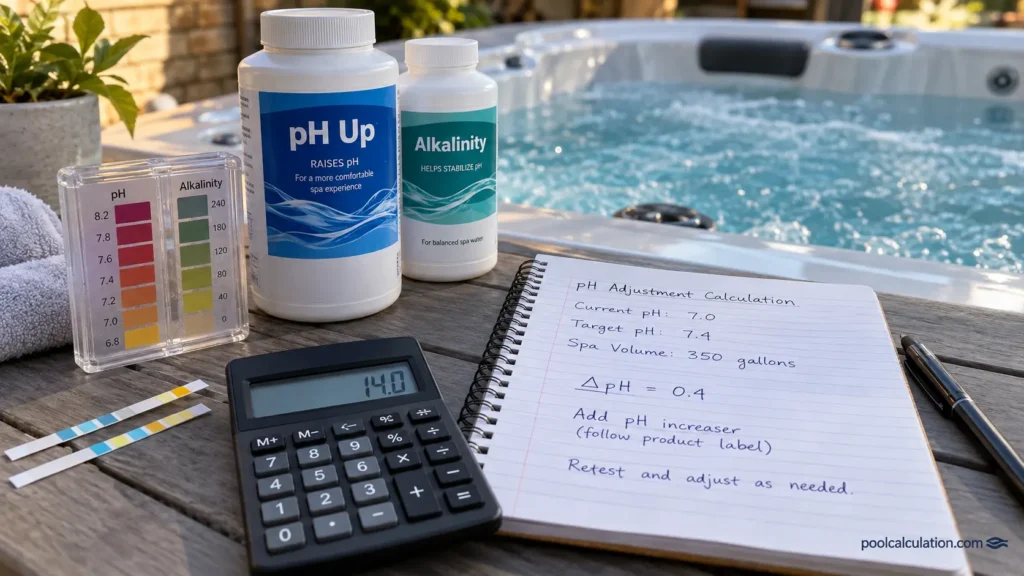
Before using a hot tub ph calculator, collect accurate information about your spa and current water chemistry.
You may need:
- Hot tub water volume
- Current pH level
- Desired pH level
- Total alkalinity
- Type of pH adjustment product
- Product concentration
Your water volume is particularly important. If the actual spa volume is different from the number entered into the calculation, the estimated chemical dose may also be inaccurate.
How to Calculate Hot Tub pH Adjustments
A hot tub ph calculator estimates an adjustment based on the difference between your current pH and desired level.
The process is generally:
- Test the current pH.
- Determine the hot tub’s water volume.
- Check total alkalinity.
- Identify the chemical being used.
- Enter the required information.
- Review the estimated dose.
- Add the chemical according to its label.
- Allow the water to circulate.
- Test the pH again.
The calculation through Hot Tub pH Calculator provides an estimate rather than a guaranteed final reading. Water chemistry can respond differently depending on alkalinity, aeration, chemical concentration, and other conditions.
Step 1: Test Your Current pH
Start with a reliable test kit or test strips.
Knowing the current pH gives you a starting point for determining whether an adjustment is necessary.
Avoid adding pH chemicals simply because the water looks cloudy or feels different. Testing gives you measurable information and helps prevent unnecessary chemical use.
Step 2: Confirm Your Water Volume
Accurate volume is essential for chemical calculations.
If you know the manufacturer’s stated capacity, use that information. Otherwise, you can estimate the amount of water based on your hot tub’s dimensions.
A spa volume calculator can be useful when you need to estimate how much water your spa holds.
Step 3: Check Alkalinity
Total alkalinity helps resist rapid changes in pH.
If alkalinity is significantly outside the recommended range, you may have difficulty keeping pH stable even after making an adjustment.
This is why repeatedly adding pH chemicals without checking alkalinity can lead to unnecessary treatment and inconsistent results.
Step 4: Choose the Correct Chemical
pH can generally be raised or lowered using different chemical products.
Products designed to increase pH are commonly used when the reading is too low. Products designed to reduce pH are used when the reading is too high.
Always check the product label because concentrations and recommended doses can vary.
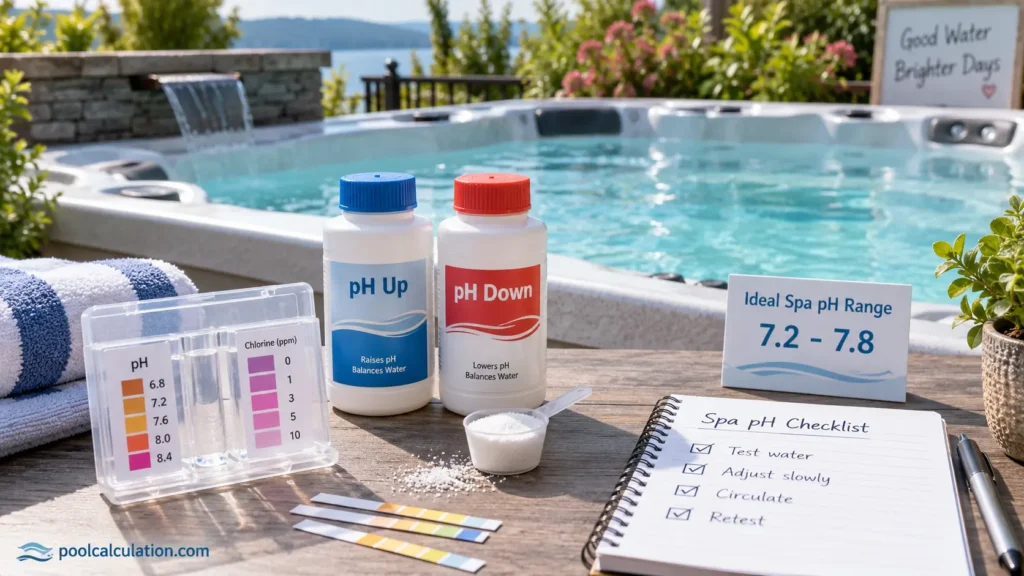
Using a Hot Tub pH Calculator Correctly
A hot tub ph calculator is most useful when you enter accurate measurements.
For example, if your current pH is above your desired range, the calculation can help estimate how much pH reducing product may be required based on the spa’s water volume and other information.
After adding the estimated amount, allow the water to circulate and then test again.
Do not assume that one calculation will always produce the exact final pH. Make smaller corrections when necessary and continue monitoring the water.
pH and Sanitizer Work Together
pH should not be managed independently from sanitizer levels.
Chlorine and bromine are commonly used to sanitize hot tubs, and their performance can be influenced by water chemistry.
If pH repeatedly moves outside the desired range, check alkalinity and review your overall maintenance routine rather than continually increasing chemical doses.
A hot tub chemical calculator can help with broader chemical dosing, but actual water testing should remain the starting point for each adjustment.
Common Hot Tub pH Mistakes
Even when using a hot tub ph calculator, several mistakes can affect your results.
Adding Too Much Chemical
Large adjustments can move pH beyond the desired range. Smaller corrections are often easier to control.
Ignoring Alkalinity
If alkalinity is not properly maintained, pH may continue changing even after treatment.
Using the Wrong Product
Always make sure the product is intended for spa or hot tub water and follow its instructions.
Guessing Water Volume
An incorrect volume can produce an inaccurate chemical estimate.
Testing Too Quickly
Give the water enough time to circulate after adding chemicals before testing again.
Adding Chemicals Without Testing
Guessing whether your pH is high or low can result in unnecessary adjustments.
How Often Should You Test Hot Tub pH?
Testing frequency depends on how often your hot tub is used.
If the spa is used frequently, regular testing can help you identify changes before they become significant. Testing is also useful after heavy use, water replacement, or chemical adjustments.
Keeping a simple record of your readings can show whether your pH tends to rise or fall over time.
This information can help you understand your spa’s normal chemistry and make future adjustments more predictable.
Tips for Maintaining Stable pH
Follow these habits to make pH management easier:
- Test water regularly.
- Keep alkalinity within the recommended range.
- Measure water volume accurately.
- Add chemicals gradually.
- Follow product instructions.
- Allow proper circulation after treatment.
- Retest after making adjustments.
- Avoid mixing chemicals together.
- Keep spa water properly maintained.
Using a hot tub ph calculator as part of a regular testing routine can reduce guesswork and help you make more controlled adjustments.
Frequently Asked Questions
What does a hot tub pH calculator do?
It estimates the amount of pH adjustment product that may be required based on information such as water volume, current pH, target level, and chemical strength.
What is the ideal pH for a hot tub?
The appropriate target should be based on your spa manufacturer’s recommendations and the sanitizer system you use. Regular testing helps keep the water within the recommended range.
Why does hot tub pH keep rising?
Aeration from spa jets, water chemistry, alkalinity, and frequent use can contribute to rising pH.
Can I lower pH without checking alkalinity?
You can make a pH adjustment, but checking alkalinity is important when pH repeatedly becomes difficult to control.
Can a calculator replace water testing?
No. A calculation depends on the information you enter. Actual testing is necessary to determine the current condition of your water.
Conclusion
A hot tub ph calculator provides a convenient way to estimate pH adjustments based on your spa’s water volume, current reading, target level, and chemical strength.
For reliable results of Hot Tub pH Calculator, always test the water first, check alkalinity, follow product instructions, and retest after allowing the spa to circulate. Consistent testing and gradual adjustments can help maintain balanced, comfortable hot tub water.