Quick Answer
If you want to buy pool salt, choose a high purity product specifically made for saltwater pool systems. Check the salt purity, recommended dosage, bag size, and compatibility with your salt chlorine generator before purchasing. Most pool owners should also calculate the amount of salt their pool actually needs instead of adding an entire bag without testing the current salinity.
Buying the right product can help your salt system operate properly and reduce unnecessary maintenance.
What Kind of Salt Should You Buy for a Pool?
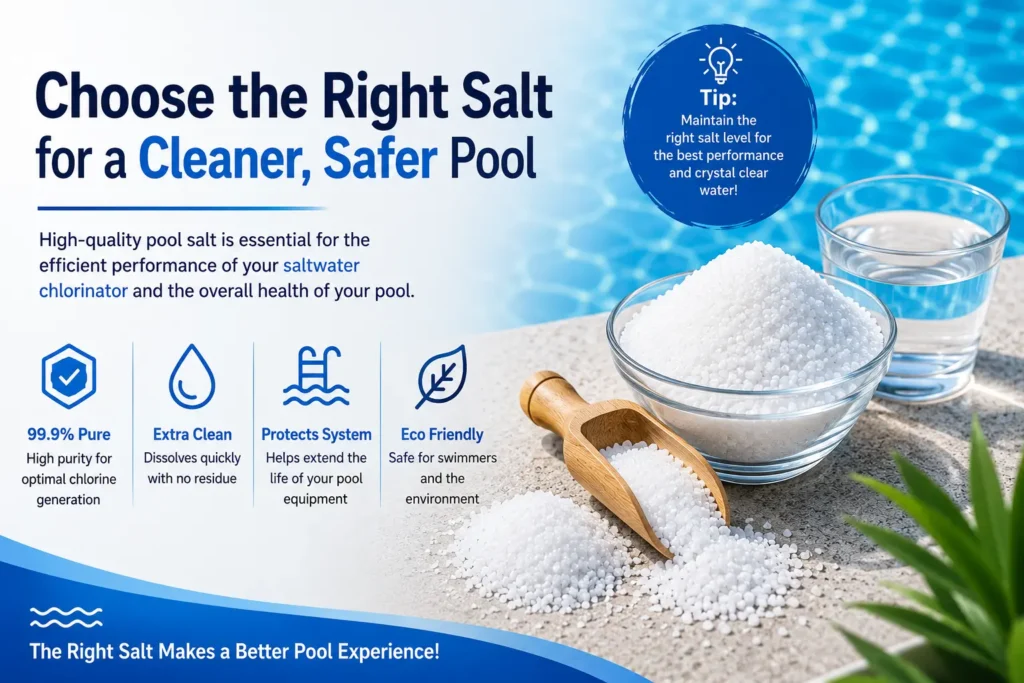
Not every type of salt is suitable for pool use. Pool salt is usually refined to a high level of purity so it can dissolve cleanly without introducing excessive impurities into the water.
When you buy pool salt, look for a product labeled specifically for swimming pool or saltwater pool systems.
Important things to check include:
- High purity level
- Pool specific labeling
- Suitable grain size
- No unnecessary additives
- Compatibility with your salt chlorine generator
- Clear dosage instructions
Avoid using random household or industrial salt unless the manufacturer specifically states that it is suitable for your pool system.
How Much Pool Salt Do You Need?
The amount of salt required depends on your pool volume and current salt level.
For example, if your pool currently has very little salt and your salt system recommends a target around 3,000 ppm, you will need considerably more salt than a pool that is already close to its recommended level.
Before adding salt, test the water. You should know:
- Pool volume
- Current salt concentration
- Recommended salt level
- Amount of salt already present
- Salt system capacity
Adding too much salt can increase salinity beyond the recommended operating range. If you buy pool salt in advance, calculate your required quantity before opening the bags.
Common Pool Salt Bag Sizes
Pool salt is commonly sold in large bags because saltwater pools can require substantial quantities when first being converted or when the salt level needs correction.
| Bag Size | Best Use |
| 20 lb | Small adjustments |
| 40 lb | Common household pool use |
| 50 lb | Larger additions |
| Multiple bags | Initial salt installation or major correction |
The exact bag size available depends on the product and retailer.
If you are comparing bags of salt for swimming pool use, do not choose based only on the lowest price per bag. Compare purity, weight, product quality, and the total amount needed.
Where Can You Buy Pool Salt?
You can purchase pool salt from several types of retailers. Local pool supply stores are useful because staff may help you select a product compatible with your salt system.
Home improvement stores and large retailers may also carry pool salt, particularly during the swimming season.
Online shopping can be convenient when you need multiple heavy bags delivered to your home. However, shipping costs can make a seemingly cheap product more expensive.
If you search for swimming pool salt near me, compare availability and total cost before deciding where to purchase.
What Should You Check Before Buying?
Before you buy pool salt, take a few minutes to compare the product specifications.
1. Purity
Higher purity generally means fewer unwanted minerals and contaminants enter the pool. Check the manufacturer’s stated purity rather than assuming every product is identical.
2. Compatibility
Your salt chlorine generator may have specific recommendations for salt concentration and product type. Always follow its operating instructions.
3. Price Per Pound
A cheaper bag is not always the better deal. Calculate the price per pound so you can compare products fairly.
4. Availability
If your pool needs a large quantity, make sure the retailer has enough bags available. Running out during an important maintenance period can delay treatment.
5. Delivery Cost
Salt is heavy. When ordering online, include shipping or delivery charges when comparing prices.
Pool Salt vs Other Types of Salt
Pool owners sometimes wonder whether ordinary table salt or other salt products can be used instead of pool salt.
The answer depends on the salt system and product specifications. Pool systems are designed to work with salt that meets their recommended requirements.
Some alternatives may contain additives or impurities that you do not want to introduce into the pool.
The safest approach is to choose salt for swimming pools that is clearly labeled for use with salt chlorine generators.
When Should You Add Pool Salt?
Salt should normally be added when testing shows that the pool’s salinity is below the level recommended by the salt chlorine generator.
You may need additional salt after:
- Adding significant amounts of fresh water
- Draining part of the pool
- Major water replacement
- Correcting a low salt reading
- Installing or restarting a salt system
Rain and normal evaporation affect water volume differently. Evaporation removes water but leaves salt behind, so adding salt simply because water evaporated can result in excessive salinity.
How to Add Pool Salt Correctly
Once you buy pool salt, adding it correctly is just as important as choosing the right product.
First, test the existing salt level. Calculate the amount required to reach the manufacturer’s recommended range.
Distribute the salt across the pool surface rather than dumping the entire amount into one location. Allow the circulation system to mix the salt thoroughly.
Avoid allowing large piles of undissolved salt to remain on the pool floor. Brush the area if necessary and follow the instructions for your specific salt system.
Wait for the salt to dissolve and circulate before checking the reading again.
How to Save Money When Buying Pool Salt
You do not always need to choose the cheapest available bag. Instead, focus on total value.
Buying multiple bags at once may reduce the cost per pound, but only purchase extra salt if you have suitable dry storage space.
Compare local and online prices, check delivery charges, and calculate the total cost for the quantity your pool actually needs.
It is also useful to track your salt purchases throughout the season. If you repeatedly need unusually large amounts of salt, investigate whether water loss or another pool issue is causing the salinity to fall.
Frequently Asked Questions
Is pool salt the same as table salt?
No. Pool salt is designed for saltwater pool systems and is generally selected for its purity and suitability for salt chlorine generators.
How do I know how much salt my pool needs?
Test the current salinity, determine your pool volume, and check the target salt level recommended by your salt system manufacturer.
Can I add too much pool salt?
Yes. Excessive salt can push the water outside the recommended operating range. Always calculate the required amount before adding salt.
Should I buy pool salt online or locally?
Both options can work. Local stores may offer immediate availability, while online retailers can provide convenient delivery. Compare the final cost, including shipping.
How should pool salt be stored?
Keep unopened bags in a dry location protected from moisture. Salt can harden when exposed to water or high humidity.
Conclusion
Knowing how to buy pool salt properly can save money and help your saltwater system operate more effectively. Focus on purity, compatibility, bag size, price per pound, and the actual amount your pool requires.
Always test your current salt level before adding more, and follow the recommended operating range for your specific salt chlorine generator. With the right product and careful dosing, maintaining the correct salinity becomes much easier.