Quick Answer
Pool pump run time cost depends mainly on the pump’s horsepower, electrical power consumption, daily operating hours, electricity rate, and number of days it runs each month. A larger pump running for longer periods will generally use more electricity. To estimate your cost, multiply the pump’s kilowatt usage by its daily operating time, electricity rate, and the number of operating days. In this article, we will cover all about pool pump run time cost.
What Is Pool Pump Run Time Cost?
Pool pump run time cost is the amount you spend on electricity to operate your pool circulation pump.
Knowing about Pool pump run time cost, the pump moves water through the filter and other equipment, helping distribute chemicals and maintain circulation. However, keeping the pump running for unnecessary hours can increase your electricity bill.
The goal is not simply to run the pump for as many hours as possible. Instead, you should determine an appropriate operating schedule based on pool size, pump type, filtration needs, weather, water conditions, and equipment requirements.
How Is Pool Pump Electricity Cost Calculated?
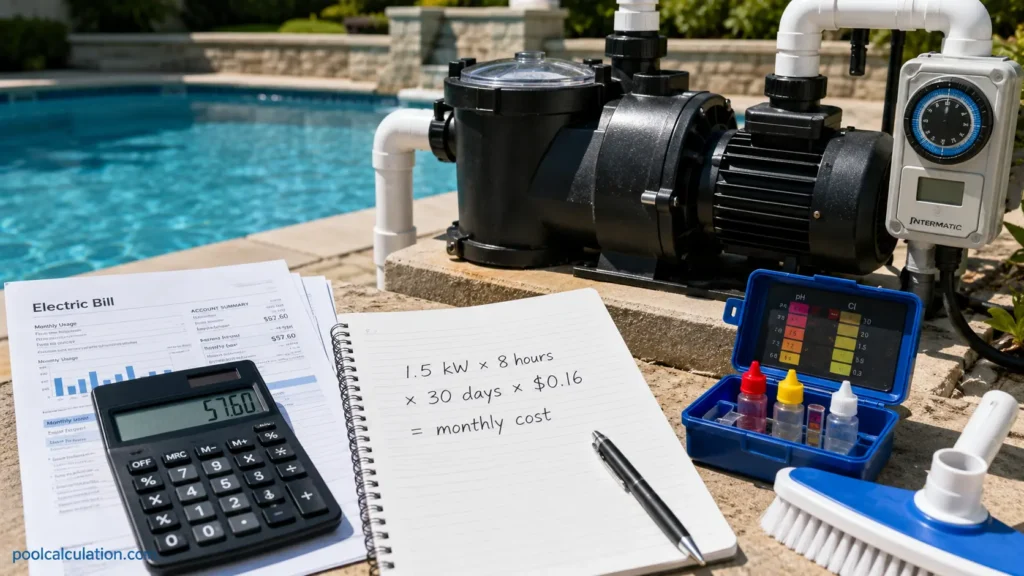
A simple calculation for Pool pump run time cost can help estimate your monthly expense.
Daily electricity cost = Pump power in kW × Daily run time × Electricity rate
Then:
Monthly electricity cost = Daily electricity cost × Number of operating days
For example, suppose a pump uses 1.5 kW, runs for 8 hours per day, and electricity costs $0.15 per kWh.
1.5 × 8 × $0.15 = $1.80 per day
For 30 days:
$1.80 × 30 = $54 per month
This is only an example. Your actual electricity cost depends on the pump’s real power consumption and your local electricity rate.
What Affects Pool Pump Energy Costs?
While calculating Pool pump run time cost, Several factors can change your monthly electricity expense.
| Factor | Effect on Energy Use |
| Pump horsepower | Higher-powered pumps can use more electricity |
| Run time | More operating hours increase consumption |
| Electricity rate | Higher rates increase monthly cost |
| Pump efficiency | Efficient pumps can reduce energy use |
| Pool size | Larger pools may require more circulation |
| Filter condition | A dirty filter can affect system performance |
| Plumbing resistance | Restriction can make the system work harder |
| Speed setting | Lower-speed operation may reduce consumption |
Because every pool system is different, there is no single operating schedule that works for every property.
How Long Should a Pool Pump Run?
The required run time depends on your pool and equipment.
Many residential pools operate their circulation systems for several hours each day, but the exact schedule should consider the pump’s flow rate, pool volume, filtration requirements, weather, and sanitizer system.
Running the pump longer is not automatically better. If the water is already circulating effectively, additional hours may provide limited benefit while increasing electricity consumption.
On the other hand, insufficient circulation can contribute to uneven chemical distribution, poor filtration, and water-quality problems.
Variable Speed vs Single Speed Pumps
Pump type can have a major effect on energy consumption.
Single Speed Pumps
A single-speed pump operates at one fixed speed. It can provide strong circulation but may use more electricity when operated for long periods.
Variable Speed Pumps
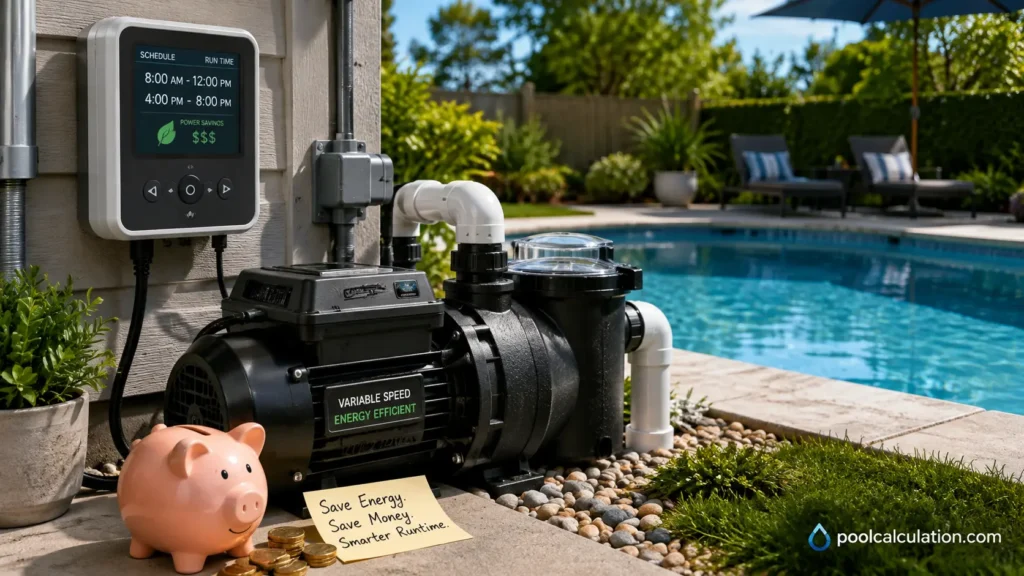
A variable-speed pump can operate at different speeds. Lower-speed operation can use significantly less electricity while still providing adequate circulation for many routine tasks.
A variable-speed system may have a higher purchase price, but its lower operating power can help reduce long-term energy expenses.
Using a Pool Pump Run Time Calculator
A pool pump run time calculator can help estimate how long your pump may need to operate based on factors such as pool volume, pump flow rate, and desired turnover.
The basic concept involves calculating how much water the pump can circulate during a given period.
For example:
Turnover time = Pool volume ÷ Pump flow rate
If a pool contains 20,000 gallons and the pump moves 50 gallons per minute:
20,000 ÷ 50 = 400 minutes
That equals approximately 6.7 hours for one theoretical turnover.
Actual operation can vary because real-world flow rates are affected by plumbing, filters, valves, fittings, and equipment condition.
Pool Pump Run Time Cost by Daily Hours
Pool pump run time cost can be calculated by changing the number of operating hours can have a noticeable effect on electricity usage.
| Daily Run Time | Example Monthly Hours | Relative Energy Use |
| 4 hours | 120 hours | Lower |
| 6 hours | 180 hours | Moderate |
| 8 hours | 240 hours | Higher |
| 10 hours | 300 hours | Higher |
| 12 hours | 360 hours | Highest |
These figures assume the pump operates every day. Actual electricity consumption depends on the pump’s power rating.
How to Reduce Pump Electricity Costs
Managing pool pump run time cost does not necessarily mean reducing circulation to the point where water quality suffers. Instead, focus on efficiency.
Use an Appropriate Schedule
Avoid running the pump significantly longer than necessary. Adjust the schedule according to pool conditions and equipment requirements.
Consider a Variable Speed Pump
Variable-speed technology can reduce power consumption when lower flow is sufficient for routine circulation.
Keep the Filter Clean
A properly maintained filter supports effective water flow. Follow the manufacturer’s cleaning and maintenance instructions.
Maintain Good Water Chemistry
Balanced water can help reduce problems that place additional demands on filtration and sanitation.
Use Timers or Automation
An automatic timer can prevent accidental continuous operation and make it easier to maintain a consistent schedule.
Pump Maintenance and Operating Cost
Maintenance can indirectly affect your energy bill.
A clogged filter, blocked skimmer basket, dirty pump basket, or other circulation problem can affect water flow. Regular inspection helps identify these issues before they become larger equipment problems.
You should also monitor unusual pump noises, leaks, changes in pressure, and reduced circulation.
A well-maintained system is easier to monitor and can help you avoid unnecessary operating hours.
Understanding Your Total Pool Energy Budget
Electricity for the circulation pump is only one part of your overall pool expenses.
Your total energy use may also include:
- Pool heater
- Saltwater chlorine generator
- Pool lights
- Automatic cleaners
- Water features
- Other circulation equipment
A pool maintenance cost calculator can help organize different maintenance expenses, but pump electricity should be calculated separately when you want to understand the impact of operating hours.
Common Pump Cost Mistakes
Avoid these common mistakes when estimating your electricity expense:
- Assuming horsepower equals exact electricity consumption
- Ignoring the pump’s actual wattage
- Using an outdated electricity rate
- Running the pump continuously without a reason
- Ignoring filter and circulation problems
- Comparing pumps only by purchase price
- Forgetting seasonal changes in pool usage
Checking the pump’s electrical specifications and your actual utility rate will produce a more useful estimate.
Frequently Asked Questions
Does running a pool pump longer increase electricity costs?
Yes, in calculating pool pump run time cost. If the pump continues operating at the same power level, additional run time generally increases electricity consumption.
Is it cheaper to run a pool pump at night?
It depends on your electricity provider’s pricing structure. If your utility offers lower off-peak rates, scheduling operation during those periods may reduce costs.
Does a larger pump always cost more to operate?
Not necessarily. A pump’s actual energy use depends on its motor, speed, efficiency, operating conditions, and schedule.
Can a variable-speed pump reduce electricity costs?
It can. Variable-speed pumps can operate at lower speeds for some tasks, potentially reducing energy consumption compared with operating a single-speed pump continuously at high speed.
Should I reduce pump hours to save money?
Do not reduce operating time without considering filtration and water-quality requirements. The appropriate schedule depends on your pool and equipment.
Conclusion
Pool pump run time cost is primarily determined by pump power, operating hours, electricity rates, and equipment efficiency. Understanding these factors makes it easier to estimate your monthly electricity expense and identify opportunities to reduce unnecessary energy use.
Rather than simply cutting pump hours, choose an appropriate schedule, maintain the filter and circulation system, and consider efficient pump technology when replacement is needed. Regular monitoring can help balance energy savings with effective pool circulation and water care.