Quick Answer
Salt cells for swimming pools are the main component in a saltwater chlorine generator that converts dissolved salt into chlorine. They help sanitize pool water automatically while the circulation system is running. A salt cell needs regular inspection because calcium buildup, poor water chemistry, and normal wear can reduce its performance.
What Are Salt Cells for Swimming Pools?
Salt cells for swimming pools are installed in the plumbing line of a saltwater chlorine generator. Water passes through the cell while an electrical current helps convert dissolved sodium chloride into chlorine.
This process allows a saltwater system to produce chlorine without requiring the owner to manually add chlorine every time sanitizer levels fall.
The cell is a replaceable component, so understanding how it works and how to maintain it can help prevent unexpected chlorine production problems.
How Does a Salt Cell Work?
A Salt Cells for Swimming Pools contains electrically charged plates, often called electrodes. When the circulation system is operating, salty pool water passes through the cell.
The generator applies a controlled electrical current to the plates. This causes a chemical reaction that produces chlorine from the dissolved salt.
The generated chlorine then sanitizes the pool water. After completing its sanitizing work, the chlorine eventually returns to a salt form, allowing the process to continue.
The system does not eliminate the need for water testing. Chlorine, pH, alkalinity, stabilizer, and salt concentration should still be monitored according to the pool system and manufacturer recommendations.
Main Benefits
A properly maintained salt cell can make routine pool care more convenient.
| Benefit | Why It Matters |
|---|---|
| Automatic chlorine production | Reduces frequent manual chlorine dosing |
| Consistent sanitizer production | Helps maintain chlorine while the system operates |
| Less daily handling | Reduces the need for regular chlorine additions |
| Adjustable output | Many systems allow chlorine production to be changed |
| Convenient operation | Works as part of the pool circulation system |
However, performance depends on proper water chemistry, adequate circulation, correct salt concentration, and a cell that is in good condition.
What Affects Salt Cells for Swimming Pools Performance?
Several factors can influence chlorine production.
Water Chemistry
Incorrect pH, alkalinity, or stabilizer levels can make pool maintenance more difficult. Follow the recommended chemistry ranges for your pool and generator.
Calcium Buildup
Calcium can accumulate on the cell plates, particularly when water chemistry encourages scaling. Heavy buildup can interfere with the cell’s ability to operate efficiently.
Salt Concentration
The generator requires a specific salt range. Too little salt can cause low-salt warnings or reduce chlorine production, while excessive salt can create other water-management issues.
Water Temperature
Some saltwater systems reduce or stop chlorine production when water temperature falls below their operating threshold. Check the manufacturer’s specifications for your equipment.
Cell Age
Salt cells are consumable components. Over time, the coating on the plates wears down, reducing the cell’s ability to produce chlorine.
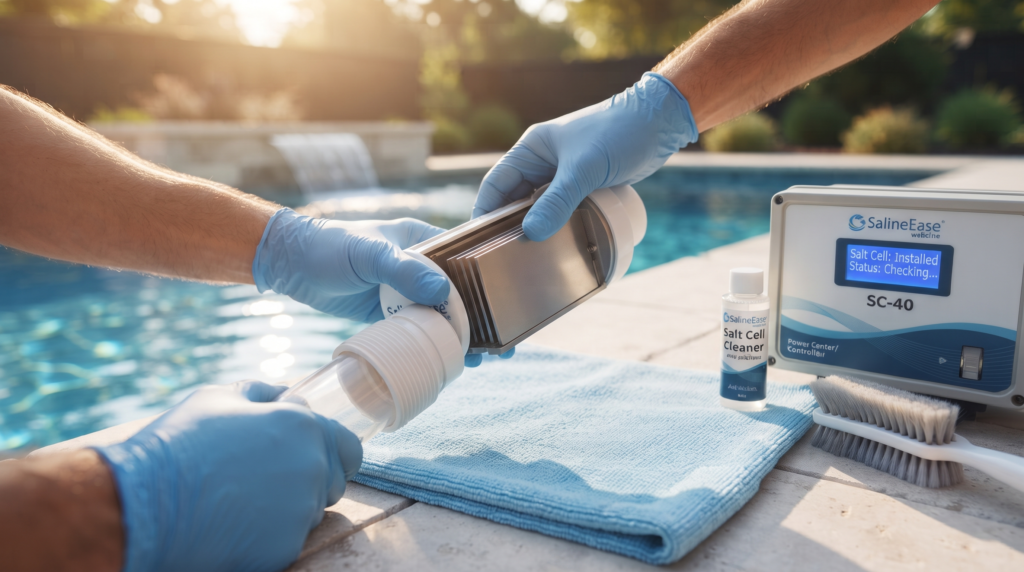
How to Clean a Salt Cell
Regular inspection is more important than cleaning on an arbitrary schedule. Check the cell according to the manufacturer’s maintenance recommendations and whenever the system indicates a problem.
A general process is:
- Turn off the pool equipment and follow the manufacturer’s safety instructions.
- Remove the cell from the plumbing.
- Inspect the plates for visible calcium deposits or debris.
- Clean the cell only with the approved method for that model.
- Rinse it thoroughly when instructed.
- Reinstall the cell correctly.
- Restart the system and check its operation.
Do not aggressively scrape the plates. Excessive physical cleaning can damage the cell coating and shorten its service life.
Pool Chlorine Salt and Salt Systems
A saltwater generator uses dissolved salt to produce chlorine, so pool owners sometimes refer to the system as a pool chlorine salt system.
The salt itself does not provide the same sanitizing effect as chlorine. Instead, the generator uses the salt as the source material for chlorine production.
This means saltwater pool owners still need to test chlorine regularly. If chlorine is low, the problem may involve the cell, water chemistry, circulation, generator settings, or another part of the system.
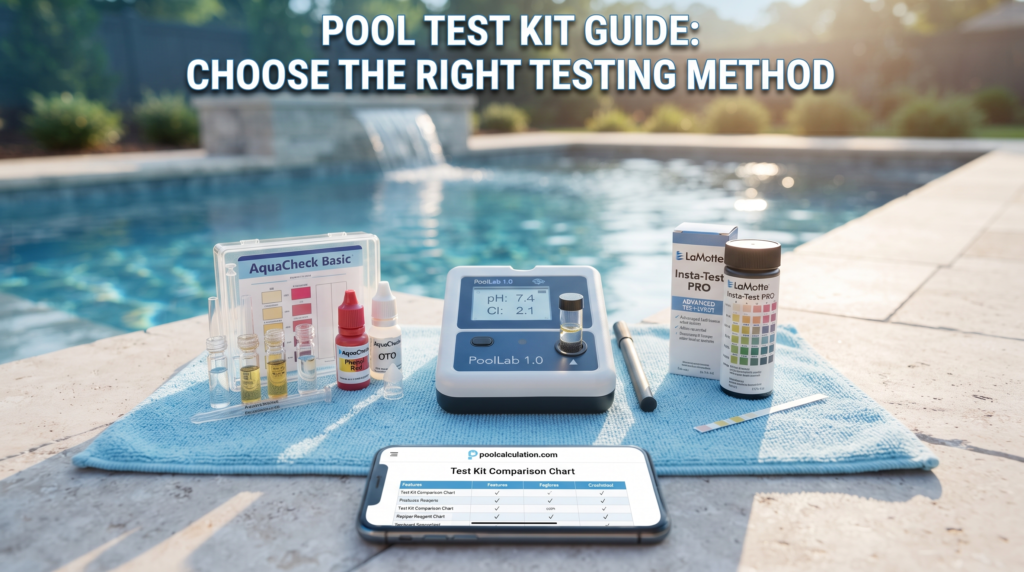
Testing Salt Levels
A salt water pool salt tester can help measure the concentration of dissolved salt. Digital meters and other testing methods are available, but results should be compared with the manufacturer’s recommended operating range.
Do not add salt simply because the generator is producing less chlorine. Test the water first and investigate other possible causes.
Signs Your Salt Cell May Need Attention
Salt cells for swimming pools can show several warning signs when maintenance or replacement is needed.
| Sign | Possible Cause |
|---|---|
| Low chlorine | Cell output, settings, chemistry, or circulation issue |
| Low-salt warning | Salt concentration may be below the required range |
| Heavy white deposits | Calcium scaling |
| Generator error | Cell, electrical, flow, or system issue |
| Reduced chlorine output | Aging cell or water chemistry problem |
| Damaged plates | Possible replacement needed |
A warning does not automatically mean the cell has failed. Test the water and inspect the complete system before purchasing a replacement.
When Should You Replace a Salt Cells for Swimming Pools?
Replacement timing depends on the cell model, operating conditions, water chemistry, cleaning practices, and hours of use.
Instead of replacing a cell based only on age, look for evidence of declining chlorine production or a manufacturer diagnostic indicating that the cell has reached the end of its service life.
Keeping water chemistry balanced and avoiding unnecessary cleaning can help protect the cell.
Common Salt Cell Mistakes
Salt cells for swimming pools can last longer when common maintenance mistakes are avoided.
Avoid:
- Adding salt without testing first
- Ignoring calcium buildup
- Using an unapproved cleaning method
- Running the generator with inadequate water flow
- Ignoring low-chlorine readings
- Assuming every generator uses the same salt target
- Replacing a cell before checking other possible causes
Always use the instructions supplied with your specific generator.
Frequently Asked Questions
Do salt cells produce chlorine?
Yes. A saltwater chlorine generator uses an electrochemical process to produce chlorine from dissolved salt.
How often should a salt cell be cleaned?
There is no universal cleaning schedule. Inspect and clean the cell according to the manufacturer’s instructions and when scaling or reduced performance indicates that cleaning may be necessary.
Can I use any salt in a saltwater pool?
Use salt that is appropriate for your specific saltwater chlorine generator. Check the manufacturer’s requirements before adding any product.
Why is my saltwater pool chlorine low?
Low chlorine can result from incorrect generator settings, inadequate circulation, low salt, cell scaling, an aging cell, or other water chemistry issues. Test the water before assuming the cell needs replacement.
Can a salt cell be repaired?
Some problems may be related to connections or other system components, but the cell itself is generally a replaceable component. Follow the manufacturer’s guidance for diagnosis and replacement.
Conclusion
Salt cells for swimming pools make saltwater chlorine systems convenient by producing chlorine automatically as pool water passes through the cell. Their performance depends on proper circulation, suitable salt concentration, balanced water chemistry, and regular inspection.
Test the water before making adjustments, inspect the cell for buildup, use only approved cleaning methods, and replace the cell when it has genuinely reached the end of its useful life. With consistent maintenance, a saltwater chlorine generator can provide reliable chlorine production and simplify everyday pool care.